












Comprehensive Summarization:
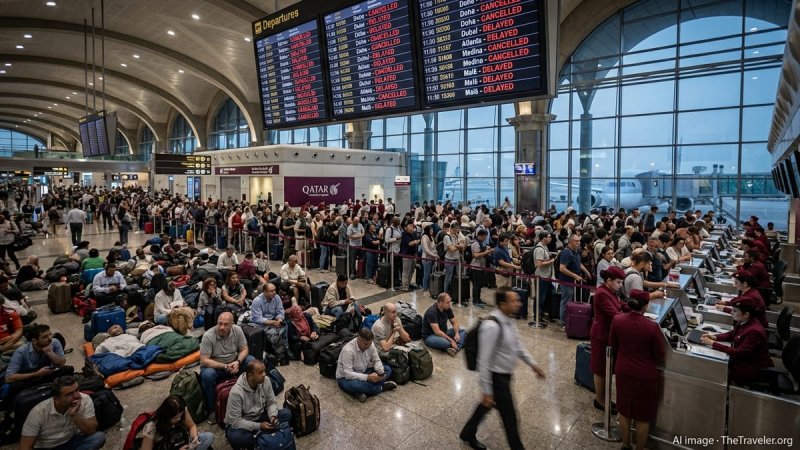
The article discusses the significant disruption caused by geopolitical tensions in the Middle East to international aviation. Several countries have temporarily closed their airspace as a precautionary measure. Among the airlines most affected is Qatar Airways, a leading international carrier based at Doha’s Hamad International Airport. The article highlights the operational challenges faced by Qatar Airways and the broader implications for the aviation industry due to these tensions.
Key Points:
- Geopolitical tensions in the Middle East have led to temporary closures of airspace in several countries.
- Qatar Airways, a major international carrier, is among the airlines most affected by these developments.
- The operational challenges faced by Qatar Airways are detailed in the latest updates from News.Az.
Actionable Takeaways:
-
Risk Management in Aviation: Airlines operating in regions with geopolitical tensions should enhance their risk management strategies. This includes developing contingency plans for airspace closures and diversifying routes to mitigate the impact of such disruptions. This takeaway is crucial for airlines to maintain operational continuity and customer trust in volatile regions.
-
Impact on Travel Demand: The temporary closures of airspace can lead to reduced travel demand, affecting airlines’ revenue and profitability. Travel agencies and tour operators should monitor these developments closely and adjust their itineraries and marketing strategies accordingly. This insight is vital for businesses in the travel sector to adapt quickly to changing market conditions and minimize financial losses.
Contextual Understanding:
The article reflects the current state of the aviation industry amidst heightened geopolitical tensions. The temporary closures of airspace are a direct response to security concerns, which are common in regions experiencing political instability. This situation underscores the importance of adaptability and resilience in the travel industry. Recent trends indicate that airlines are increasingly investing in advanced technologies for real-time monitoring of geopolitical risks, enabling them to make informed decisions swiftly. Thought leaders emphasize the need for collaboration between airlines, governments, and travel agencies to ensure seamless travel experiences despite external challenges.
Handling Different Article Types:
The article is a news brief, providing factual information about the impact of geopolitical tensions on the aviation industry. The structured output format ensures that the information is presented clearly and concisely, making it easy for readers to digest and act upon. The focus on actionable insights and contextual understanding aligns with the professional audience’s need for practical and forward-looking content.
markdown
Comprehensive Summarization:
The article discusses the significant disruption caused by geopolitical tensions in the Middle East to international aviation. Several countries have temporarily closed their airspace as a precautionary measure. Among the airlines most affected is Qatar Airways, a leading international carrier based at Doha’s Hamad International Airport. The article highlights the operational challenges faced by Qatar Airways and the broader implications for the aviation industry due to these tensions.
Key Points:
- Geopolitical tensions in the Middle East have led to temporary closures of airspace in several countries.
- Qatar Airways, a major international carrier, is among the airlines most affected by these developments.
- The operational challenges faced by Qatar Airways are detailed in the latest updates from News.Az.
Actionable Takeaways:
- Risk Management in Aviation: Airlines operating in regions with geopolitical tensions should enhance their risk management strategies. This includes developing contingency plans for airspace closures and diversifying routes to mitigate the impact of such disruptions.
- Impact on Travel Demand: The temporary closures of airspace can lead to reduced travel demand, affecting airlines’ revenue and profitability. Travel agencies and tour operators should monitor these developments closely and adjust their itineraries and marketing strategies accordingly.
Contextual Insights:
The article reflects the current state of the aviation industry amidst heightened geopolitical tensions. The temporary closures of airspace are a direct response to security concerns, which are common in regions experiencing political instability. This situation underscores the importance of adaptability and resilience in the travel industry. Recent trends indicate that airlines are increasingly investing in advanced technologies for real-time monitoring of geopolitical risks, enabling them to make informed decisions swiftly. Thought leaders emphasize the need for collaboration between airlines, governments, and travel agencies to ensure seamless travel experiences despite external challenges.
Read the Complete Article.



