












Comprehensive Summarization:
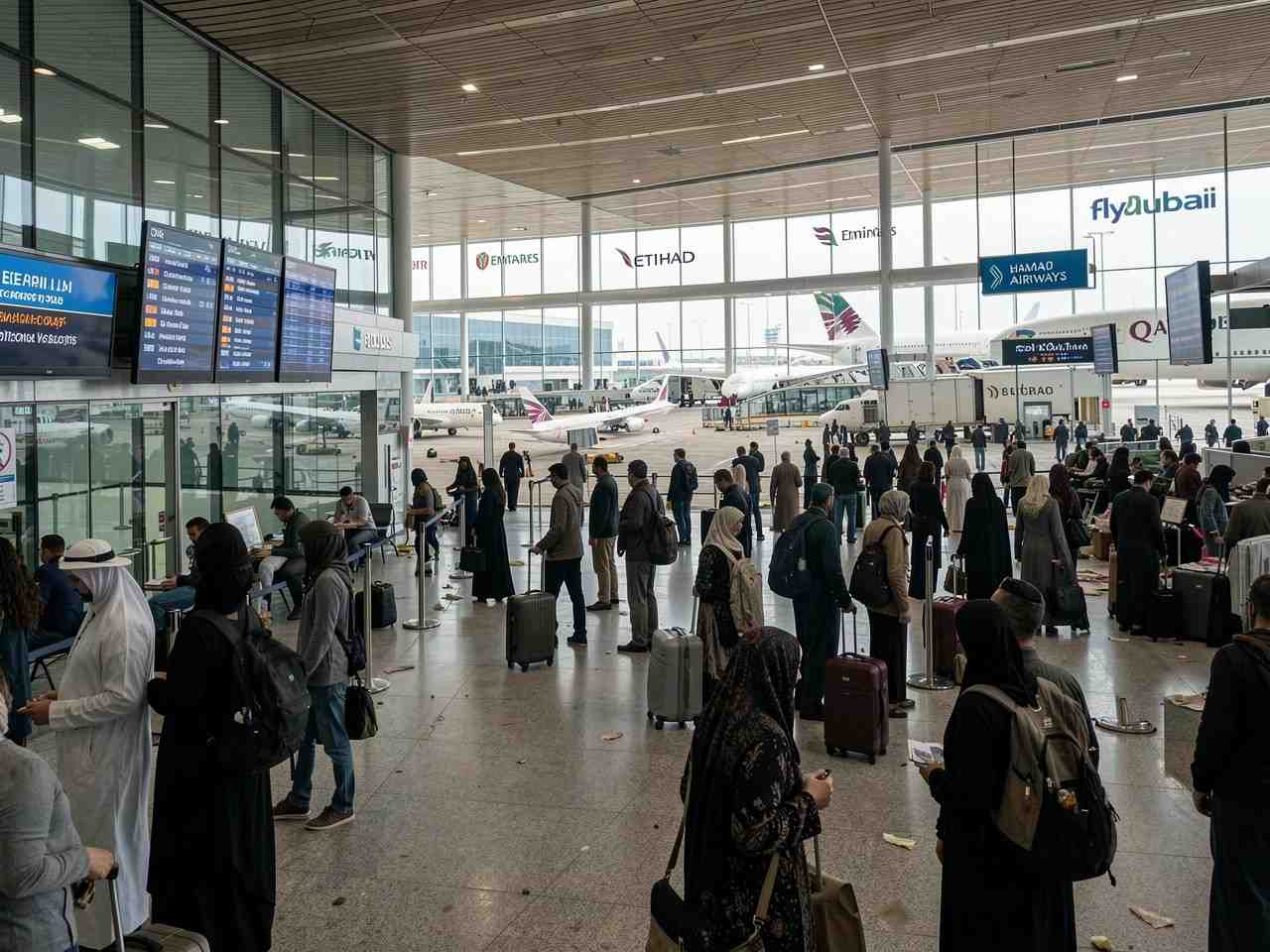
The article reports that Qatar Airways, Emirates, Etihad, and Flydubai, major airlines in the Middle Eastern aviation sector, have suspended their flights due to escalating tensions between Israel, the United States, and Iran. This development has significant implications for the UAE, Qatar, and hospitality giants like Hilton, which rely heavily on these airlines for their operations. The article underscores the vulnerability of the travel industry to geopolitical conflicts and the potential ripple effects on global travel and hospitality sectors.
Key Points:
- Qatar Airways, Emirates, Etihad, and Flydubai have suspended flights due to escalating tensions between Israel, the United States, and Iran.
- The suspension impacts the UAE, Qatar, and hospitality sectors, including Hilton, which depend on these airlines for their operations.
- The article highlights the vulnerability of the travel industry to geopolitical conflicts, emphasizing the need for strategic planning and risk management in travel and hospitality.
Actionable Takeaways:
-
Diversify Airline Partnerships: Travel and hospitality companies should diversify their airline partnerships to mitigate risks associated with geopolitical conflicts. This strategy can help ensure continuity of operations and minimize disruptions caused by airline suspensions.
-
Implement Flexible Cancellation Policies: Given the unpredictability of travel due to geopolitical tensions, companies should offer flexible cancellation policies to accommodate customers facing disruptions. This approach can enhance customer satisfaction and loyalty, especially in a volatile market.
-
Monitor Geopolitical Developments: Companies in the travel and hospitality sectors should establish robust monitoring systems to track geopolitical developments. Proactive monitoring allows for timely adjustments in operations, such as route changes or alternative transportation arrangements, to mitigate the impact of conflicts on travel plans.
Contextual Insights:
The suspension of flights by major Middle Eastern airlines underscores the industry’s sensitivity to geopolitical tensions. This event is a stark reminder of the interconnectedness of global travel and the potential for conflicts to disrupt supply chains and operational continuity. In response, the travel industry must adopt a proactive approach to risk management, leveraging technology and strategic partnerships to navigate uncertainties. The article also highlights the importance of flexibility in travel policies, reflecting a broader trend towards customer-centric solutions in the face of unpredictable global events. As the industry evolves, staying informed about geopolitical developments and integrating them into operational strategies will be crucial for resilience and sustained growth.
Read the Complete Article.



