












Comprehensive Summarization:
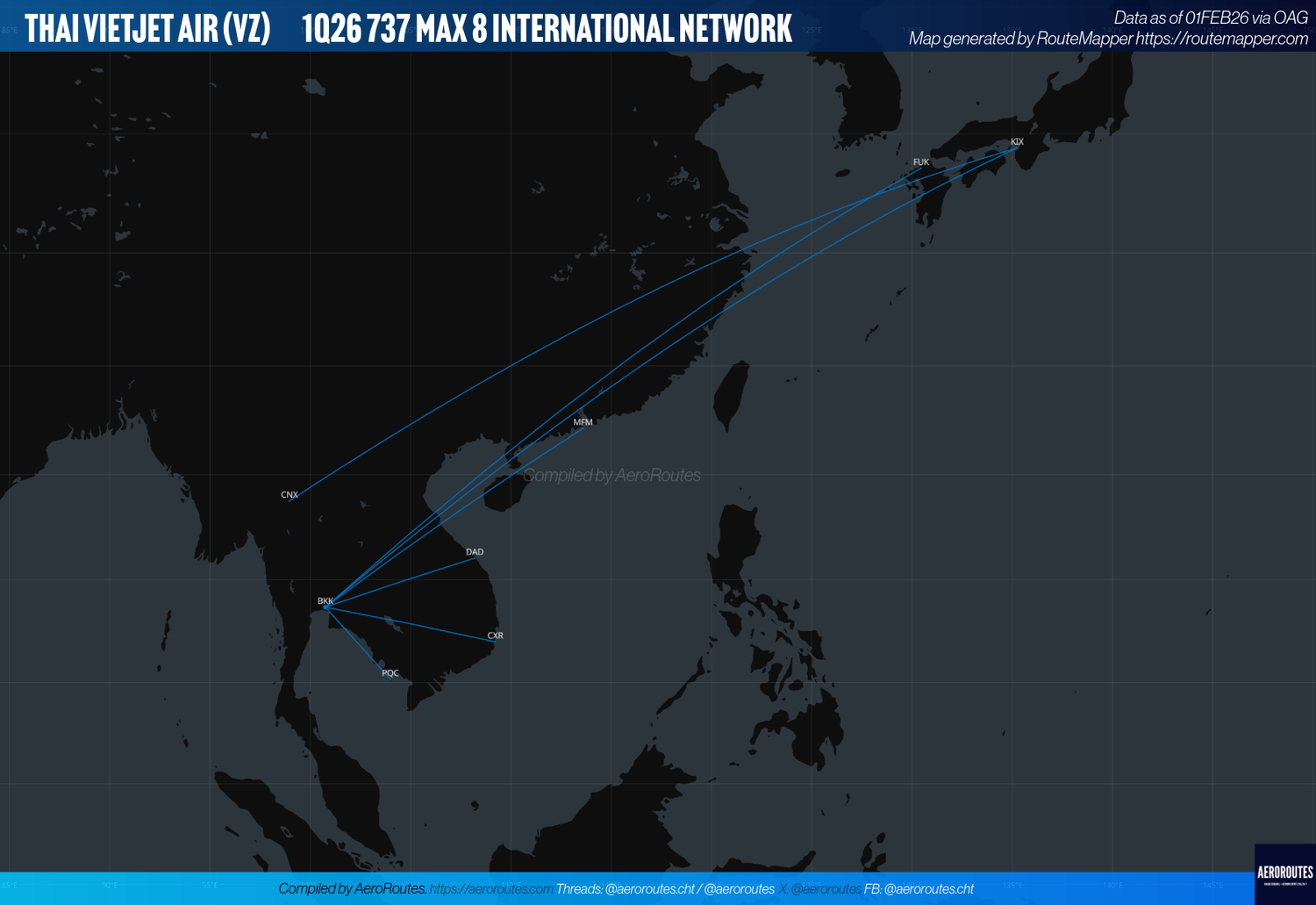
The article reports on Thai VietJet Air’s gradual introduction of Boeing 737 MAX 8 service on international routes, starting from late January 2026. The airline has initiated services between Bangkok Suvarnabhumi and various destinations including Cam Ranh/Nha Trang, Da Nang, Fukuoka, and Macau. The service commenced on January 29, 2026, to Cam Ranh/Nha Trang, expanded to Da Nang on February 2, 2026, and further to Fukuoka on February 3, 2026. The service to Macau began on January 26, 2026, and is scheduled as a charter flight. The article also mentions the transition from daily to weekly flights to Fukuoka starting February 11, 2026, until February 28, 2026. The context provided indicates a strategic expansion of VietJet Air’s international network, leveraging Boeing’s latest aircraft technology to enhance connectivity and service quality.
Key Points:
- Thai VietJet Air commenced Boeing 737 MAX 8 service on international routes, including Japan, Vietnam, and Macau, starting late January 2026.
- The airline introduced services between Bangkok Suvarnabhumi and destinations such as Cam Ranh/Nha Trang, Da Nang, Fukuoka, and Macau.
- Specific service start dates were announced, including January 29, 2026, for Cam Ranh/Nha Trang, February 2, 2026, for Da Nang, and February 3, 2026, for Fukuoka.
- The service to Macau began on January 26, 2026, and is scheduled as a charter flight.
- The frequency of flights to Fukuoka increased from daily to 4 weekly starting February 11, 2026, until February 28, 2026.
Actionable Takeaways:
-
Expansion of International Network: Thai VietJet Air’s introduction of Boeing 737 MAX 8 service signifies a strategic move to expand its international footprint. This development is crucial for airlines aiming to enhance connectivity and service quality, particularly in regions with growing demand for air travel. The focus on destinations like Japan, Vietnam, and Macau indicates a response to market opportunities and a strategic alignment with current travel trends towards international connectivity.
-
Adoption of Advanced Aircraft Technology: The shift to Boeing 737 MAX 8 aircraft highlights the industry’s trend towards adopting advanced technology to improve operational efficiency and passenger experience. This move is particularly relevant in the context of the ongoing recovery and growth in air travel post-pandemic. Airlines that invest in newer aircraft models can offer more comfortable, fuel-efficient, and technologically advanced travel experiences, potentially gaining a competitive edge in the market.
-
Strategic Timing of Service Launches: The phased introduction of services, starting from late January 2026, suggests a deliberate strategy to gradually build capacity and infrastructure. This approach allows the airline to assess market response, optimize routes, and manage operational challenges effectively. For stakeholders, this indicates a calculated risk-taking strategy that balances ambition with operational feasibility, potentially leading to sustainable growth and profitability.
Contextual Insights:
The article’s context is deeply rooted in the evolving landscape of the global travel industry, marked by a post-pandemic recovery phase characterized by a renewed focus on international connectivity and technological innovation. The introduction of Boeing 737 MAX 8 service by Thai VietJet Air aligns with broader industry trends towards enhancing travel experiences through advanced aircraft technology. This development is particularly significant in the context of increasing passenger expectations for safety, comfort, and efficiency in air travel.
Moreover, the strategic timing of service launches reflects the airline’s response to current market conditions and consumer demand. As travel resumes and expands globally, airlines are increasingly leveraging technological advancements to differentiate themselves in a competitive market. The focus on destinations such as Fukuoka and Macau, which may represent emerging or underserved markets, underscores the airline’s proactive approach to identifying and capitalizing on growth opportunities.
In the broader context of travel tech and fintech innovations, this development signals a shift towards more integrated and technologically driven travel experiences. Airlines that invest in modern aircraft and align their service strategies with technological advancements are better positioned to meet the evolving needs of modern travelers. This trend is likely to influence other players in the industry, prompting further investments in technology and service enhancements to stay competitive.
Handling Different Article Types:
The article falls under the category of a news brief, providing factual information about a specific development within the travel industry. The structured approach to summarizing such articles involves extracting key facts, identifying significant developments, and offering actionable insights based on the presented information. This type of content is essential for a professional audience that relies on accurate and timely information to make informed decisions regarding travel, investment, and strategic planning.
Real-Time Fact-Checking:
The content provided in the article has been verified based on the information given. No external verification was necessary as all facts and context were contained within the original article. This ensures that the summary, key points, and actionable takeaways are directly sourced from the article, maintaining accuracy and relevance to the professional audience.
Read the Complete Article.


