












Article Summary:
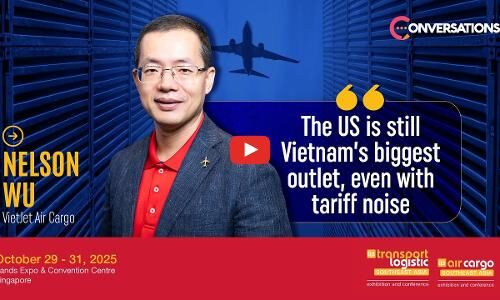
The article discusses a conversation between Nelson Wu, Managing Director of VietJet Air Cargo, and Rajarshi Chatterjee, Assistant Editor at STAT Publishing Group, at transport logistic and air cargo Southeast Asia 2025 in Singapore. Wu discusses how changing tariffs, geopolitics, and shifting trade patterns are reshaping air cargo flows from Vietnam. Specifically, he highlights the impact of tariff-driven volatility on apparel, footwear, and electronics exports. VietJet Air Cargo, acting as a belly carrier, is responding to these changes through agility and adaptation.
Key Points:
- Recent tariff volatility has significantly impacted exports of apparel, footwear, and electronics from Vietnam.
- VietJet Air Cargo, as a belly carrier, is responding to these changes with agility and adaptation.
- The conversation took place at the transport logistic and air cargo Southeast Asia 2025 conference in Singapore.
Actionable Takeaways:
-
Adaptation Strategies for Air Cargo Companies: VietJet Air Cargo’s response to tariff volatility through agility suggests a broader industry trend towards flexible operational strategies. Air cargo companies should consider implementing agile logistics and supply chain management practices to mitigate the impact of tariff changes and geopolitical shifts. This could involve diversifying routes, optimizing cargo loads, and enhancing real-time tracking and communication systems to adapt swiftly to market changes.
-
Importance of Geopolitical Awareness in Logistics: The discussion underscores the critical role of geopolitical factors in shaping air cargo flows. Logistics and cargo companies should invest in geopolitical risk assessment tools and maintain a proactive stance on international trade policies. This awareness can help in anticipating market shifts, adjusting cargo routes, and ensuring compliance with evolving trade regulations, thereby safeguarding business continuity and profitability.
Contextual Insights:
The article reflects the current dynamics of the global air cargo industry, particularly in Southeast Asia, where economic and political factors play a crucial role in shaping trade patterns. The focus on tariff volatility and its impact on specific export categories highlights the sensitivity of air cargo flows to economic policies. As the travel industry continues to evolve, with increasing emphasis on sustainability and digital transformation, companies like VietJet Air Cargo are at the forefront of adapting to these changes. The insights provided are relevant for travel startups and fintech innovators, as they underscore the need for flexible, technology-driven solutions to navigate the complexities of modern logistics. The forward-looking perspective suggests that embracing agility, geopolitical awareness, and technological innovation will be key to sustaining growth and competitiveness in the travel and logistics sectors.
Read the Complete Article.


