












Comprehensive Summarization:
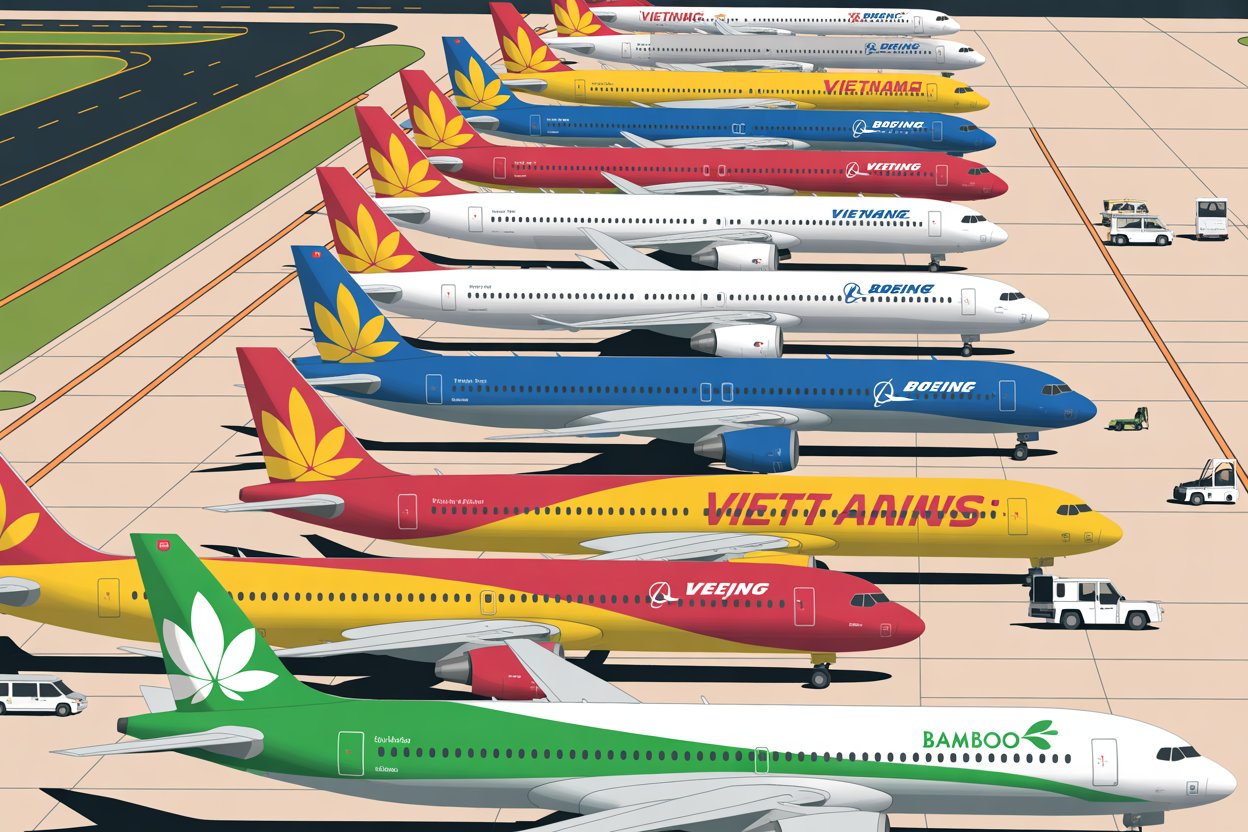
Vietnam Airlines, Sun PhuQuoc Airways, and VietJet have collectively signed nearly a hundred Boeing aircraft deals worth over $30 billion during a high-level visit by Vietnam’s Communist Party General Secretary Tô Lâm to Washington, D.C. This significant investment in Boeing aircraft underscores the robust growth trajectory of Vietnam’s aviation sector, reflecting strategic partnerships and a commitment to expanding domestic and international air travel capabilities. The article, published on February 21, 2026, highlights the strategic importance of these deals in bolstering Vietnam’s position in the global aviation market and underscores the ongoing advancements in air travel infrastructure within the region.
Key Points:
- Vietnam Airlines, Sun PhuQuoc Airways, and VietJet have signed nearly a hundred Boeing aircraft deals worth more than $30 billion.
- These agreements were finalized during a visit by Vietnam’s Communist Party General Secretary Tô Lâm to Washington, D.C.
- The investments signify a major expansion in Vietnam’s aviation infrastructure and capabilities.
- The deals reflect a strategic commitment to enhancing both domestic and international air travel services.
Actionable Takeaways:
-
Strategic Expansion in Aviation: The significant investment in Boeing aircraft by Vietnam’s major airlines indicates a strategic expansion in the aviation sector. For stakeholders in the travel industry, this presents an opportunity to explore partnerships or collaborations with Vietnamese airlines to tap into the growing domestic and international travel demand. This could involve joint ventures, shared services, or investment opportunities in airport infrastructure and air travel technology.
-
Market Growth and Investment Opportunities: The $30 billion worth of aircraft deals highlight a robust growth trajectory in Vietnam’s aviation market. Investors and industry players should consider the potential for increased market share and revenue growth by aligning with or investing in Vietnamese airlines. This could include offering financing solutions, technology partnerships, or marketing collaborations to capitalize on the expanding air travel market.
-
Technological and Infrastructure Advancements: The acquisition of Boeing aircraft, known for their advanced technology and reliability, suggests a focus on modernizing Vietnam’s air travel infrastructure. Industry professionals should monitor technological advancements in aviation and consider how these innovations can be integrated into their operations. This may involve adopting new aircraft technologies, improving air traffic management systems, or enhancing passenger experience through state-of-the-art amenities.
Contextual Insights:
The article’s context is deeply rooted in the current global trends of aviation expansion and strategic partnerships in the travel industry. The visit of Vietnam’s Communist Party General Secretary Tô Lâm to Washington, D.C., underscores the diplomatic and economic ties between Vietnam and the United States, which are pivotal in facilitating large-scale investments in the aviation sector. This context is crucial for understanding the broader implications of the aircraft deals, as it reflects a strategic alignment between Vietnam’s economic development goals and its aspirations to become a significant player in the global air travel market.
Moreover, the emphasis on Boeing aircraft, a leading manufacturer in the aviation industry, highlights the importance of technological innovation and reliability in modern air travel. This aligns with the broader trend of integrating advanced technologies in the travel sector, such as digital ticketing, in-flight entertainment systems, and sustainable aviation fuels. For professionals in the travel industry, these insights suggest a forward-looking perspective on the adoption of cutting-edge technologies to enhance operational efficiency, passenger satisfaction, and competitive advantage.
In summary, the article provides a clear picture of Vietnam’s aggressive expansion in the aviation sector, driven by strategic investments in Boeing aircraft. The actionable takeaways emphasize the opportunities for industry stakeholders to engage with Vietnamese airlines, capitalize on market growth, and leverage technological advancements to drive innovation and growth in the travel sector. Understanding the contextual backdrop of diplomatic and economic partnerships further enriches the analysis, offering a comprehensive view of the evolving landscape of global air travel.
Read the Complete Article.


