












Comprehensive Summarization:
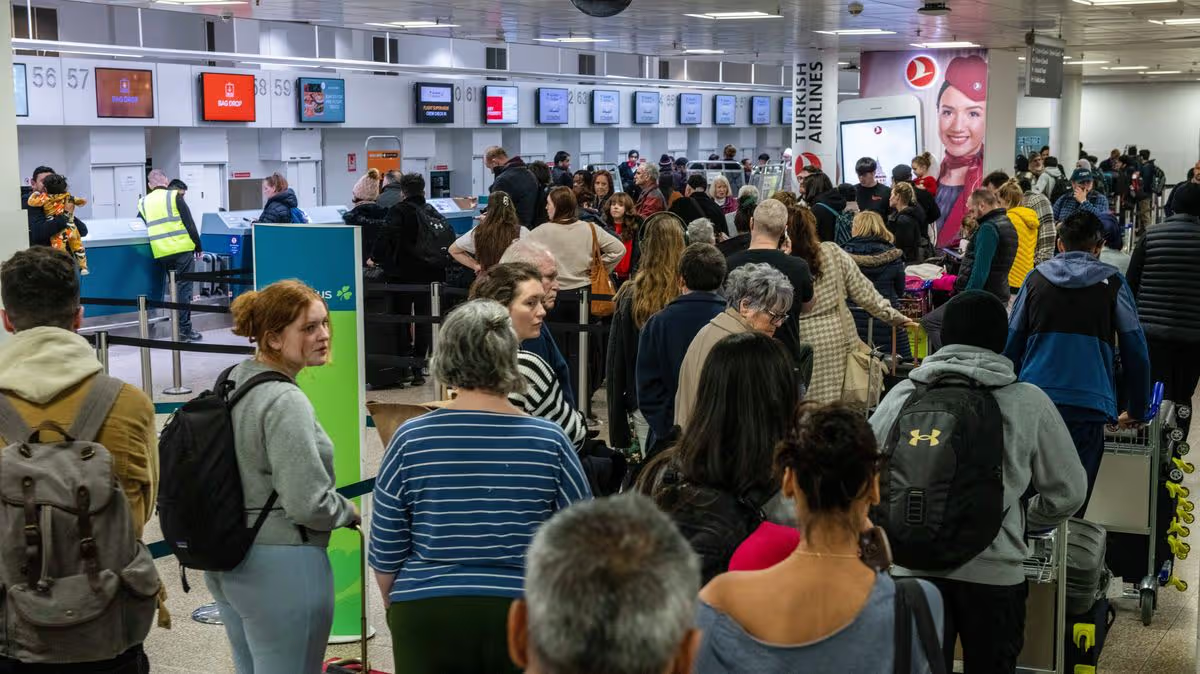
The article discusses the ongoing uncertainty surrounding global jet fuel shortages and its impact on major UK budget airlines such as Ryanair, easyJet, Jet2, and Wizz Air. These airlines have issued statements expressing their confidence in maintaining normal flight operations despite the challenges posed by the fuel shortages. The context provided includes recent travel trends and insights from thought leaders, highlighting the post-pandemic recovery of air travel, particularly in regions like China and India, and the anticipated record travel demand in the US during the holiday season. The article also features a photo of airline passengers queuing for check-in at Birmingham Airport, emphasizing the current travel situation and the potential for disruption this summer.
Key Points:
- Major UK budget airlines (Ryanair, easyJet, Jet2, and Wizz Air) are issuing statements amid global jet fuel shortages.
- The airlines express confidence in maintaining normal flight operations despite the fuel shortages.
- The article references the post-pandemic recovery of air travel, noting increased travel demand in China, India, and the US during the holiday season.
- A photo of airline passengers queuing for check-in at Birmingham Airport is included to illustrate the current travel situation and potential disruptions.
Actionable Takeaways:
-
Fuel Price Volatility Impact: Budget airlines’ confidence in normal operations despite fuel shortages highlights the need for airlines to develop contingency plans for fuel price volatility. This could involve hedging strategies, diversifying fuel suppliers, or exploring alternative fuel sources to mitigate risks associated with fuel price fluctuations.
-
Regional Travel Trends: The article’s mention of increased travel demand in China, India, and the US during the holiday season underscores the importance of regional travel trends in shaping airline strategies. Airlines should focus on understanding and capitalizing on these trends to optimize routes, pricing, and capacity planning, ensuring they meet the evolving demands of global travelers.
-
Innovation in Travel Tech: The challenges posed by jet fuel shortages and the need for airlines to maintain operations suggest a growing emphasis on innovation in travel technology. This includes the development of more efficient flight operations, advanced fuel management systems, and digital solutions to enhance customer experience and operational resilience. Airlines that invest in and adopt cutting-edge travel tech are likely to gain a competitive edge in navigating the current industry challenges.
Contextual Insights:
The article’s focus on budget airlines and the current fuel shortage situation is deeply rooted in the post-pandemic recovery of air travel. The resurgence in travel demand, particularly in regions like China, India, and the US, reflects a broader trend of pent-up travel desires post-COVID-19. This context is crucial for understanding the urgency and scale of the challenges faced by airlines like Ryanair, easyJet, Jet2, and Wizz Air. Furthermore, the inclusion of a photo of passengers queuing at Birmingham Airport serves as a tangible reminder of the operational pressures airlines are under, emphasizing the need for immediate and strategic responses to fuel shortages. The article also aligns with current industry trends, such as the increasing focus on sustainability and the search for alternative fuels to reduce carbon emissions. As airlines grapple with fuel shortages, there is a parallel push towards more sustainable aviation practices, which could open new avenues for innovation and collaboration within the travel sector.
Read the Complete Article.



