













Sail Through Time: Discover the Timeless Wonders of Upper Egypt Aboard Kenzy Dahabeya
Experience the magic of the Nile aboard Kenzy Dahabeya, a luxury boutique sailing cruise that offers an unforgettable journey between...
Read moreDetails
STR Weekly Insights: 14-20 September 2025
Article Summary:
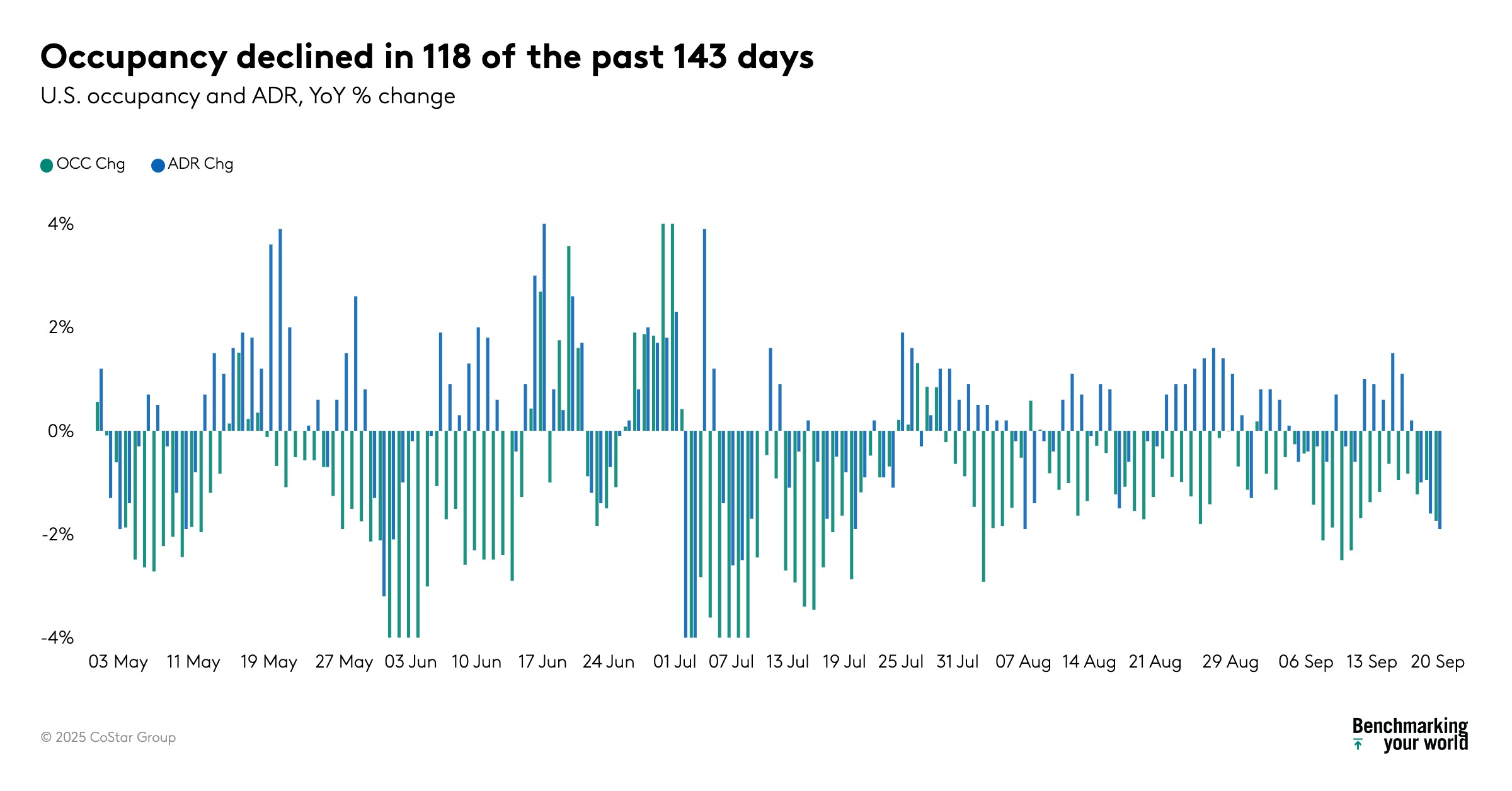
The STR Weekly Insights for 14-20 September 2025 highlight a concerning trend in the U.S. travel market with a continued decline in weekly RevPAR, despite a positive global RevPAR. The U.S. occupancy rate has dropped significantly, with ADR only increasing over inflation five times. The top 25 markets are identified as contributors to the U.S. RevPAR decrease. Notably, Germany experienced a growth week due to events, while Canada’s growth streak continued across most markets except one. The article also touches on global travel trends and insights from thought leaders, emphasizing the importance of adapting to changing market conditions and leveraging technological advancements.
Key Points:
Actionable Takeaways:
Adapt to Market Conditions: Travel businesses should closely monitor occupancy rates and adjust pricing strategies accordingly to mitigate the impact of declining RevPAR. This is crucial as the U.S. market shows a significant drop in occupancy, which directly affects revenue.
Leverage Global Growth Opportunities: While the U.S. market faces challenges, global RevPAR remains positive. Travel companies can explore opportunities in markets like Germany, where growth due to events has been observed. This suggests a potential for diversification and tapping into international markets to offset domestic declines.
Innovate with Technology: The article underscores the importance of technological advancements in travel. Companies should invest in data analytics and AI-driven solutions to better understand market trends, optimize pricing, and enhance customer experiences. This aligns with the need to adapt to changing market dynamics and stay competitive.
Contextual Insights:
The decline in U.S. RevPAR and occupancy rates, coupled with a positive global trend, highlights the volatility and complexity of the travel industry. The focus on the top 25 markets as contributors to the U.S. RevPAR decrease suggests that localized strategies, such as leveraging events and festivals, can be pivotal in reviving market performance. Furthermore, the continued growth in Canada, despite challenges elsewhere, indicates that regional strategies can yield positive results. As the industry evolves, embracing technological innovations and adapting to regional nuances will be key to sustaining growth and maintaining competitiveness.
Read the Complete Article.
Experience the magic of the Nile aboard Kenzy Dahabeya, a luxury boutique sailing cruise that offers an unforgettable journey between...
Read moreDetails



