













Comprehensive Summarization:
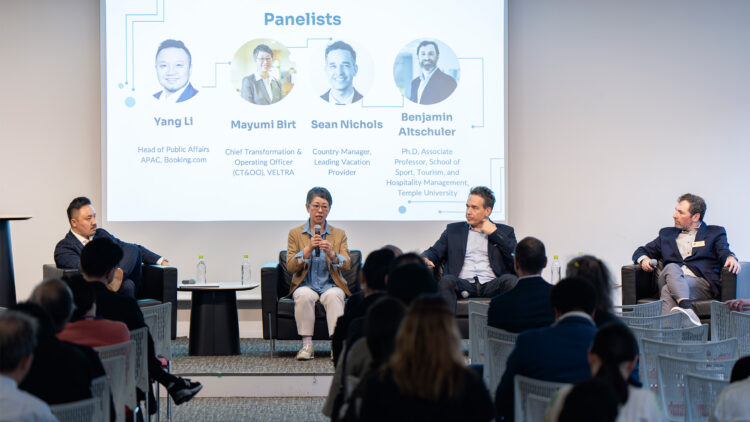
The article reports on a joint tourism industry event held at Temple University Japan Campus (TUJ) on March 30, 2026, in collaboration with Booking.com Japan. The event featured a panel discussion and a networking session aimed at students and industry professionals. The panel focused on how digital transformation is reshaping traditional hospitality and addressing challenges such as overtourism. The Tourism, Hospitality and Event Management program at TUJ, which gained significant interest since its 2023 launch and was further boosted by the opening of TUJ Kyoto, was prominently featured. The event provided a platform for industry leaders to share insights and for students to engage with these leaders, reflecting on the evolving business landscape of the tourism industry.
Key Points:
- Joint event between TUJ and Booking.com Japan held on March 30, 2026.
- Panel discussion centered on digital transformation in hospitality and challenges like overtourism.
- TUJ’s Tourism, Hospitality and Event Management program saw increased interest post-2023 launch, with momentum from TUJ Kyoto’s opening.
- Event aimed to engage students with industry leaders and foster networking opportunities.
Actionable Takeaways:
-
Embrace Digital Transformation: The article underscores the importance of digital transformation in the hospitality sector. Travel companies and startups should invest in technology to stay competitive and address challenges such as overtourism. This includes leveraging data analytics, AI for personalized experiences, and sustainable practices to mitigate environmental impacts.
-
Leverage International Partnerships: The collaboration between TUJ and Booking.com Japan highlights the value of international partnerships in education and industry. Travel startups and fintech companies can benefit from forming alliances with educational institutions to gain insights into industry trends and nurture future talent.
-
Focus on Student Engagement and Networking: The event’s emphasis on networking between industry professionals and students suggests that fostering connections early in careers can significantly impact industry growth. Travel startups should prioritize building relationships with educational institutions to identify and nurture emerging talent, ensuring a pipeline of skilled professionals ready to tackle industry challenges.
Contextual Understanding:
The article reflects the ongoing evolution of the tourism industry, particularly in response to digital transformation and sustainability challenges. The launch of TUJ Kyoto and the increased interest in the Tourism, Hospitality and Event Management program indicate a growing demand for professionals equipped with digital skills and a deep understanding of sustainable practices. This aligns with broader industry trends where technology and sustainability are becoming central to business strategies. The focus on digital transformation and the challenges of overtourism highlights the need for innovative solutions that enhance guest experiences while minimizing environmental impact. As the travel industry continues to recover and adapt post-pandemic, these insights are crucial for startups and established companies alike to navigate the changing landscape effectively.
Handling Different Article Types:
The article is a news brief, providing factual information about a recent industry event and its implications. The structured approach ensures that the summary, key points, and actionable takeaways are directly derived from the article’s content, maintaining accuracy and relevance. For similar articles, the same methodology can be applied, ensuring that the output remains fact-based and aligned with the article’s context.
Read the Complete Article.



