












Comprehensive Summarization:
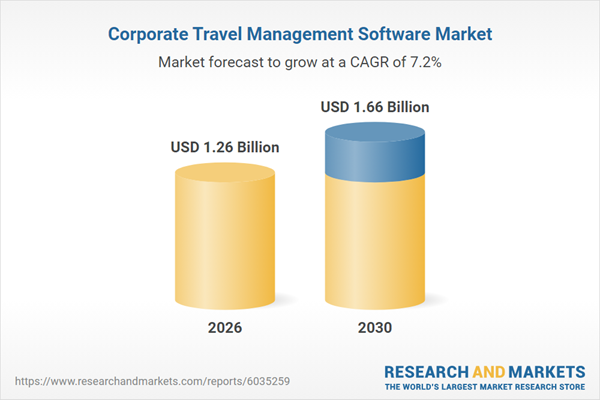
The “Corporate Travel Management Software Market Report 2026” has been added to ResearchAndMarkets.com’s offering. This report provides vital statistics on the global corporate travel management software market, including its size, regional dynamics, and detailed competitor analytics. The market has been experiencing robust growth, with its value predicted to expand from $1.17 billion in 2025 to $1.26 billion in 2026, at a Compound Annual Growth Rate (CAGR) of 7.5%. This growth is attributed to the shift away from manual travel management, increased business travel volumes, the need for cost reduction, and the early adoption of digital solutions that emphasize travel policy compliance. Looking ahead, the market is expected to reach $1.66 billion by 2030, with a CAGR of 7.2%. Key growth drivers include the integration of AI and machine learning for travel optimization, cloud-based platforms, real-time data analytics, mobile-first management, and prioritization of travel policy compliance.
Key Points:
- The corporate travel management software market is experiencing robust growth, with a predicted expansion from $1.17 billion in 2025 to $1.26 billion in 2026, and an expected market value of $1.66 billion by 2030.
- The growth is driven by the shift away from manual travel management, increased business travel volumes, the need for cost reduction, and the adoption of digital solutions that emphasize travel policy compliance.
- Key growth drivers include the integration of AI and machine learning for travel optimization, cloud-based platforms, real-time data analytics, mobile-first management, and prioritization of travel policy compliance.
Actionable Takeaways:
- Adopt Cloud-Based Travel Management Solutions: Companies should consider transitioning to cloud-based travel management software to leverage real-time data analytics, mobile-first management, and AI-driven travel optimization. This shift can lead to significant cost reductions and improved compliance with travel policies.
- Invest in AI and Machine Learning Capabilities: Organizations should prioritize the integration of AI and machine learning technologies in their travel management systems. These technologies can enhance travel optimization, streamline processes, and provide valuable insights into travel patterns and costs.
- Focus on Travel Policy Compliance: With the increasing emphasis on travel policy compliance, companies should ensure their travel management software solutions prioritize adherence to organizational policies. This can help in reducing unnecessary expenses and ensuring that travel aligns with corporate objectives.
Contextual Insights:
The growth of the corporate travel management software market is indicative of a broader trend in the travel industry towards digital transformation. The shift from manual to digital solutions is driven by the need for efficiency, cost reduction, and compliance with travel policies. The integration of AI and machine learning represents a significant technological advancement, enabling more sophisticated travel optimization and real-time data analytics. This trend is likely to continue, with cloud-based platforms and mobile-first management solutions becoming standard in the industry. For travel startups and fintech companies, there is a clear opportunity to innovate in areas such as travel policy compliance, AI-driven travel optimization, and cloud-based platforms. These innovations can provide a competitive edge and meet the evolving needs of businesses in the digital age.
Read the Complete Article.



