












Comprehensive Summarization:
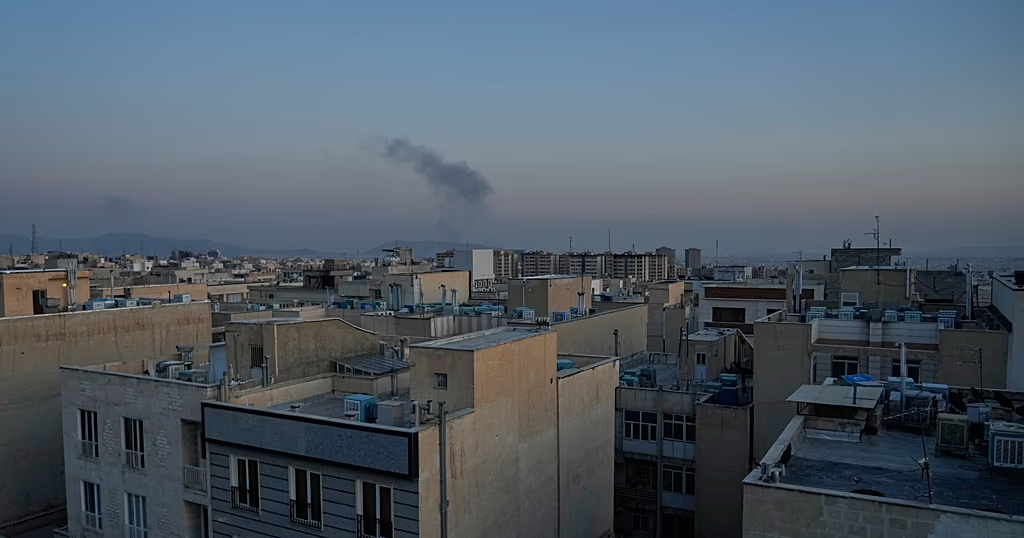
The article reports on intensified airstrikes targeting Tehran, the capital of Iran, on Saturday. These strikes follow earlier explosions in the morning and appear to have targeted downtown Tehran and government buildings. The attacks are attributed to both Israel and the United States. US President Donald Trump has threatened “very hard strikes” if Iran does not surrender unconditionally, a stance rejected by Iranian President Masoud Pezeshkian, who emphasized adherence to international law and human frameworks. The article also touches on the latest travel trends and insights from industry thought leaders, though these are not detailed within the provided text.
Key Points:
- Intensified airstrikes hit Tehran, Iran, on Saturday, targeting downtown areas and government buildings.
- The attacks are claimed by both Israel and the United States.
- US President Donald Trump has vowed “very hard strikes” if Iran does not surrender unconditionally.
- Iranian President Masoud Pezeshkian rejected the idea of unconditional surrender, emphasizing commitment to international law and human frameworks.
- The article mentions the latest travel trends and insights from industry thought leaders, though specific details are not provided in the excerpt.
Actionable Takeaways:
-
Monitor Geopolitical Developments: The ongoing airstrikes and threats of further military action between Israel, the United States, and Iran have significant geopolitical implications. Travel and business organizations should closely monitor these developments to assess potential impacts on travel safety, visa restrictions, and international trade routes. This proactive monitoring can help mitigate risks and adjust travel plans accordingly.
-
Enhance Cybersecurity Measures: The threat of airstrikes and military action underscores the importance of robust cybersecurity measures for travel companies and startups operating in the region. Implementing advanced cybersecurity protocols can protect sensitive data, communications, and operations from potential cyber threats associated with heightened geopolitical tensions.
-
Explore Alternative Travel Routes: Given the heightened tensions and the possibility of further escalations, travel companies may need to explore alternative routes and destinations to ensure the safety of their clients. This could involve reevaluating travel itineraries, partnering with local guides familiar with current safety conditions, and leveraging technology to provide real-time updates on travel advisories and safety protocols.
Contextual Insights:
The article’s context is deeply rooted in the current geopolitical tensions between Israel, the United States, and Iran. These tensions have far-reaching implications for the travel industry, particularly in terms of safety, security, and operational logistics. The threat of airstrikes and military action not only poses direct risks to travelers but also creates uncertainty that can affect travel planning and investment decisions.
In the realm of travel tech, startups focusing on safety and security solutions are likely to see increased demand. Innovations such as real-time threat monitoring systems, secure communication platforms, and AI-driven risk assessment tools are becoming increasingly relevant. These technologies can help travel companies and individuals navigate the complexities of travel during periods of heightened geopolitical instability.
Moreover, the article’s mention of the latest travel trends and insights from thought leaders suggests a forward-looking perspective on the industry. As the travel sector continues to evolve, integrating insights from experts can provide valuable guidance on adapting to new challenges and opportunities. For instance, thought leaders may highlight the growing importance of digital nomadism, sustainable travel practices, and the role of fintech in facilitating secure financial transactions for travelers.
In summary, while the article provides a factual account of recent events in Tehran, its broader implications for the travel industry are significant. By focusing on actionable insights and contextual understanding, stakeholders can better navigate the current landscape and prepare for future developments.
Read the Complete Article.



