












Comprehensive Summarization:
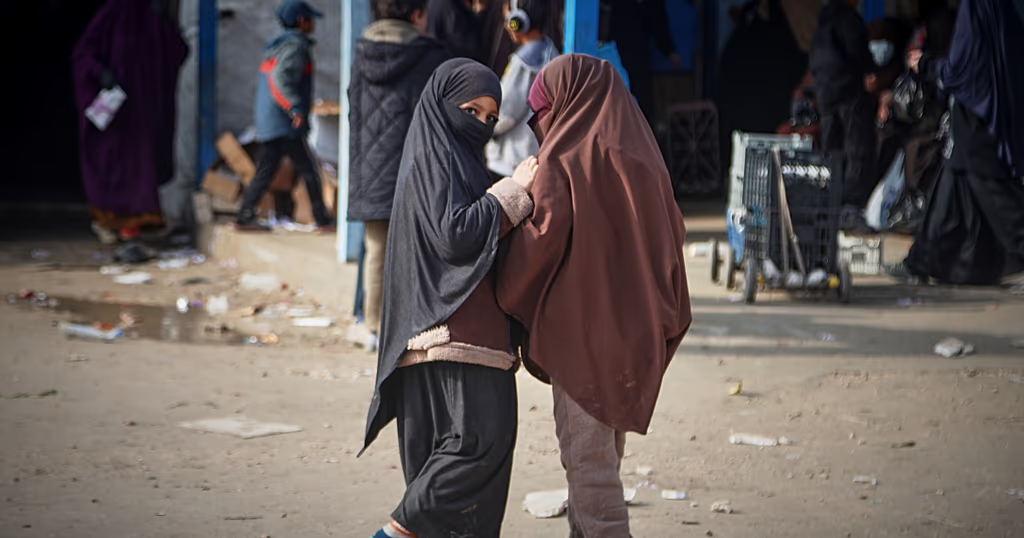
The article reports on a camp near Syria’s border with Iraq, known as Roj camp, which houses over two thousand people who have been detained there for nearly a decade. Many of these individuals are wives or widows of former Islamic State fighters who were defeated in 2019, effectively ending their self-declared caliphate in parts of Iraq and Syria. Foreign women residing in Roj camp are currently seeking amnesty following a government offensive this month that weakened the Kurdish-led force guarding the camp. The army has captured most of the territory previously controlled by the Syrian Democratic Forces, including al-Hol camp, which houses nearly 24,000 people.
Key Points:
- Roj camp near Syria’s border with Iraq houses over two thousand people detained for nearly a decade.
- Many detainees are wives or widows of former Islamic State fighters defeated in 2019.
- Foreign women in Roj camp are seeking amnesty after a government offensive weakened the Kurdish-led force guarding the camp.
- The army has captured most of the territory previously held by the Syrian Democratic Forces, including al-Hol camp, which houses nearly 24,000 people.
Actionable Takeaways:
-
Amnesty Process and Its Implications: The potential amnesty for women in Roj camp could lead to a significant demographic shift, impacting the camp’s dynamics and the broader humanitarian response. This development underscores the importance of flexible and adaptive policies in managing complex refugee situations, particularly those involving former combatants.
-
Strategic Military Offensives: The success of the government offensive in weakening the Kurdish-led force highlights the effectiveness of strategic military actions in altering geopolitical landscapes. This trend suggests that similar tactics could be leveraged in other conflict zones, emphasizing the need for intelligence-driven military strategies to achieve political objectives.
Contextual Insights:
The situation at Roj camp is deeply intertwined with broader geopolitical shifts in the Middle East, particularly the decline of the Islamic State’s territorial control. This development reflects a larger trend of state-led counterterrorism operations aimed at dismantling extremist groups and rehabilitating former combatants. From a travel industry perspective, such geopolitical changes can have profound implications for regional tourism, security protocols, and humanitarian aid logistics. For instance, the potential amnesty could lead to increased travel to the region as former detainees seek to rebuild their lives, presenting both opportunities and challenges for travel startups and fintech innovations in facilitating safe and secure travel arrangements. Additionally, the ongoing military engagements underscore the importance of fintech solutions in managing financial transactions for displaced populations, ensuring they have access to essential services without falling victim to exploitation.
Read the Complete Article.



