












Comprehensive Summarization:
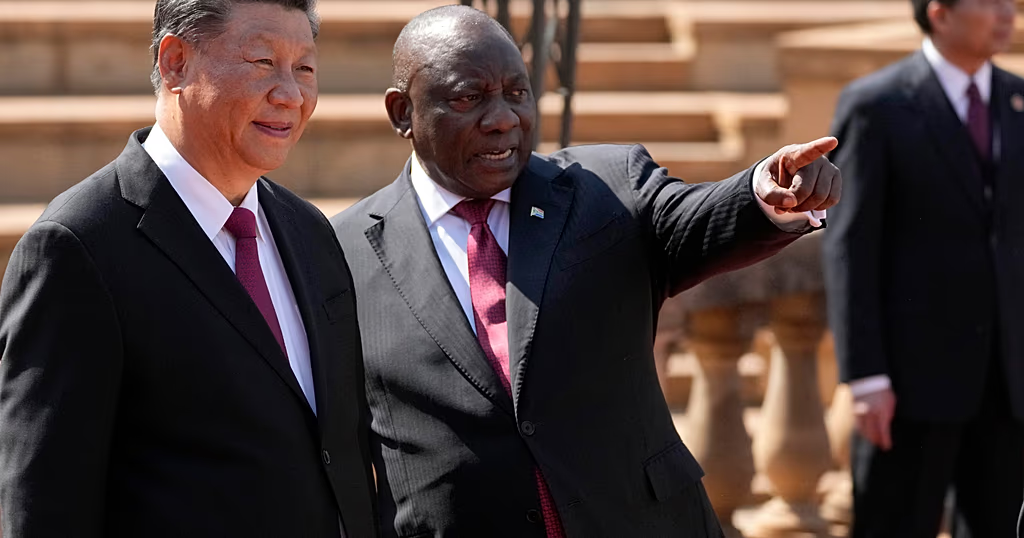
The article discusses a significant policy shift by China, which has granted tariff-free access to its market for Africa’s 20 largest economies, including South Africa, Egypt, Nigeria, Algeria, and Kenya, for the next two years. This move comes as the United States, under President Donald Trump’s protectionist policies, seeks to impose new import taxes. The China deal covers 53 out of Africa’s 54 nations, with Eswatini being the sole exception due to its diplomatic stance. The context highlights the ongoing global trade dynamics, particularly the contrasting approaches of China and the U.S., and their implications for African economies. It also touches on the broader travel industry trends and insights from thought leaders, emphasizing the importance of staying informed on trade policies and their potential impact on travel and related sectors.
Key Points:
- China has implemented a policy granting tariff-free access to its market for Africa’s 20 largest economies for the next two years.
- The policy covers 53 out of Africa’s 54 nations, including major economies like South Africa, Egypt, Nigeria, Algeria, and Kenya.
- Eswatini is the only African nation not eligible for tariff-free treatment due to its diplomatic stance.
- The policy contrasts with the U.S.’s push for protectionism, which includes seeking to impose new import taxes.
- The article underscores the importance of understanding global trade dynamics and their implications for the travel industry.
Actionable Takeaways:
-
Leverage Tariff-Free Access: Companies operating in the travel sector, particularly those targeting African markets, should explore opportunities to leverage the tariff-free access granted by China. This could involve increasing market penetration, expanding product offerings, or enhancing service delivery to capitalize on the favorable trade conditions.
-
Monitor U.S. Trade Policies: Given the U.S.’s shift towards protectionism, businesses should closely monitor changes in import taxes and tariffs. This will help in strategizing supply chain management, pricing strategies, and identifying potential market shifts that could impact travel-related goods and services.
-
Diversify Market Strategies: The article highlights the importance of understanding global trade dynamics. Travel companies should consider diversifying their market strategies to include regions with favorable trade policies, thereby mitigating risks associated with protectionist measures and ensuring sustained growth.
Contextual Insights:
The policy shift by China reflects a broader trend of countries seeking to bolster their economic influence through trade agreements, especially in regions with significant growth potential like Africa. This move aligns with the current global emphasis on trade liberalization and the need for countries to diversify their economic partnerships. In the context of the travel industry, such trade policies can significantly impact market access, consumer behavior, and investment opportunities. For instance, the tariff-free access to China’s market could open new avenues for travel companies looking to expand their footprint in Africa, potentially leading to increased tourism, trade, and cultural exchange. Moreover, the contrast with the U.S.’s protectionist stance underscores the need for travel businesses to remain agile and adaptable, ready to pivot their strategies in response to evolving trade landscapes. This context is crucial for professionals in the travel industry to make informed decisions and capitalize on emerging opportunities while navigating potential challenges.
Read the Complete Article.



