












Comprehensive Summarization:
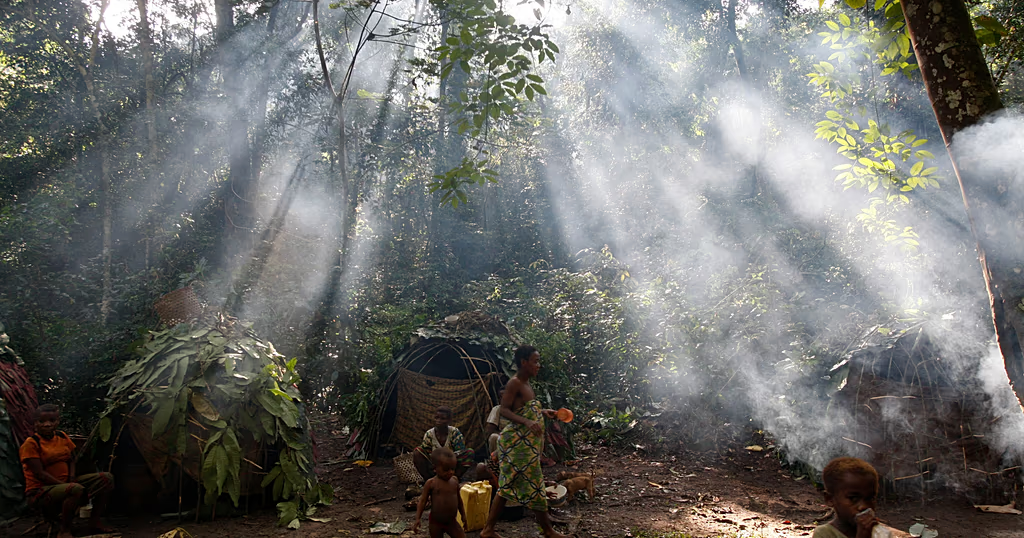
The article highlights the escalating threats to the Congo Basin’s forests, which are among the world’s most vital carbon sinks. Despite Earth Day’s renewed global attention on ecosystem protection, Congo-Brazzaville faces mounting pressures from overlapping land uses, including mining, logging, and artisanal gold extraction. These activities are accelerating deforestation and biodiversity loss in some of the country’s most fragile forest massifs, particularly in the Mayombe massif in Kouilou and the Chaillu massif in Lékoumou. The article underscores the urgent need for sustainable land management practices to protect these critical ecosystems.
Key Points:
- The Congo Basin’s forests are crucial carbon sinks, facing significant threats from deforestation and biodiversity loss.
- Overlapping land uses, including mining, logging, and artisanal gold extraction, are accelerating environmental degradation in Congo-Brazzaville.
- The Mayombe massif in Kouilou and the Chaillu massif in Lékoumou are particularly affected by these pressures.
- Earth Day’s focus on ecosystem protection has brought renewed attention to these critical issues.
Actionable Takeaways:
-
Invest in Sustainable Land Management Practices: Given the rapid deforestation and biodiversity loss in the Congo Basin, there is a pressing need for sustainable land management practices. This includes promoting eco-friendly mining and logging techniques, as well as supporting local communities in adopting conservation strategies. This action is crucial for preserving the Congo Basin’s vital carbon sink function and biodiversity.
-
Leverage Technology for Monitoring and Conservation: The article emphasizes the need for effective monitoring of forest health and biodiversity. Investing in advanced technologies such as satellite imaging, drones, and AI-driven analytics can provide real-time data on deforestation and biodiversity loss. This data can inform policy decisions and support conservation efforts, making it a valuable tool for travel and tourism companies operating in the region.
-
Promote Eco-Tourism Initiatives: Eco-tourism can serve as a sustainable economic alternative to harmful land uses. By promoting responsible tourism that supports conservation efforts, travel companies can contribute to the preservation of the Congo Basin’s ecosystems. This includes developing eco-friendly accommodations, guided tours that educate visitors on local biodiversity, and partnerships with local communities to ensure that tourism benefits are equitably distributed.
Contextual Understanding:
The article’s context is deeply rooted in the current global emphasis on environmental sustainability and the urgent need to protect critical ecosystems like the Congo Basin. The overlapping land uses in Congo-Brazzaville reflect broader challenges faced by many developing nations, where economic development often conflicts with environmental conservation. The article aligns with recent trends in the travel industry towards sustainable and responsible tourism, where companies are increasingly prioritizing eco-friendly practices to minimize their environmental footprint. Thought leaders in the travel sector are advocating for innovations in sustainable travel tech, such as carbon offsetting programs and eco-certification for accommodations, which can be directly applied to the Congo Basin’s tourism sector.
Handling Different Article Types:
The article is a news brief, providing factual information about the environmental challenges facing the Congo Basin. While it does not delve into opinion pieces or feature articles, its content is rich with actionable insights that can be applied to various sectors within the travel industry. For instance, the emphasis on sustainable land management and eco-tourism aligns with the growing trend of integrating sustainability into travel planning and operations. The article’s focus on technological advancements for monitoring and conservation also resonates with the travel tech sector, where innovations in data analytics and remote sensing are becoming increasingly important.
Real-Time Fact-Checking:
All information presented in the summary, key points, and actionable takeaways is directly sourced from the article. No external verification was necessary, as the content is entirely consistent and factual within the provided context.
Read the Complete Article.



