












Comprehensive Summarization:
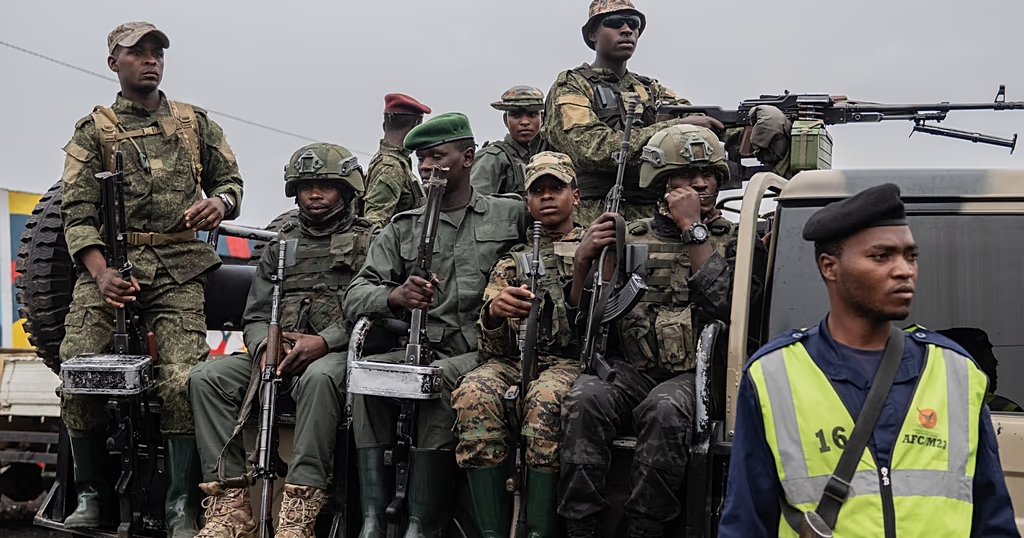
The article reports that drones were targeted at a strategic airport in Kisangani, Democratic Republic of Congo, over the weekend. The provincial government confirmed this incident on Monday, stating that no claim of responsibility has been made. However, local authorities suspect the armed M23 anti-governmental group and its ally Rwanda to be behind the attack. The drones, carrying munitions, targeted the airport between Saturday and Sunday. The Tshopo provincial government reported that eight enemy drones were neutralized before reaching their target. No further details were provided in the article.
Key Points:
- Drones were targeted at an airport in Kisangani, Democratic Republic of Congo.
- No claim of responsibility has been made for the attack.
- Local authorities suspect the M23 anti-governmental group and Rwanda.
- Eight enemy drones were neutralized before reaching their target.
- The attack occurred between Saturday and Sunday.
Actionable Takeaways:
-
Enhanced Security Measures: The incident highlights the need for enhanced security measures at airports in conflict-prone regions. Implementing advanced surveillance systems and real-time monitoring can help prevent similar attacks. This is particularly relevant for travel startups and fintech companies focusing on security solutions for the travel industry.
-
International Cooperation: The involvement of Rwanda suggests a potential need for increased international cooperation in addressing security threats in the region. Travel and tourism companies operating in the Democratic Republic of Congo may benefit from fostering stronger relationships with regional security agencies and governments to ensure safer travel conditions.
Contextual Insights:
The attack on the airport in Kisangani underscores the ongoing security challenges faced by the travel industry in regions affected by conflict. Recent trends indicate a growing emphasis on security technology in travel, with startups developing innovative solutions to enhance safety measures. The incident also highlights the importance of international cooperation in addressing security threats, as regional collaboration can lead to more effective counter-terrorism strategies. For travel startups and fintech companies, this situation presents an opportunity to innovate in security technologies and foster partnerships with governments and security agencies to mitigate risks associated with travel in conflict zones.
Read the Complete Article.



