












Comprehensive Summarization:
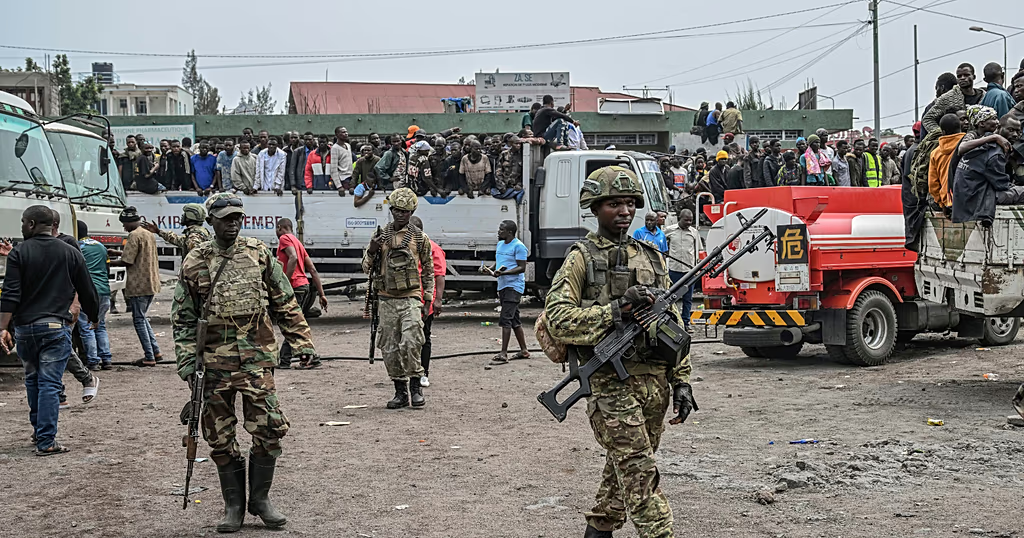
The article reports on the resumption of fighting between the Congolese army and the paramilitary group AFC-M23 in eastern Democratic Republic of Congo (DRC), despite a ceasefire proposal last week by Angola’s President João Lourenço. Both sides are accusing each other of violations, with Kinshasa alleging that the rebels aim to strengthen their position while continuing diplomatic talks. Mayor of Uvira, Kifara Kapenda Kyk’y, provides insight into the situation, stating that the Congolese government is genuinely seeking peace, whereas the rebels are focused on conquest and looting in the occupied areas.
Key Points:
- Fighting has resumed between the Congolese army and the AFC-M23 in eastern DRC, despite a ceasefire proposal.
- Both sides are accusing each other of ceasefire violations.
- Kinshasa accuses the rebels of seeking to strengthen their position, while the rebels claim they are focused on diplomatic talks.
- Mayor of Uvira, Kifara Kapenda Kyk’y, comments on the government’s respect for peace versus the rebels’ focus on conquest and looting.
Actionable Takeaways:
-
Ceasefire Violations and Diplomatic Implications: The resumption of fighting despite a ceasefire proposal highlights the fragility of peace efforts in the DRC. This situation underscores the need for robust diplomatic engagement and monitoring mechanisms to prevent further escalation. It is crucial for international bodies and stakeholders to closely monitor the situation and provide support to ensure compliance with the ceasefire agreement. This could potentially impact travel safety in the region and influence travel insurance policies.
-
Mayor’s Perspective on Peace vs. Conquest: Mayor Kapenda Kyk’y’s statement about the government’s genuine desire for peace versus the rebels’ focus on conquest and looting provides a nuanced view of the conflict. This insight is valuable for understanding the motivations behind the conflict and could inform strategies for peacebuilding and humanitarian aid. For the travel industry, this suggests a need for enhanced security measures and risk assessments for travelers heading to the DRC, particularly in areas controlled by the rebels.
Contextual Understanding:
The article reflects the ongoing instability in eastern DRC, a region that has been plagued by conflict for decades. The ceasefire proposal by Angola’s President João Lourenço is a significant diplomatic effort to stabilize the region. The involvement of Angola, a neighboring country with its own security challenges, adds a layer of complexity to the conflict dynamics. The mayor’s perspective highlights the differing priorities of the government and the rebels, which is crucial for understanding the underlying causes of the conflict. In the context of the travel industry, this situation underscores the importance of real-time risk assessments and the development of contingency plans for travelers and businesses operating in the region.
Handling Different Article Types:
The article is a news brief, providing factual information about a current conflict situation in the DRC. The analysis focuses on extracting key points and actionable insights directly from the article’s content, without requiring opinion or feature elements. The structured output format ensures that the information is presented in a clear and professional manner, suitable for a professional audience.
markdown
Comprehensive Summarization:
The article reports on the resumption of fighting between the Congolese army and the paramilitary group AFC-M23 in eastern DRC, despite a ceasefire proposal last week by Angola’s President João Lourenço. Both sides are accusing each other of violations, with Kinshasa alleging that the rebels aim to strengthen their position while continuing diplomatic talks. Mayor of Uvira, Kifara Kapenda Kyk’y, provides insight into the situation, stating that the Congolese government is genuinely seeking peace, whereas the rebels are focused on conquest and looting in the occupied areas.
Key Points:
- Fighting has resumed between the Congolese army and the AFC-M23 in eastern DRC, despite a ceasefire proposal.
- Both sides are accusing each other of ceasefire violations.
- Kinshasa accuses the rebels of seeking to strengthen their position, while the rebels claim they are focused on diplomatic talks.
- Mayor of Uvira, Kifara Kapenda Kyk’y, comments on the government’s respect for peace versus the rebels’ focus on conquest and looting.
Actionable Takeaways:
- Ceasefire Violations and Diplomatic Implications: The resumption of fighting despite a ceasefire proposal highlights the fragility of peace efforts in the DRC. This situation underscores the need for robust diplomatic engagement and monitoring mechanisms to prevent further escalation. It is crucial for international bodies and stakeholders to closely monitor the situation and provide support to ensure compliance with the ceasefire agreement. This could potentially impact travel safety in the region and influence travel insurance policies.
- Mayor’s Perspective on Peace vs. Conquest: Mayor Kapenda Kyk’y’s statement about the government’s genuine desire for peace versus the rebels’ focus on conquest and looting provides a nuanced view of the conflict. This insight is valuable for understanding the motivations behind the conflict and could inform strategies for peacebuilding and humanitarian aid. For the travel industry, this suggests a need for enhanced security measures and risk assessments for travelers heading to the DRC, particularly in areas controlled by the rebels.
Contextual Insights:
The article reflects the ongoing instability in eastern DRC, a region that has been plagued by conflict for decades. The ceasefire proposal by Angola’s President João Lourenço is a significant diplomatic effort to stabilize the region. The involvement of Angola, a neighboring country with its own security challenges, adds a layer of complexity to the conflict dynamics. The mayor’s perspective highlights the differing priorities of the government and the rebels, which is crucial for understanding the underlying causes of the conflict. In the context of the travel industry, this situation underscores the importance of real-time risk assessments and the development of contingency plans for travelers and businesses operating in the region.
Read the Complete Article.



