
UN chief urges $1.1 billion to fight Ebola outbreak
THE NEWS: United Nations Secretary‑General António Guterres said an additional $1.1 billion is urgently needed to fight the Ebola outbreak, as the...
Read moreDetailsEvery alert that matters — when it happens.
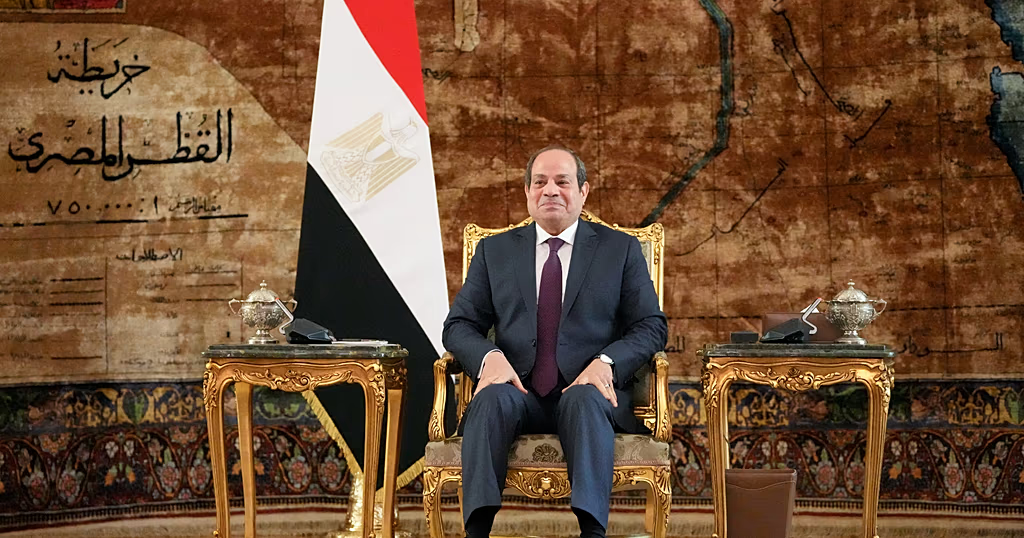
Egypt's inflation expected to slow in January as food prices fall
Comprehensive Summarization:
Egypt’s headline inflation is expected to slow to 11.7% in January from 12.3% in December, according to analysts polled by Reuters. This decrease is attributed to cooling food prices and transport prices. Annual inflation has dropped from a record high of 38% in September 2023, largely due to an $8 billion financial support package signed with the IMF in March 2024. The central bank responded to the slowing inflation by cutting its overnight lending rate by 100 basis points in December. However, there are concerns that an increased money supply could lead to price inflation again. The article also touches on Egypt’s economy, indicating ongoing challenges and the need for careful economic management.
Key Points:
Actionable Takeaways:
Central Bank’s Rate Cut and Inflation Control: The central bank’s decision to cut the overnight lending rate by 100 basis points in December is a proactive measure to control inflation. This action is likely to provide immediate relief to consumers and businesses by reducing borrowing costs, thereby stimulating economic activity. However, the long-term impact will depend on the effectiveness of other economic policies and the sustainability of the reduced inflation rate.
Financial Support Package’s Role: The $8 billion financial support package signed with the IMF in March 2024 played a crucial role in bringing down inflation to a more manageable level. This package likely provided much-needed liquidity to the economy, stabilizing prices and supporting consumer confidence. For stakeholders in the travel industry, this could mean a more favorable economic environment for travel investments and consumer spending.
Contextual Insights:
The article reflects the current economic challenges Egypt is facing, particularly in controlling inflation, which is a critical factor for any economy’s stability and growth. The slowdown in inflation, coupled with the central bank’s rate cut, indicates a concerted effort to stabilize the economy. This context is particularly relevant for the travel industry, as economic stability directly impacts consumer spending and travel behavior. For instance, lower inflation rates can lead to increased disposable income, encouraging more people to travel. Additionally, the central bank’s actions suggest a cautious approach to managing the economy, which could influence investor confidence in travel-related startups and fintech innovations. As the travel industry continues to evolve, staying abreast of such economic developments is crucial for making informed strategic decisions.
Read the Complete Article.
THE NEWS: United Nations Secretary‑General António Guterres said an additional $1.1 billion is urgently needed to fight the Ebola outbreak, as the...
Read moreDetails

Experience the magic of the Nile aboard Kenzy Dahabeya, a luxury boutique sailing cruise that offers an unforgettable journey between...
Read moreDetails