












Comprehensive Summarization:
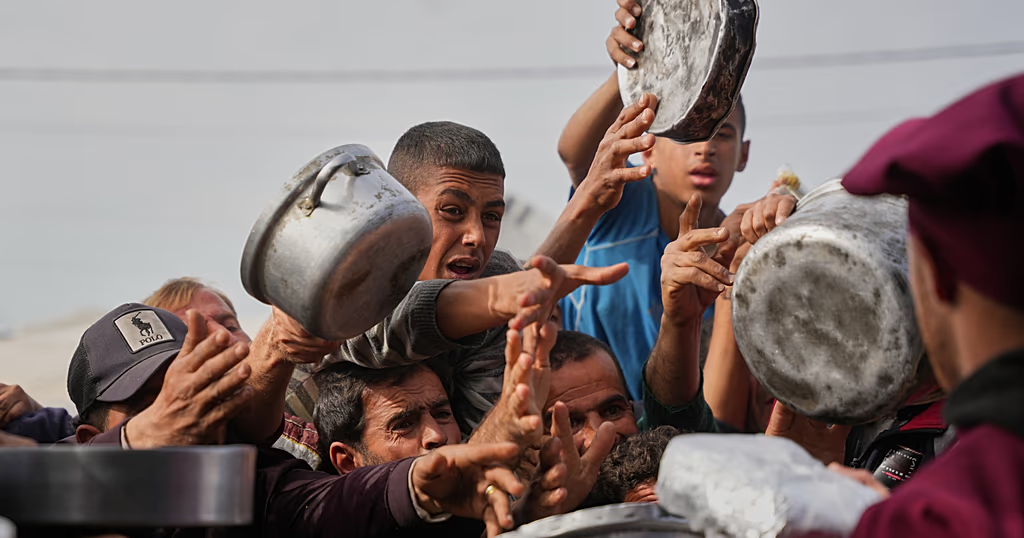
The article highlights the ongoing struggle of Palestinians in Gaza amidst the harsh winter weather and the continuous bombardment by Israel. Almost four months into a US-brokered ceasefire, the majority of the population still resides in makeshift shelters, with limited income and access to food and water. A group of residents in the Muwasi tent camp in southern Gaza was seen collecting drinking water in plastic bottles and jerrycans, illustrating the daily challenges they face. The situation underscores the dire need for humanitarian aid and the resilience of the Palestinian people in the face of adversity.
Key Points:
- Palestinians in Gaza are enduring a severe humanitarian crisis due to ongoing bombardment and harsh winter conditions.
- The population is living in makeshift shelters, with limited access to basic necessities like food, water, and income.
- Residents are forced to walk long distances daily to fetch clean drinking water, highlighting the dire water scarcity situation.
- The situation is exacerbated by the tenuous ceasefire, which has not significantly improved living conditions.
Actionable Takeaways:
-
Enhanced Humanitarian Aid Efforts: There is an urgent need for increased humanitarian aid to Gaza, focusing on providing clean water, shelter, and basic necessities. This could involve partnerships between international organizations, NGOs, and governments to ensure efficient distribution and monitoring of aid.
-
Investment in Water Infrastructure: Given the critical water scarcity issue, investing in sustainable water infrastructure in Gaza could be transformative. This could include desalination plants, water purification systems, and improved distribution networks to ensure reliable access to clean water for the population.
-
Strengthening Local Economies: Supporting local economies in Gaza through microfinance initiatives or small business grants could help alleviate income shortages. This would empower residents to generate their own income, reducing dependency on external aid and fostering self-sufficiency.
Contextual Insights:
The article reflects the current state of the travel industry’s humanitarian aspect, particularly in conflict zones. The ongoing crisis in Gaza underscores the importance of travel tech solutions that can facilitate safe and efficient aid distribution. Innovations in fintech, such as mobile payment systems, could play a crucial role in ensuring that aid reaches those in need quickly and securely. Additionally, the resilience of the Palestinian people highlights the potential for travel startups to focus on sustainable tourism initiatives that support local communities in rebuilding and recovery efforts. Expert opinions suggest that leveraging technology for humanitarian purposes can significantly enhance the effectiveness of aid delivery and foster long-term stability in conflict-affected regions.
Read the Complete Article.



