



No products in the cart.
- Latest
- Trending

Humanitarian workers face rising attacks in Eastern DR Congo
Article Summary:
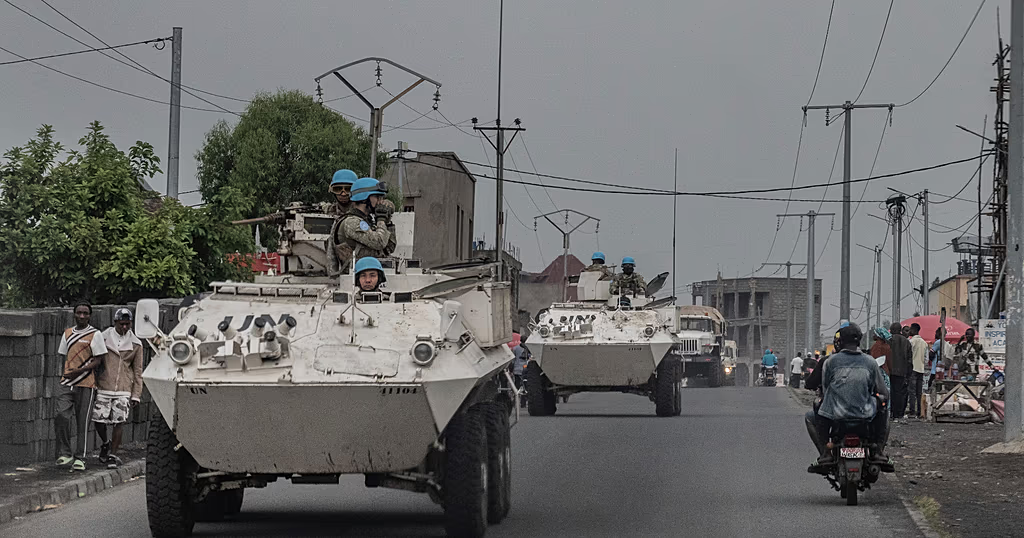
In eastern Democratic Republic of Congo (DR Congo), humanitarian workers are facing increasing risks due to rising insecurity in the region. According to OCHA, the UN’s Office for the Coordination of Humanitarian Affairs, 48 incidents involving aid personnel were recorded in December 2025, with half occurring in South Kivu, ten more cases than in November. North Kivu and Ituri follow, reflecting long-standing instability in the area. These provinces have been plagued for years by clashes between government forces, local militias, and armed groups vying for control of territory and resources, leaving civilians and aid workers in a precarious situation. Most of the incidents in December involved burglaries and thefts.
Key Points:
Actionable Takeaways:
Contextual Insights:
The article highlights the ongoing challenges faced by humanitarian workers in eastern DR Congo, where insecurity remains a significant barrier to effective aid delivery. The rise in incidents involving aid personnel underscores the urgent need for improved security measures to protect both workers and the populations they serve. This situation is emblematic of broader trends in conflict-affected regions, where instability often impedes humanitarian efforts and exacerbates suffering. From a travel industry perspective, this context emphasizes the importance of developing innovative solutions for safe and efficient travel to conflict zones. This includes leveraging technology for secure communication, real-time risk assessment, and the deployment of secure logistics solutions. Additionally, the article aligns with current industry trends towards the integration of technology in travel and logistics, particularly in sectors dealing with humanitarian aid and disaster response. By adopting these forward-looking insights, the travel industry can better support humanitarian missions and contribute to conflict resolution efforts.
Read the Complete Article.
Get curated travel AI insights — choose the newsletters that matter to you.
This spot is reserved for brands with a compelling story for the travel trade. They use this space to cut...
Read moreDetailsTravel One Technologies launches the world’s first Traveler DNA Platform, targeting the structural data gap at the core of an...
Read moreDetails