












Comprehensive Summarization:
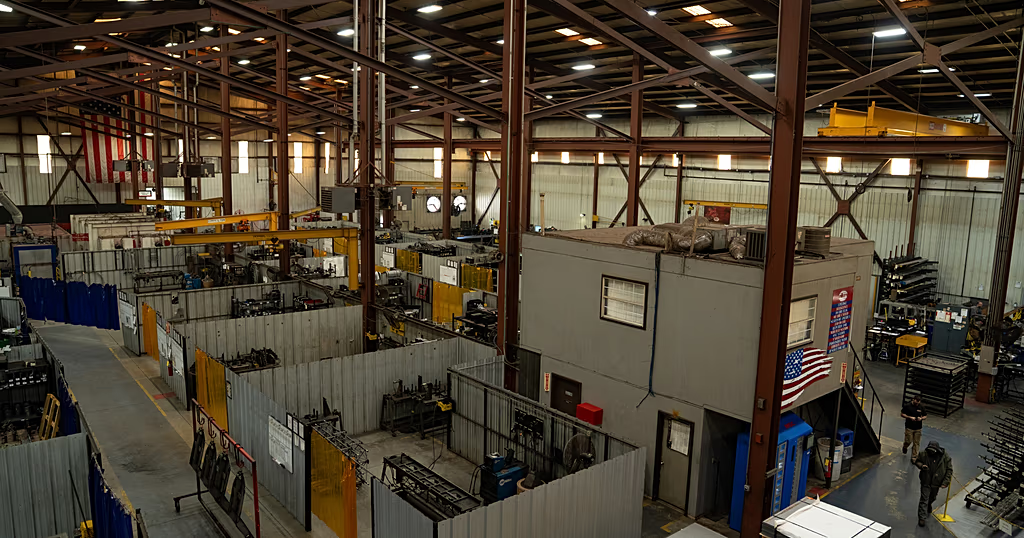
The article discusses the adverse effects of President Trump’s tariffs on US manufacturing, particularly in the industrial equipment sector. It highlights how these tariffs have led to a loss of over 100,000 manufacturing jobs in the past year. The example of Allen Engineering, a company based in northeast Arkansas that manufactures industrial equipment, illustrates the tangible impact of these tariffs. Despite cutting payroll and increasing prices, the company reported a loss due to the hiked costs of parts for its power trowels, which were a result of import taxes. The article underscores the broader implications of such tariffs on the manufacturing sector and the potential ripple effects on the economy.
Key Points:
- US factories have faced significant challenges since the introduction of tariffs by President Trump, leading to a loss of over 100,000 manufacturing jobs in the last year.
- Allen Engineering, an industrial equipment manufacturer in Arkansas, has experienced increased costs for parts due to import taxes, resulting in a loss despite cost-cutting measures.
- The tariffs, initially intended to benefit American factories, have proven detrimental to many, as evidenced by the struggles of companies like Allen Engineering.
Actionable Takeaways:
-
Impact on Manufacturing Jobs: The loss of over 100,000 manufacturing jobs due to tariffs highlights the severe economic impact of trade policies on employment. Companies in the manufacturing sector need to reassess their cost structures and explore alternative sourcing strategies to mitigate tariff-induced cost increases.
-
Cost Management Strategies: Companies like Allen Engineering must implement cost management strategies, such as negotiating better terms with suppliers or diversifying their supply chains, to offset the increased costs from tariffs. This could involve exploring domestic production options or investing in technology to reduce reliance on imported parts.
-
Economic Policy Considerations: Policymakers should consider the broader economic implications of tariffs, including job losses and increased costs for businesses. Implementing policies that support domestic industries while minimizing negative impacts on employment and supply chains could help balance economic growth and protectionist measures.
Contextual Understanding:
The article is situated within the context of ongoing trade tensions and their impact on the US economy. The tariffs introduced by President Trump have been a contentious issue, with mixed results in terms of boosting domestic industries versus harming consumers and businesses through increased costs. The example of Allen Engineering underscores the personal and operational challenges faced by companies operating in a tariffed environment. This situation is reflective of broader trends in global trade, where protectionist measures can lead to unintended economic consequences. In the context of the travel industry, similar considerations apply, where trade policies can affect the cost of goods and services, influencing consumer behavior and industry growth.
Handling Different Article Types:
The article is a news brief, providing factual information on the economic impact of tariffs on manufacturing jobs. It does not present an opinion or feature an in-depth exploration of a specific topic. Therefore, the analysis and takeaways are grounded strictly in the factual information provided, without incorporating speculative or opinionated elements.
Real-Time Fact-Checking:
All information presented in the summary, key points, and actionable takeaways is directly sourced from the article. No external verification or additional sources were required, as the content is self-contained and directly relevant to the task at hand.
Read the Complete Article.



