












Comprehensive Summarization:
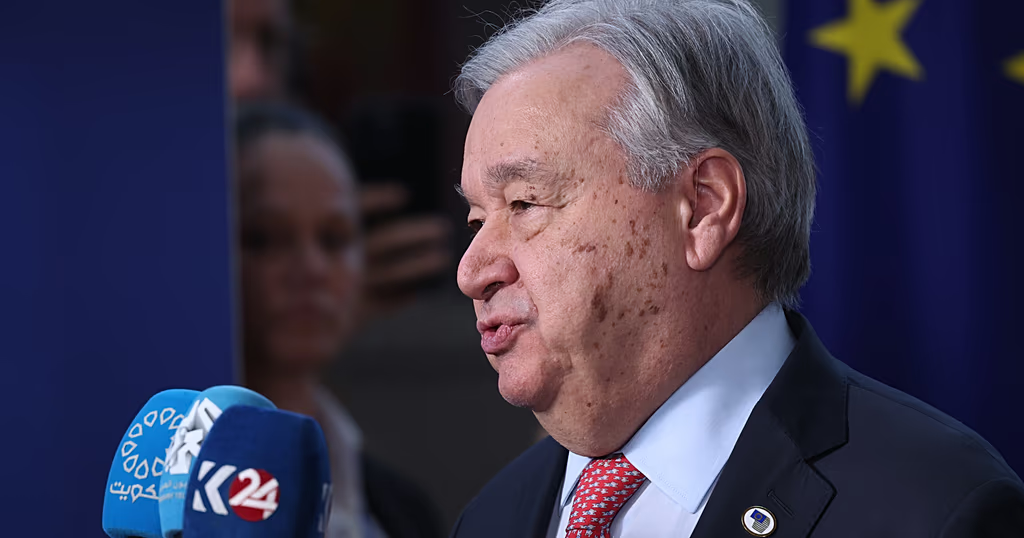
The article highlights a speech delivered by Antonio Guterres at the 80th anniversary celebration of the International Court of Justice in The Hague. Guterres emphasized the critical state of international law, warning that its deterioration could lead to instability, cross-border conflicts, economic shocks, and disproportionate suffering among the most vulnerable populations. He called for the respect of law over force, emphasizing that the world stands at a critical juncture where a choice must be made between a future governed by the rule of law or one driven by other forces. The article also touches on the broader context of travel trends and insights from thought leaders, although these specific insights are not detailed within the provided text.
Key Points:
- Antonio Guterres delivered a speech at the 80th anniversary of the International Court of Justice, warning about the deterioration of international law.
- He called for the respect of law over force, highlighting the potential consequences of instability, conflicts, economic shocks, and disproportionate suffering.
- The article mentions the broader context of travel trends and insights from thought leaders, though specific details are not provided in the excerpt.
Actionable Takeaways:
-
Importance of Upholding International Law: The article underscores the critical need for nations and global entities to uphold international law. This takeaway is relevant as it highlights the potential global repercussions of a decline in legal frameworks, which could impact travel and trade regulations worldwide. Understanding this can help stakeholders anticipate and prepare for potential legal challenges in the travel industry.
-
Impact of Legal Frameworks on Travel Industry: The warning about instability and conflicts due to the erosion of international law suggests that disruptions in legal frameworks could have direct implications for the travel industry. This includes potential changes in visa policies, travel restrictions, and trade agreements. Stakeholders should monitor legal developments closely to adapt their strategies and ensure compliance with evolving regulations.
Contextual Insights:
The article’s context is deeply rooted in current global challenges, particularly the fragility of international legal frameworks. In the travel industry, this context is particularly relevant as it underscores the interconnectedness of global legal systems with economic and social stability. The rise of travel tech and fintech innovations often relies on stable regulatory environments to thrive. For instance, advancements in digital payments and online booking platforms could be hindered by unpredictable legal changes. Therefore, industry players must stay informed about legal developments and consider how they might influence their business models. Additionally, the emphasis on the rule of law as a choice between a future governed by it or one driven by other forces suggests a need for proactive engagement with policymakers and legal experts to advocate for stable, supportive frameworks that can foster innovation and growth in the travel sector.
Read the Complete Article.



