












Comprehensive Summarization:
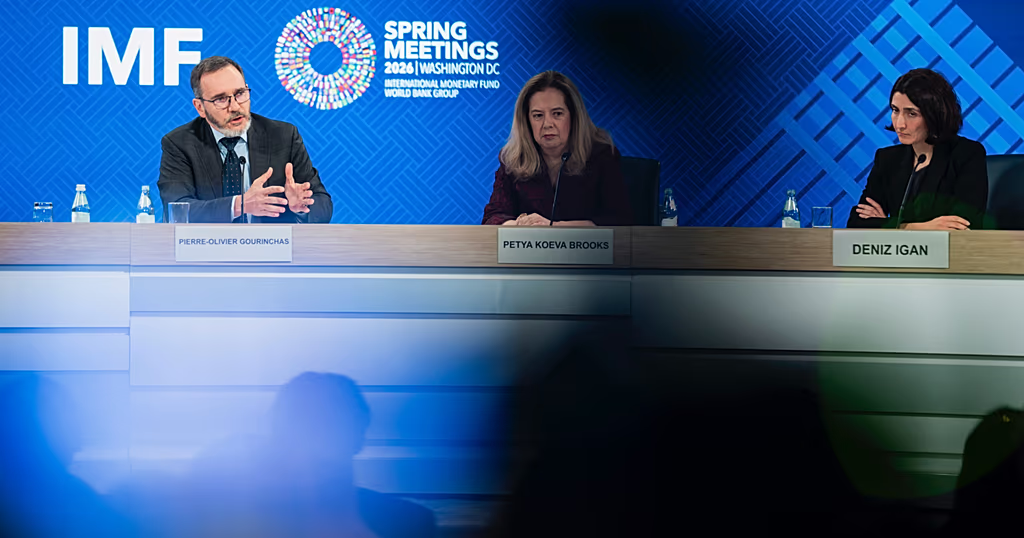
The latest World Economic Outlook from the International Monetary Fund (IMF) presents a concerning outlook for Sub-Saharan Africa, as escalating conflict in the Middle East threatens to derail an already fragile global recovery. At the 2026 Spring Meetings, IMF Chief Economist Pierre-Olivier Gourinchas highlighted a significant shift in global momentum, downgrading the growth trajectory from 3.3% to 3.1% for 2026, with inflation projected to rise to 4.4%. Deniz Igan further emphasized the broader implications of the crisis, noting that “with the war, global growth has been reduced,” reinforcing concerns about the global economic slowdown.
Key Points:
- The IMF’s World Economic Outlook indicates a downgrade in global growth projections for 2026, from 3.3% to 3.1%, due to escalating conflict in the Middle East.
- Inflation is projected to climb to 4.4%, reflecting broader economic challenges.
- Deniz Igan underscores the impact of the crisis on global growth, emphasizing the reduction in growth due to the ongoing war.
Actionable Takeaways:
-
Economic Caution for Sub-Saharan Africa: The downgrade in global growth projections suggests that Sub-Saharan Africa should adopt a cautious approach to economic planning and investment. The potential for reduced growth and increased inflation rates necessitates a reevaluation of strategies to mitigate economic risks.
-
Focus on Inflation Management: With inflation projected to rise to 4.4%, businesses and policymakers in affected regions should prioritize strategies to manage inflation effectively. This could involve fiscal policies aimed at controlling spending and investment, as well as monetary policies to stabilize the currency and interest rates.
-
Investment in Resilient Sectors: Given the challenges highlighted by the IMF, there is an opportunity for investment in sectors that are more resilient to economic downturns. This could include sectors such as healthcare, essential services, and technology, which tend to be more stable during economic uncertainties.
Contextual Insights:
The current global economic landscape, as outlined by the IMF, underscores the interconnectedness of regional and international economies. The conflict in the Middle East has introduced significant volatility, impacting global growth trajectories and inflation rates. For the travel industry, this context suggests a need for adaptive strategies that can withstand economic uncertainties. Travel startups and fintech innovations that focus on financial inclusion, digital payment solutions, and risk management could find a niche in supporting businesses and consumers in Sub-Saharan Africa. Additionally, the emphasis on inflation management highlights the importance of fintech solutions that offer stable and accessible financial services, which can help mitigate the impact of rising inflation on consumers and businesses alike.
Read the Complete Article.



