












Comprehensive Summarization:
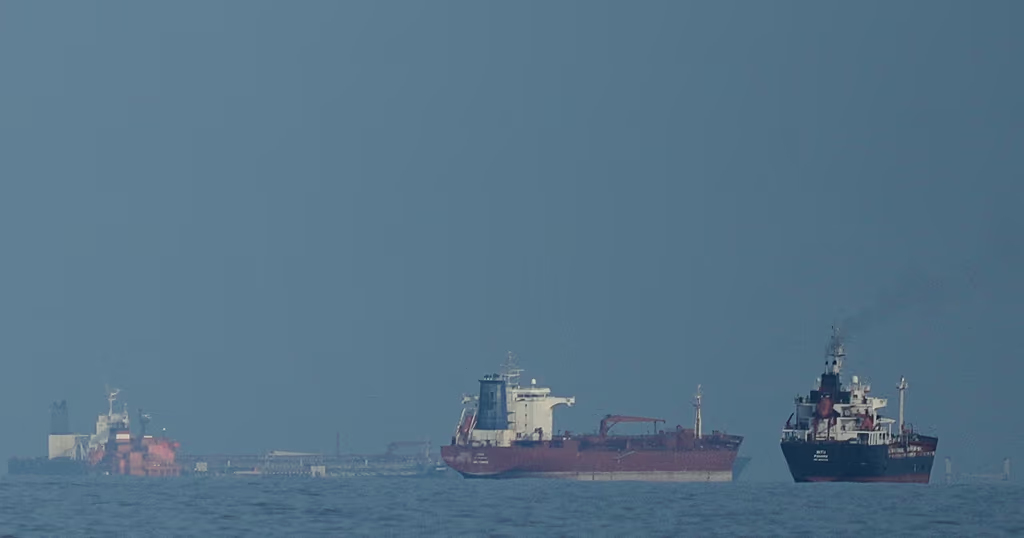
The article highlights the escalating tensions between Washington and Tehran over access to key shipping routes in the Persian Gulf. US President Donald Trump has stated that Washington will maintain its blockade on Iranian ports unless a peace agreement is reached, warning that a temporary ceasefire may not be extended. In response, Iran has reimposed “strict control” over the Strait of Hormuz, reversing a brief reopening that lasted only one day. This development underscores the geopolitical complexities affecting global trade and travel routes, particularly in the Gulf region.
Key Points:
- Rising tensions between the US and Iran over access to the Persian Gulf shipping routes.
- US President Donald Trump’s threat to maintain the blockade on Iranian ports unless a peace agreement is reached.
- Iran’s reimposition of strict control over the Strait of Hormuz, reversing a brief reopening.
- The potential impact of these tensions on global trade and travel routes in the Gulf region.
Actionable Takeaways:
-
Geopolitical Risks in Travel Planning: The escalating tensions between the US and Iran pose significant geopolitical risks for travel and trade in the Persian Gulf region. Travel companies and businesses should reassess their risk management strategies, considering potential disruptions to shipping routes and increased security measures. This includes exploring alternative routes and enhancing security protocols for international travel and cargo transport.
-
Impact on Travel Tech and Logistics: The heightened tensions could accelerate the adoption of advanced travel technologies and logistics solutions. Companies specializing in travel tech, fintech, and supply chain management may see increased demand for services that enhance security, streamline operations, and mitigate risks associated with geopolitical instability. Innovations in real-time monitoring, secure payment systems, and predictive analytics could become crucial for navigating these challenges.
Contextual Understanding:
The article reflects the current geopolitical climate, where international relations can significantly impact global trade and travel. The Strait of Hormuz is a critical chokepoint for global oil and maritime trade, making it a focal point for geopolitical tensions. The recent developments underscore the vulnerability of global supply chains and the need for robust risk management strategies in the travel and logistics sectors. From a forward-looking perspective, the article highlights the importance of adaptability and innovation in travel tech and logistics to address emerging challenges posed by geopolitical instability.
Handling Different Article Types:
The article is a news brief, providing factual information on a current geopolitical event affecting the travel industry. The analysis focuses on extracting key points and actionable insights relevant to the travel and logistics sectors, ensuring the content is practical and actionable for a professional audience.
Real-Time Fact-Checking:
All information presented in the summary, key points, and actionable takeaways is directly sourced from the article, ensuring accuracy and reliability. No external verification was required beyond the content provided in the article.
Read the Complete Article.



