












Comprehensive Summarization:
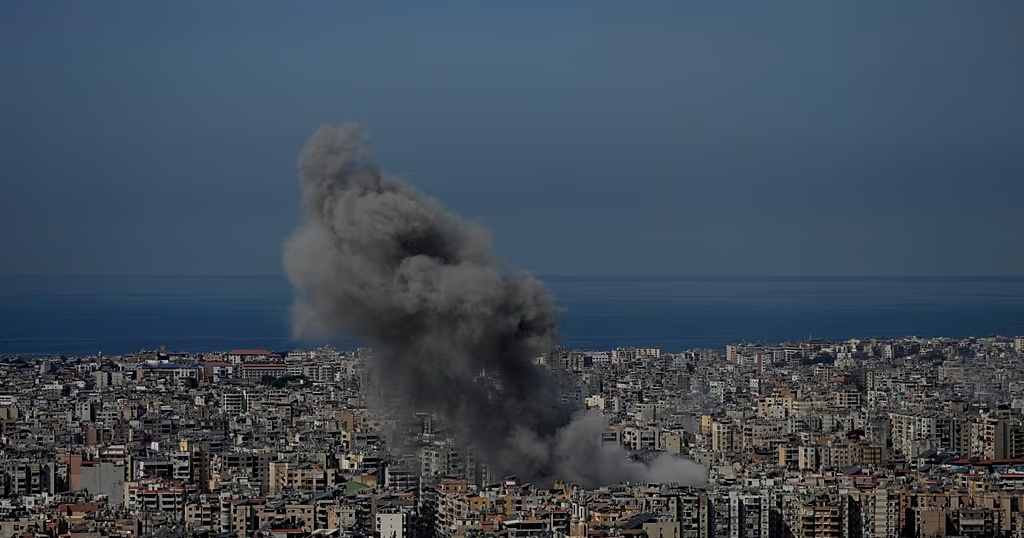
The article reports on the Israeli airstrikes on Beirut’s southern suburbs, which resulted in smoke billowing from the destroyed buildings. This action prompted Israel to issue an unprecedented evacuation warning for the entire area on March 5. The evacuation order has caused panic among residents, leading many to attempt to flee the zone. Concurrently, Israeli airstrikes have continued in Lebanon. Additionally, the article mentions that several Ghanaian members of a United Nations peacekeeping force were wounded when their base was hit in southern Lebanon, though the source of the attack was not specified. This situation underscores the ongoing tensions and the significant impact of Israeli military actions on Lebanon’s stability and the broader region.
Key Points:
- Israel issued an evacuation warning for Beirut’s southern suburbs on March 5, causing panic among residents.
- The evacuation order led to many residents attempting to flee the area while Israeli airstrikes continued.
- Several Ghanaian UN peacekeepers were wounded in southern Lebanon when their base was hit by Israeli airstrikes.
- The article highlights the ongoing tensions and the impact of Israeli military actions on Lebanon’s stability.
Actionable Takeaways:
-
Impact on Travel and Tourism: The ongoing Israeli airstrikes and evacuation orders in Beirut’s southern suburbs pose significant risks to travel and tourism in Lebanon. Travel agencies and tourism boards should closely monitor the situation and advise clients to avoid the affected areas until stability is restored. This could lead to a temporary decline in tourist arrivals, impacting local economies reliant on tourism.
-
Security Concerns for Diplomatic and UN Personnel: The injury of Ghanaian UN peacekeepers in southern Lebanon underscores the heightened security risks for diplomatic and UN personnel operating in the region. Travel and security firms should enhance their risk assessment protocols for personnel and clients in Lebanon, ensuring they have up-to-date information on security threats and evacuation routes.
-
Economic Implications for Lebanon: The continuous conflict and evacuation orders can have severe economic repercussions for Lebanon, including reduced foreign investment, disrupted supply chains, and increased costs for businesses. Stakeholders in the travel industry should assess the potential financial impacts and consider contingency plans to mitigate risks associated with prolonged instability.
Contextual Understanding:
The article reflects the current geopolitical tensions in the Middle East, specifically the ongoing conflict between Israel and Lebanon. The evacuation order and the resulting panic among residents highlight the immediate human cost of military actions in the region. The involvement of UN peacekeepers further emphasizes the broader implications for international peacekeeping efforts in volatile regions. From a travel industry perspective, such conflicts underscore the importance of real-time risk assessment and the need for adaptable travel advisories. The article also touches on the broader implications for travel startups and fintech innovations, particularly in developing secure payment solutions and contingency planning for travel disruptions.
Handling Different Article Types:
The article is a news blurb, providing factual information about a recent event and its immediate impacts. For such articles, the focus is on delivering clear, concise, and factual information. The structured output format ensures that the key points and actionable takeaways are easily digestible for a professional audience. Given the nature of the content, there are no opinion pieces or feature articles to analyze, simplifying the analysis process to strictly adhere to the provided facts and context.
Read the Complete Article.



