












Comprehensive Summarization:
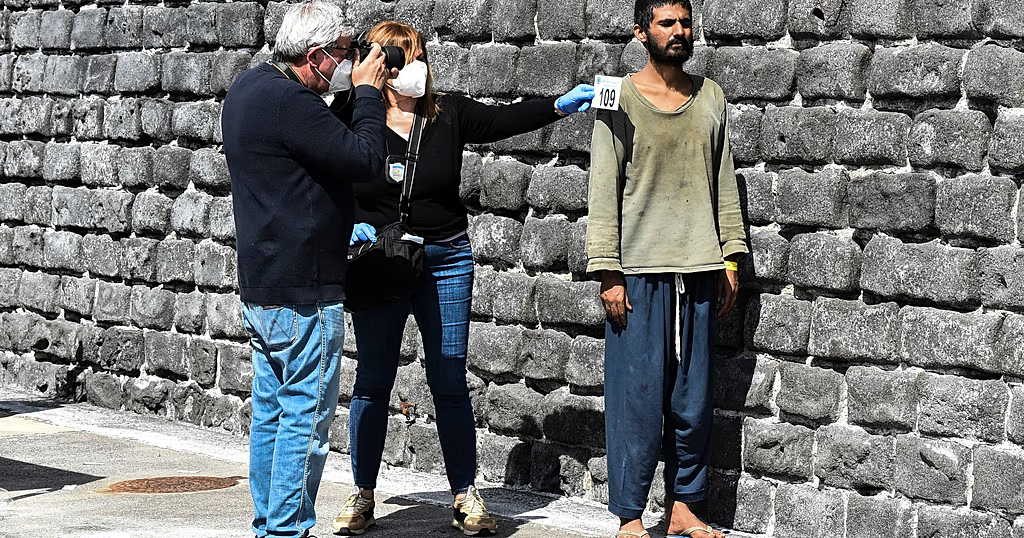
On Friday, six Italian police and coastguard members went on trial for the 2023 shipwreck off the coast of Steccato di Cutro, where at least 94 migrants died, including 35 children. The defendants are accused of involuntary manslaughter for failing to launch rescue operations despite being aware of the boat’s presence for hours. All six defendants have stated their intention to testify. The overcrowded boat had set sail from Turkey, carrying a significant number of migrants. This incident highlights critical issues in the handling of migrant crises and the responsibilities of authorities in such emergencies.
Key Points:
- Six Italian police and coastguard members are on trial for involuntary manslaughter related to a 2023 shipwreck that resulted in at least 94 deaths, including 35 children.
- The defendants are accused of failing to launch rescue operations despite being aware of the boat’s presence for hours.
- The overcrowded boat had set sail from Turkey, carrying a large number of migrants.
- All six defendants have expressed their intention to testify in the trial.
Actionable Takeaways:
-
Enhanced Training for Emergency Response Teams: The trial underscores the critical need for comprehensive training and protocols for emergency response teams, particularly in handling migrant crises. This takeaway is relevant as it highlights the importance of preparedness and quick decision-making in disaster scenarios, which can significantly impact outcomes.
-
Strengthening International Cooperation: The incident emphasizes the necessity for stronger international cooperation in managing migrant flows and maritime emergencies. This takeaway is actionable for travel and tourism sectors, suggesting that collaboration between countries can lead to more effective crisis management and potentially reduce the risks associated with such incidents.
Contextual Insights:
The trial of the Italian police and coastguard members reflects broader challenges within the travel and migration sectors, particularly concerning the safety and handling of migrants at sea. Recent trends indicate a growing emphasis on maritime safety technologies and international protocols to prevent such tragedies. Innovations in maritime surveillance and rescue technologies are becoming increasingly important, as highlighted by thought leaders in the travel industry. The case also points to the need for continuous evaluation and improvement of emergency response strategies, integrating both technological advancements and legal frameworks to better protect vulnerable populations. This contextual analysis aligns with current industry trends focusing on safety, regulation, and international collaboration within the travel and migration sectors.
Read the Complete Article.



