












Comprehensive Summarization:
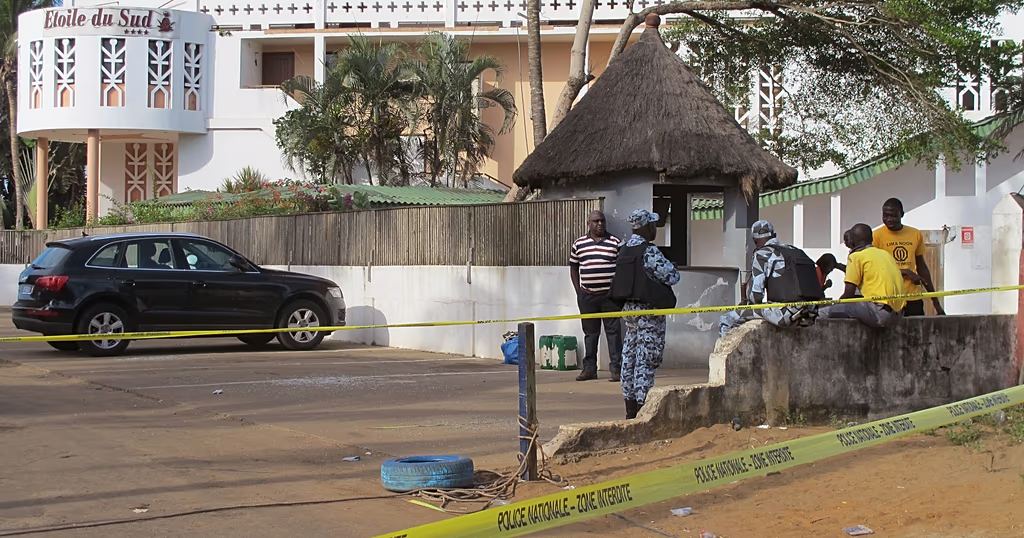
On March 13, 2016, Ivory Coast commemorated the 10th anniversary of a jihadist attack on the popular beach resort of Grand-Bassam, which resulted in the deaths of 19 victims. The attack, carried out by three assailants armed with assault rifles, targeted hotels and lasted for 45 minutes before being stopped by Ivorian security forces. This marks the first jihadist attack in Ivory Coast, a country that has largely avoided the jihadist violence that has plagued neighboring countries like Burkina Faso and Mali. The attack highlights the ongoing security challenges in the region and the resilience of Ivory Coast in maintaining its tourist appeal despite such incidents.
Key Points:
- The 2016 jihadist attack on Grand-Bassam beach in Ivory Coast resulted in the deaths of 19 people.
- The attack was the first of its kind in Ivory Coast, a country that has largely avoided jihadist violence.
- Ivorian security forces successfully neutralized the attackers within 45 minutes of the assault.
- The attack underscores the security challenges faced by Ivory Coast despite its status as a popular tourist destination.
Actionable Takeaways:
-
Enhanced Security Measures in Tourist Destinations: Given the historical context of jihadist attacks in the region, tourist destinations in Ivory Coast and neighboring countries should consider implementing enhanced security measures. This could include increased surveillance, regular security drills, and collaboration with regional security agencies to prevent future attacks. The relevance of this takeaway lies in its potential to safeguard tourist interests and ensure the continued viability of tourism as an economic driver in the region.
-
Regional Cooperation Against Terrorism: The article highlights the contrast between Ivory Coast and its neighbors, Burkina Faso and Mali, which have experienced more frequent jihadist violence. A potential actionable insight is for Ivory Coast to strengthen regional cooperation with these countries to combat terrorism. This could involve sharing intelligence, coordinating security operations, and supporting joint military and intelligence efforts. The impact of this takeaway could be significant in reducing the overall threat level in the region and fostering a safer environment for tourism and trade.
Contextual Understanding:
The article provides a sobering reminder of the ongoing security challenges faced by Ivory Coast, despite its reputation as a popular tourist destination. The fact that this was the first jihadist attack in the country in a decade underscores the resilience of the Ivorian government and security forces. However, it also highlights the need for continued vigilance and investment in security infrastructure to protect tourists and local residents alike. In terms of travel trends, the incident underscores the importance of risk assessment and mitigation strategies in the travel industry. Travel agencies and tour operators may need to reassess their safety protocols and communication strategies to reassure potential visitors about the safety of their destinations.
Handling Different Article Types:
The article in question is a news blurb, providing factual information about a significant event in Ivory Coast’s recent history. The summary, key points, and actionable takeaways are all derived directly from the facts presented in the article. There are no opinion pieces or feature articles in the content, so the analysis is strictly factual and based solely on the information provided.
Read the Complete Article.



