












Comprehensive Summarization:
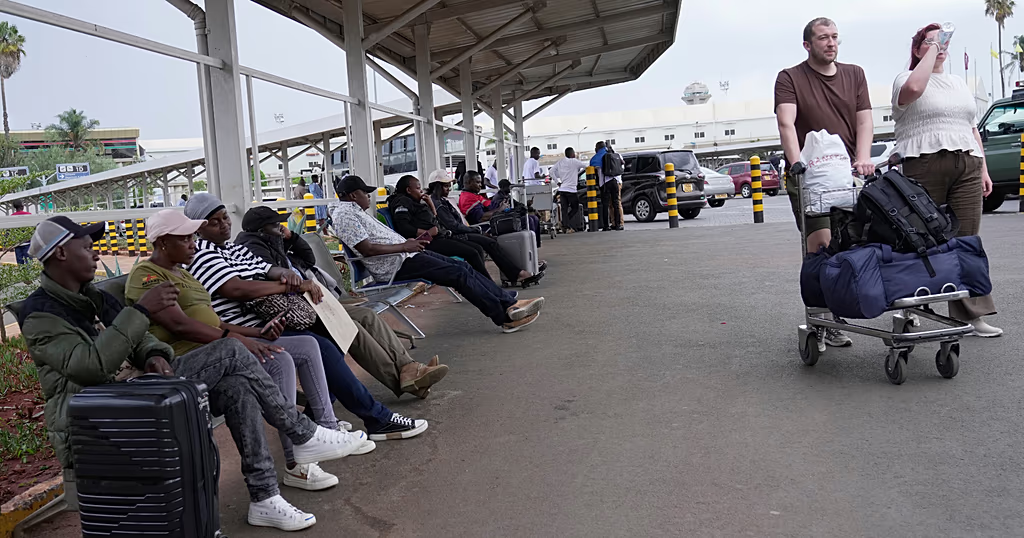
The article reports on a strike at Kenya’s main airport, Jomo Kenyatta International Airport in Nairobi, which has led to delays in flights. The strike is a result of workers demanding better pay and improved work conditions. Kenya Airways, the country’s main airline, issued a travel advisory urging customers to check their flight status before heading to the airport due to operational delays affecting both departures and arrivals. The advisory also stated that flight schedules would have to be adjusted. The article emphasizes the importance of passengers not proceeding to the airport without confirmed flight status.
Key Points:
- A strike at Kenya’s main airport, Jomo Kenyatta International Airport, has caused flight delays.
- The strike is due to workers demanding better pay and improved work conditions.
- Kenya Airways issued a travel advisory advising customers to check their flight status before traveling.
- Air traffic control operational delays are also contributing to the disruptions.
- Flight schedules are expected to be adjusted due to the strike.
Actionable Takeaways:
-
Travel Advisory Importance: The travel advisory issued by Kenya Airways highlights the critical need for customers to verify their flight status before traveling. This underscores the importance of real-time communication in the travel industry, particularly during operational disruptions. It ensures that passengers are informed and can make necessary adjustments to their travel plans, thereby minimizing inconvenience and potential financial losses.
-
Impact on Airline Operations: The strike and subsequent operational delays underscore the vulnerability of airline operations to labor disputes. This situation serves as a reminder for airlines to have contingency plans in place for such events. It could prompt airlines to invest more in labor relations and employee satisfaction to prevent future disruptions, thereby enhancing operational resilience.
Contextual Insights:
The strike at Kenya’s main airport is a reflection of broader trends in the travel industry where labor relations and employee welfare are becoming increasingly important. Recent trends indicate a growing emphasis on worker rights and workplace conditions, not only in the travel sector but across various industries. This case serves as a case study for how labor disputes can directly impact airline operations and customer experience. Furthermore, it highlights the need for the travel industry to adopt more flexible and responsive operational strategies to manage such disruptions effectively. The article also aligns with the growing trend of integrating technology in travel to provide real-time updates and manage operational challenges more efficiently. This could lead to increased investment in travel tech solutions that enhance communication and operational transparency.
Read the Complete Article.



