












Comprehensive Summarization:
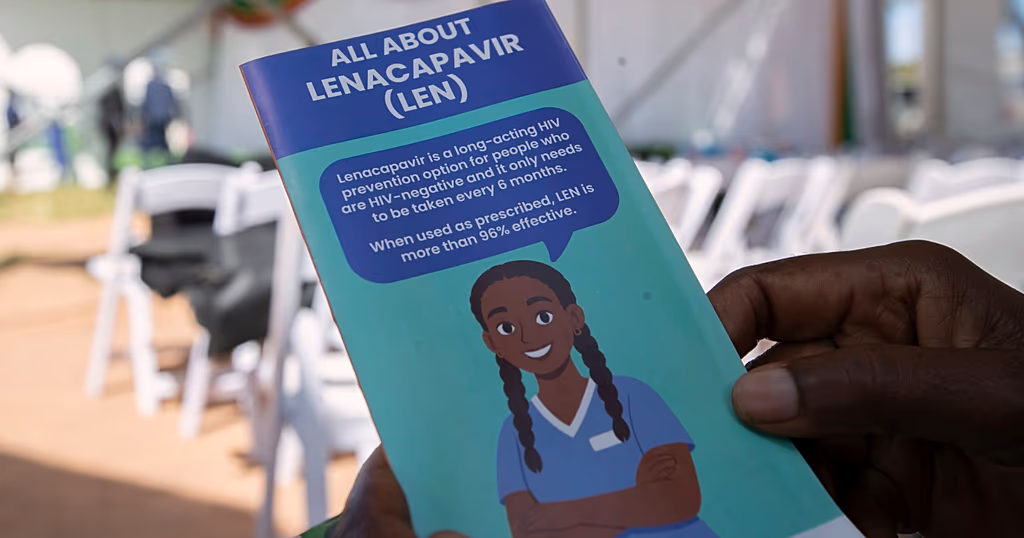
The article reports on Kenya’s initiation of administering lenacapavir, a twice-yearly HIV prevention injection, in a Nairobi slum. This groundbreaking development offers new hope in the country’s fight against HIV, with the drug reducing HIV transmission risk by over 99.9%. Health Minister Aden Duale hailed it as a moment of hope for thousands of Kenyan families, emphasizing that the drug will be provided free of charge. The first recipient, Samson Mutua, and a sex worker, Peace Lawrence, expressed relief and optimism about the new preventive measure.
Key Points:
- Kenya has begun administering lenacapavir, a twice-yearly HIV prevention injection, in a Nairobi slum.
- The drug reduces HIV transmission risk by over 99.9% and will be provided free of charge.
- Health Minister Aden Duale hailed the launch as a moment of hope for thousands of Kenyan families.
- The first recipient, Samson Mutua, and a sex worker, Peace Lawrence, expressed relief and optimism about the new preventive measure.
Actionable Takeaways:
-
Increased Access to HIV Prevention: The introduction of lenacapavir in Kenya provides free access to a highly effective HIV prevention method, potentially reducing new infections and improving public health outcomes. This development underscores the importance of innovative healthcare solutions in combating HIV/AIDS, particularly in resource-limited settings.
-
Impact on Travel and Tourism: As HIV prevention becomes more accessible, there may be a positive impact on travel and tourism in Kenya. Health-conscious travelers might feel more secure visiting the country, potentially boosting tourism numbers. Travel agencies and hospitality businesses could leverage this information to market Kenya as a safe destination for travelers concerned about HIV/AIDS.
Contextual Insights:
The introduction of lenacapavir in Kenya is a significant development in the global fight against HIV/AIDS. This injectable prevention method represents a major advancement in HIV treatment and prevention strategies, offering a more convenient and potentially more effective alternative to traditional antiretroviral therapy. The fact that the drug will be provided free of charge is particularly noteworthy, as it addresses one of the major barriers to HIV prevention: cost. This initiative could serve as a model for other countries facing similar challenges in HIV prevention.
In the context of the travel industry, this development could have several implications. Firstly, it may enhance Kenya’s reputation as a leader in public health and innovation, potentially attracting more health-conscious travelers. Secondly, it could stimulate growth in related sectors such as travel insurance, which often includes coverage for medical emergencies and preventive treatments. Lastly, the initiative highlights the importance of continued investment in healthcare infrastructure and innovation, particularly in regions where HIV/AIDS remains a significant public health challenge.
Handling Different Article Types:
The article in question is a news blurb, providing factual information about a recent development in Kenya’s healthcare sector. The summary, key points, and actionable takeaways are structured accordingly, focusing on factual accuracy and relevance to the travel and healthcare industries. If the article were an opinion piece or feature, the analysis would need to adapt to incorporate the author’s perspective and broader implications, potentially including expert opinions and industry trends. However, given the factual nature of the article, the structured output above adheres strictly to the provided content.
Read the Complete Article.



