




No products in the cart.
- Latest
- Trending

Lagos dredging boom fuels development but sinks fishing livelihoods
Article Summary:
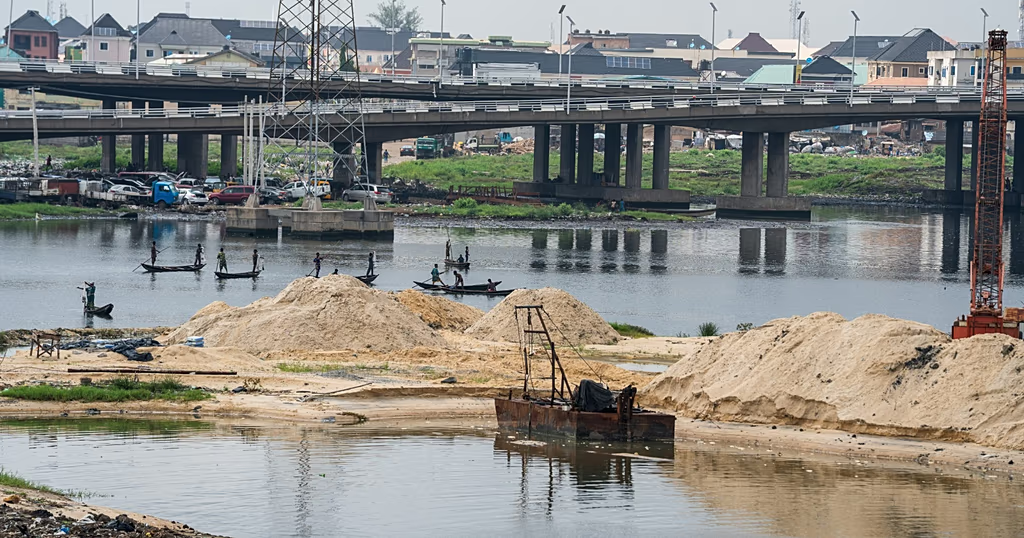
The article discusses the booming dredging industry in Lagos, Nigeria, where men are manually extracting sand from the Lagos Lagoon to support the city’s rapid development. This activity, essential for concrete production and land reclamation, is driven by the city’s fast-growing megacity status. However, the dredging operations pose significant challenges for nearby fishing communities like Makoko, disrupting traditional livelihoods and causing environmental concerns. The dredging process is described as straightforward, with operators using barges to transport extracted sand to various destinations.
Key Points:
Actionable Takeaways:
Contextual Insights:
The dredging industry in Lagos reflects broader trends in urban development and infrastructure expansion in rapidly growing megacities. As cities like Lagos expand, the demand for construction materials like sand increases, driving innovative solutions in extraction and transportation. However, this growth comes with significant environmental and social challenges, particularly for vulnerable communities. The article highlights the need for a balanced approach that integrates economic development with environmental sustainability and social equity. This aligns with current travel industry trends focusing on sustainable tourism and responsible development, where the impact on local communities and ecosystems is a key consideration. Thought leaders in the travel sector are increasingly advocating for practices that ensure tourism development does not come at the expense of local livelihoods or environmental health, making the insights from this article highly relevant for professionals in the travel and tourism industry.
Read the Complete Article.
Get curated travel AI insights — choose the newsletters that matter to you.
This spot is reserved for brands with a compelling story for the travel trade. They use this space to cut...
Read moreDetailsTravel One Technologies launches the world’s first Traveler DNA Platform, targeting the structural data gap at the core of an...
Read moreDetails