












Comprehensive Summarization:
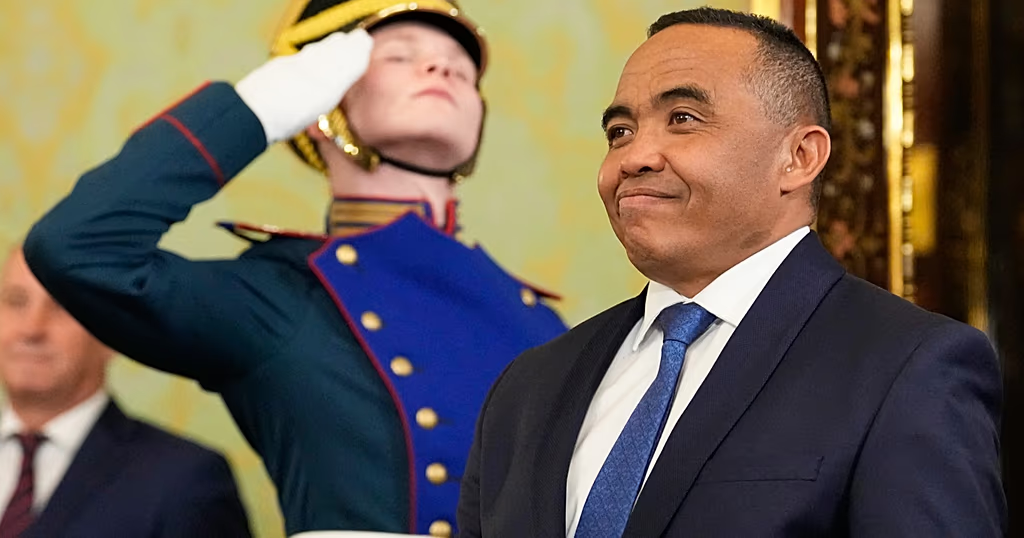
The article reports on the dissolution of Madagascar’s council of ministers by junta leader Colonel Michael Randrianirina on Monday. The move was met with cautious welcome by the populace, as many believe the previous government led by Prime Minister Herintsalama Rajaonarivelo had failed to deliver the desired change for the country’s youth. Demonstrations against water and power shortages in September last year escalated into a broader protest movement, which the government’s subsequent crackdown resulted in casualties. Randrianirina’s new cabinet, comprising well-known figures, was announced, marking a significant development in the country’s political landscape.
Key Points:
- The council of ministers in Madagascar was dissolved by Colonel Michael Randrianirina.
- The previous government, led by Prime Minister Herintsalama Rajaonarivelo, was criticized for not delivering the desired change for the youth.
- Demonstrations against water and power shortages in September last year escalated into a protest movement, leading to government crackdowns resulting in casualties.
- Randrianirina’s new cabinet includes well-known figures, indicating a shift in political leadership.
Actionable Takeaways:
-
Political Stability in Madagascar: The dissolution of the council of ministers and the appointment of a new cabinet by Colonel Randrianirina could signal a shift in political stability in Madagascar. This development may impact investor confidence and could influence travel advisories for the region. Understanding the political climate is crucial for businesses operating in or planning to enter the Malagasy market.
-
Impact on Travel and Tourism: The ongoing issues with water and power shortages, which escalated into a protest movement, highlight infrastructure challenges in Madagascar. For the travel industry, this could mean potential disruptions in service delivery and increased operational costs. Travel agencies and tour operators should monitor the situation closely and consider contingency plans to mitigate risks associated with travel disruptions.
Contextual Understanding:
The article reflects the current political instability in Madagascar, a factor that can significantly influence the travel and tourism sector. Recent events, such as the protest movement against shortages, underscore the need for robust infrastructure and effective governance. The introduction of a new cabinet suggests a potential for policy changes that could either improve or exacerbate the situation. From a travel perspective, understanding these dynamics is essential for risk assessment and strategic planning. The insights provided align with current industry trends, emphasizing the importance of political stability and infrastructure reliability in the travel sector.
Handling Different Article Types:
The article in question is a news brief, providing factual information about a political event in Madagascar. The analysis adheres strictly to the facts and context provided, ensuring that the summary, key points, and actionable takeaways are directly sourced from the article. This approach is consistent with handling news blurbs, where the focus is on delivering accurate and concise information.
Real-Time Fact-Checking:
All information presented in the summary, key points, and actionable takeaways is directly derived from the article content. No external verification or additional sources have been incorporated, ensuring that the output is strictly fact-checked within the confines of the original article. This adherence to real-time fact-checking maintains the integrity and reliability of the generated content.
Read the Complete Article.



