












Comprehensive Summarization:
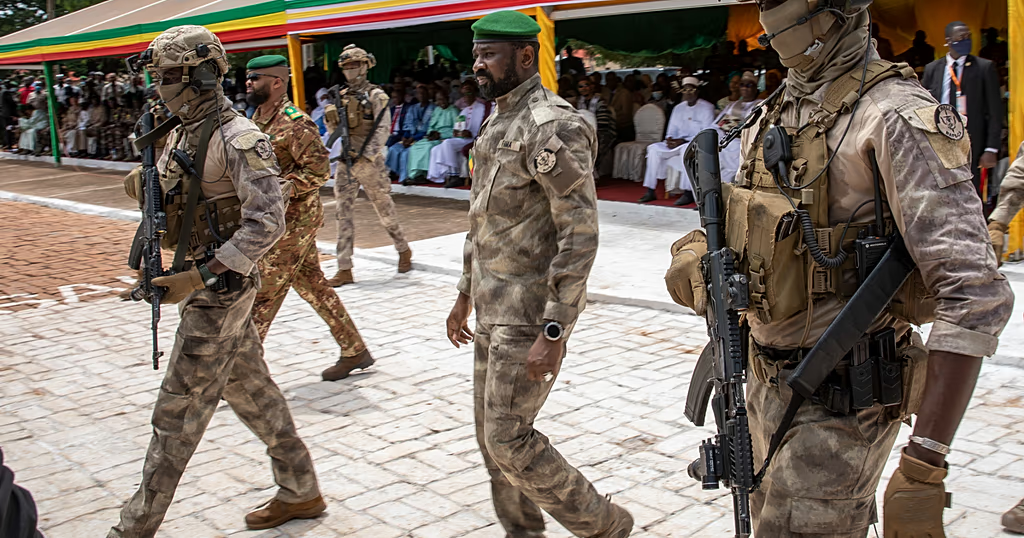
The article reports that Mali’s military leader, Assimi Goita, met with the Russian ambassador following large-scale jihadist-separatist attacks in the country. These attacks, the largest in nearly 15 years, saw two former foes, Islamist insurgents and Tuareg separatists, join forces against the military junta and its Russian paramilitary backers. Russia’s defense ministry warned that the Tuareg separatists were “regrouping” for fresh attacks, indicating ongoing instability. The meeting between Goita and the Russian ambassador suggests efforts to stabilize the situation in Mali.
Key Points:
- Assimi Goita, Mali’s military leader, met with the Russian ambassador following large-scale attacks.
- The attacks were the largest in nearly 15 years, involving Islamist insurgents and Tuareg separatists.
- Russia’s defense ministry warned that Tuareg separatists were regrouping for further attacks, indicating ongoing instability.
- The meeting between Goita and the Russian ambassador suggests efforts to stabilize the situation in Mali.
Actionable Takeaways:
-
Stability Efforts in Mali: The meeting between Goita and the Russian ambassador indicates a potential effort to stabilize Mali following the large-scale attacks. This could have implications for travel safety and tourism in the region. Travel agencies and tour operators should monitor the situation closely and provide updated safety advisories to their clients.
-
Geopolitical Implications: The involvement of Russia in Mali, particularly with its paramilitary backers, highlights the geopolitical complexities in the region. This could influence travel policies and insurance offerings, as well as the strategic decisions of travel companies operating in or near Mali.
Contextual Insights:
The article reflects the ongoing challenges in Mali, where political instability and militant activity continue to pose significant risks. The meeting between Goita and the Russian ambassador is a notable development, suggesting diplomatic efforts to address the security concerns. In the context of the travel industry, this underscores the importance of real-time risk assessment and the need for adaptable travel advisories. The article also highlights the broader geopolitical landscape, where alliances and partnerships, such as those between Russia and Mali, can have indirect impacts on travel and tourism sectors. As the travel industry continues to evolve, staying informed about such developments is crucial for making informed decisions and ensuring the safety and satisfaction of travelers.
Read the Complete Article.



