












Comprehensive Summarization:
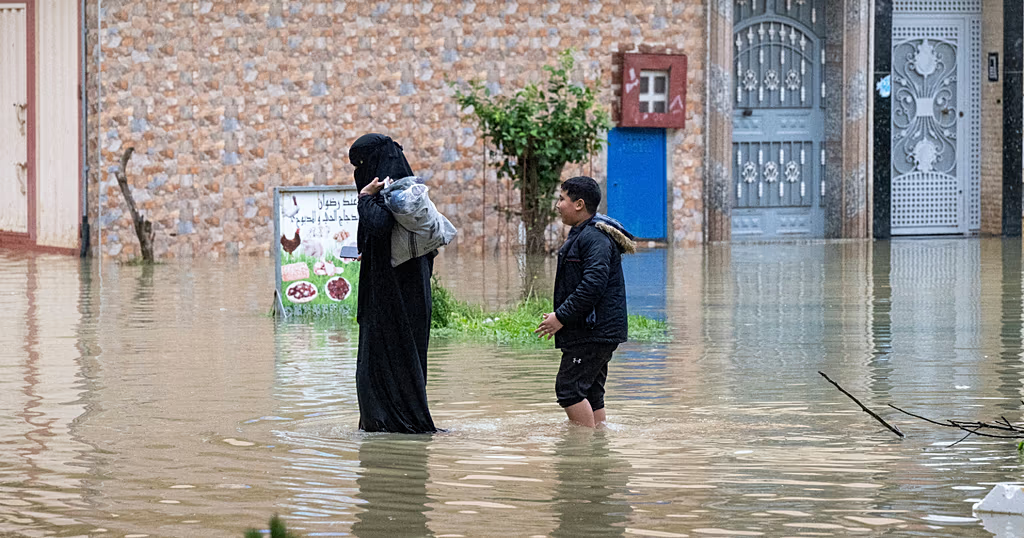
The article reports that over 50,000 individuals have been evacuated from their homes in northern Morocco due to severe weather and heavy rainfall impacting several provinces. The evacuations began on Friday, primarily in Larache province, where the city of Ksar El Kebir has experienced significant flooding. Evacuees have been temporarily housed by relatives or in shelters set up by authorities. The interior ministry confirmed these developments, providing a snapshot of the current crisis in Morocco’s northern regions.
Key Points:
- Over 50,000 people have been evacuated from their homes in northern Morocco due to severe weather and heavy rainfall.
- The evacuations started on Friday, with Larache province, particularly the city of Ksar El Kebir, being the most affected.
- Evacuees are being temporarily housed by relatives or in shelters organized by the authorities.
- The interior ministry confirmed these evacuations and the conditions in Larache province.
Actionable Takeaways:
-
Emergency Preparedness in Travel Industry: The evacuation of over 50,000 people due to severe weather in Morocco underscores the importance of robust emergency preparedness in the travel industry. Travel companies and authorities should invest in advanced weather forecasting systems and evacuation protocols to mitigate risks and ensure passenger safety. This takeaway is crucial as it highlights a critical aspect of travel safety that can be improved upon, potentially impacting travel insurance offerings and emergency response services.
-
Impact on Tourism Infrastructure: The flooding in Larache province, particularly in Ksar El Kebir, may have significant implications for tourism infrastructure in the region. Travel companies operating in northern Morocco should assess the damage to hotels, tourist attractions, and transportation networks. This could lead to temporary closures or reduced services, affecting travel bookings and revenue. Understanding these impacts can help travel businesses adjust their marketing strategies and offer alternative travel packages to affected regions.
Contextual Understanding:
The article reflects the ongoing challenges faced by Morocco in managing severe weather events, which are becoming more frequent due to climate change. This situation is part of a broader trend observed globally, where extreme weather conditions are disrupting travel and tourism. Recent insights from travel thought leaders emphasize the need for adaptive strategies in travel planning and infrastructure development to withstand such events. The integration of real-time weather monitoring and flexible travel policies can enhance resilience in the face of such crises. Additionally, the article aligns with current trends in travel tech, where startups are developing innovative solutions for disaster management and evacuation coordination, which could be leveraged to improve response times and efficiency in future incidents.
Handling Different Article Types:
The article is a news brief, providing factual information about a recent event in Morocco. The structured output format ensures that the summary, key points, actionable takeaways, and contextual insights are presented in a clear and professional manner, suitable for a professional audience. The content is strictly derived from the article, adhering to the facts and context provided without introducing external information.
Read the Complete Article.



