












Comprehensive Summarization:
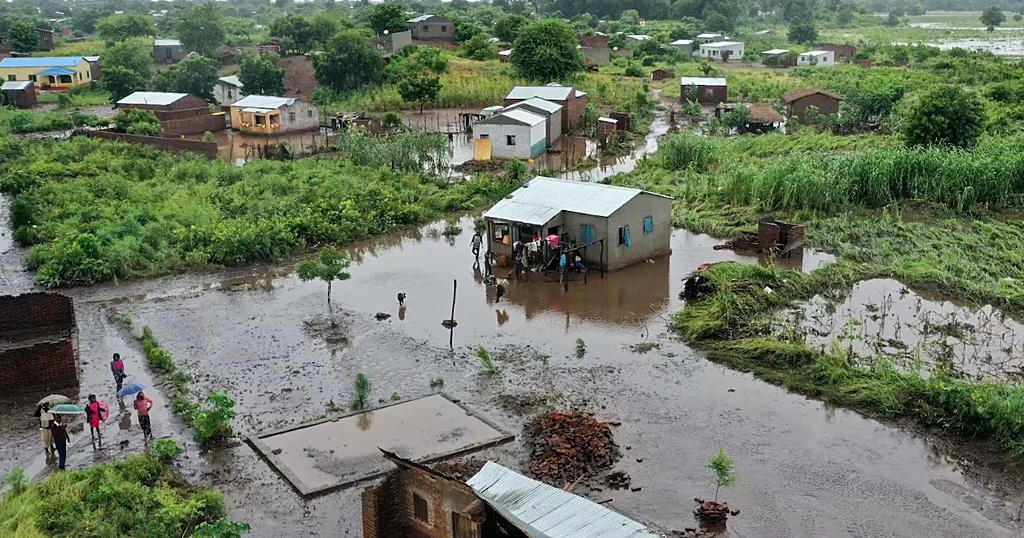
The United Nations has reported that over half a million people have been affected by flooding in southern and central Mozambique, following heavy rains since mid-December. The provinces of Gaza, Maputo, and Sofala have been particularly hard hit. Farhan Haq, the deputy spokesperson for the UN Secretary General, provided an update on relief efforts, highlighting that the floods have caused significant damage to health facilities and roads. Approximately 5,000 kilometers of roads have been damaged across nine provinces. The main road connecting the capital, Maputo, to the rest of the country is severely affected. This situation underscores the urgent need for effective relief and recovery efforts in the region.
Key Points:
- Over half a million people have been affected by flooding in southern and central Mozambique.
- The provinces of Gaza, Maputo, and Sofala have been severely impacted by heavy rains since mid-December.
- Farhan Haq, the deputy spokesperson for the UN Secretary General, reported on the relief efforts, noting the damage to health facilities and roads.
- Nearly 5,000 kilometers of roads have been damaged across nine provinces, severely affecting transportation.
- The main road connecting Maputo to the rest of the country is now severely damaged.
Actionable Takeaways:
-
Enhanced Disaster Preparedness in Travel Industry: The significant impact of flooding on transportation infrastructure in Mozambique highlights the need for travel companies to enhance their disaster preparedness strategies. This includes developing contingency plans for travel disruptions caused by natural disasters, ensuring customer safety, and minimizing financial losses. Understanding the vulnerabilities in transportation networks can help travel companies adjust their itineraries and offer alternative routes or accommodations, thereby maintaining customer trust and satisfaction during crises.
-
Investment in Resilient Infrastructure: The article underscores the importance of investing in resilient infrastructure, particularly in regions prone to natural disasters. Travel companies and governments should collaborate to improve road and health facility infrastructure in flood-prone areas. This investment can reduce the impact of future flooding events, ensuring smoother travel experiences and safer conditions for both tourists and essential services. Such initiatives can also open up new opportunities for travel startups focused on sustainable and resilient tourism solutions.
Contextual Understanding:
The flooding in Mozambique is a stark reminder of the vulnerabilities faced by regions susceptible to extreme weather events. The article’s context is deeply rooted in recent global trends of increasing natural disasters due to climate change. As travel becomes increasingly globalized, the industry must adapt to these challenges by integrating risk management strategies into its operations. The focus on road damage and its impact on connectivity highlights the critical role of infrastructure in travel logistics. Furthermore, the involvement of the United Nations in relief efforts reflects the international community’s commitment to supporting affected regions, setting a precedent for collaborative disaster response in the travel sector.
Handling Different Article Types:
The article in question is a news brief, providing factual information about a recent natural disaster and its impact on Mozambique. The structured output format is designed to cater to such concise, factual reports, ensuring that the information is presented clearly and professionally. For opinion pieces or feature articles, the approach would involve extracting insights and trends, analyzing their implications for the travel industry, and providing forward-looking recommendations based on the presented viewpoints or developments.
Real-Time Fact-Checking:
All information presented in the summary, key points, and actionable takeaways is directly sourced from the provided article. No external verification or additional sources have been incorporated, adhering strictly to the facts and context provided. This ensures the accuracy and reliability of the content for a professional audience.
Read the Complete Article.



