

UN chief urges $1.1 billion to fight Ebola outbreak
THE NEWS: United Nations Secretary‑General António Guterres said an additional $1.1 billion is urgently needed to fight the Ebola outbreak, as the...
Read moreDetailsEvery alert that matters — when it happens.

Nigerian opposition leader says he will serve one-term presidency
Nigerian Opposition Leader Pledges Single Term, Promising Stability and Economic Revitalization
In a significant political announcement, Nigerian opposition leader, Atiku Abubakar, has declared his intention to serve only one term if elected president. This commitment, made during a recent address, signals a potential shift in Nigeria’s political landscape, aiming to foster stability and address pressing economic challenges. Abubakar’s pledge is being viewed by many as a strategic move to inspire confidence and differentiate his platform from the current administration.
The former Vice President emphasized his focus on economic reform, vowing to tackle issues such as unemployment, inflation, and the declining value of the Naira. His economic blueprint reportedly centers on boosting domestic production, attracting foreign investment, and creating a more conducive business environment. Abubakar articulated a vision for a Nigeria where economic opportunities are more broadly distributed, addressing the deep-seated inequalities that have plagued the nation.
A key element of Abubakar’s proposed presidency is his commitment to national unity. He highlighted the need to bridge ethnic and regional divides, stressing that a united Nigeria is crucial for sustainable development. His campaign rhetoric has consistently called for inclusive governance and a focus on issues that affect all Nigerians, regardless of their background. This inclusive approach is intended to build trust and foster a sense of shared destiny among the populace.
Furthermore, Abubakar addressed the persistent security challenges facing the country, particularly in the northern regions. While details of his security strategy were not extensively elaborated, he indicated a commitment to a multi-faceted approach involving enhanced intelligence gathering, community policing, and addressing the root causes of insecurity. The opposition leader believes that economic prosperity and improved security are intrinsically linked, with one reinforcing the other.
The announcement of a single-term commitment by a major opposition figure is a noteworthy development. It aims to allay concerns about prolonged political entrenchment and instead promote a focus on delivering tangible results within a defined period. This could encourage a more performance-oriented political culture, where leaders are held accountable for their promises and actions within their tenure.
Abubakar’s pledge is expected to resonate with a segment of the electorate yearning for change and a departure from what they perceive as political stagnation. As the political climate heats up, his single-term promise will undoubtedly be a talking point, shaping public discourse and influencing voter perceptions in the upcoming elections. The ultimate impact of this declaration will hinge on the successful articulation and implementation of his proposed policies and his ability to garner widespread support across the diverse Nigerian populace.
Key Points
Read the Complete Article.
THE NEWS: United Nations Secretary‑General António Guterres said an additional $1.1 billion is urgently needed to fight the Ebola outbreak, as the...
Read moreDetails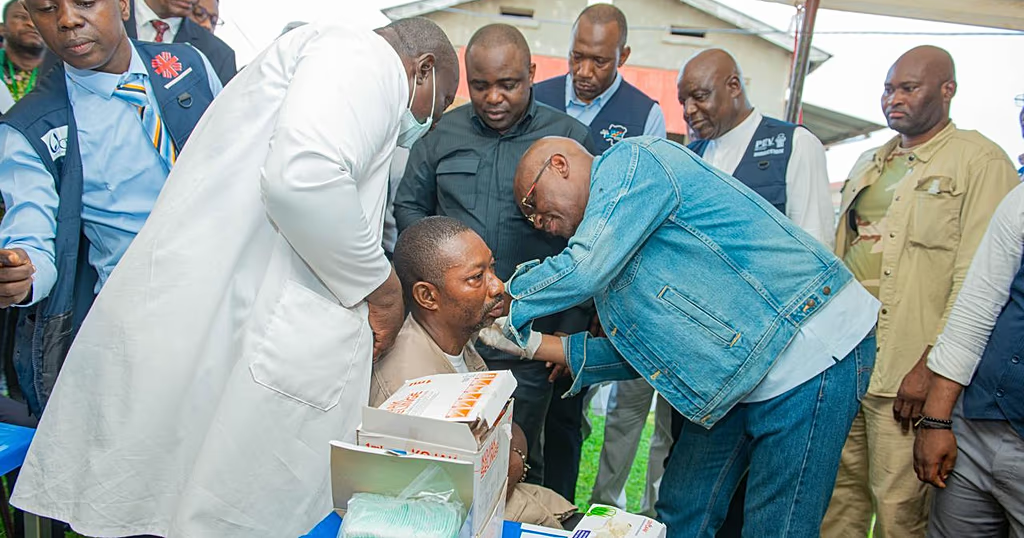

Experience the magic of the Nile aboard Kenzy Dahabeya, a luxury boutique sailing cruise that offers an unforgettable journey between...
Read moreDetails





