












Comprehensive Summarization:
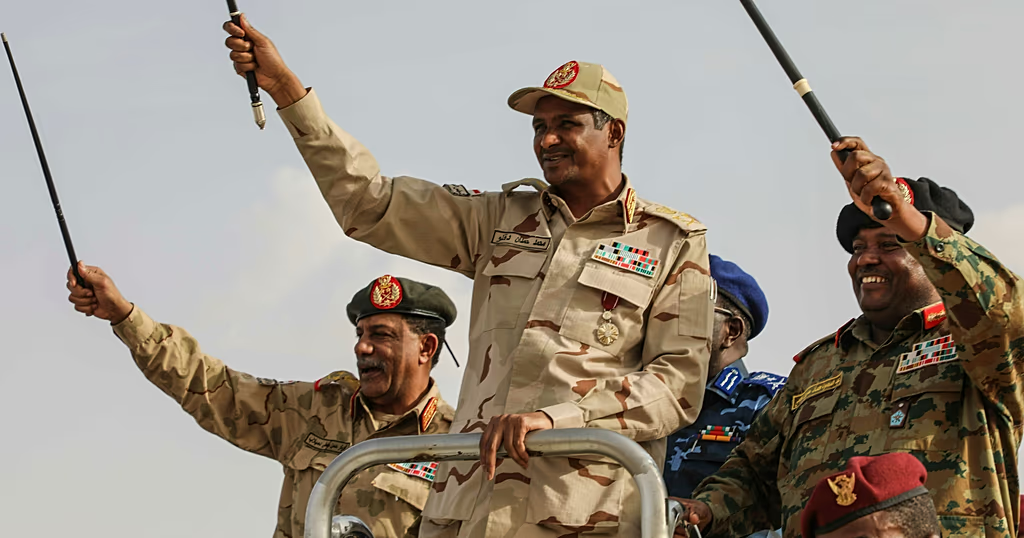
The article reports a conflict in Sudan where the paramilitary Rapid Support Forces (RSF) claims to have captured the town of al-Tina, located near the border with Chad in North Darfur state. The RSF shared a video on social media depicting armed men celebrating beneath a banner stating “District of al-Tina.” However, the military and its allied Joint Forces dispute this claim, stating they repelled the attack on Saturday. Minni Arko Minawi, the pro-army governor of Darfur, described the assault on al-Tina as “repeated criminal behavior.” The article also touches on the latest travel trends and insights from thought leaders, although these are not detailed in the provided text.
Key Points:
- The RSF claims to have captured the town of al-Tina in Sudan’s ongoing war with the army.
- The RSF shared video footage of the capture, but the military and Joint Forces deny this, stating they repelled the attack.
- Minni Arko Minawi, the pro-army governor of Darfur, described the assault as “repeated criminal behavior.”
- The article mentions the need to incorporate the latest travel trends and insights from thought leaders, though specific details are not provided.
Actionable Takeaways:
-
Monitor Conflict Zones for Travel Advisories: Given the ongoing conflict in Sudan, travel advisories and safety protocols for regions near the border with Chad should be closely monitored. This is crucial for travel agencies and tour operators to ensure the safety of their clients and to adjust travel itineraries accordingly.
-
Investigate Conflict Impact on Tourism: The RSF’s actions and the military’s denial of the capture could have significant implications for tourism in the region. Travel companies should assess the potential impact on tourism infrastructure and plan accordingly, possibly diversifying their offerings to mitigate risks associated with conflict zones.
-
Leverage Real-Time Information for Decision-Making: The article underscores the importance of real-time information in decision-making, especially in volatile regions. Travel companies should invest in real-time data analytics and monitoring tools to stay informed about conflicts and their potential impact on travel operations.
Contextual Insights:
The conflict in Sudan highlights the ongoing challenges faced by regions in North Africa, impacting not only regional stability but also the travel and tourism industry. The RSF’s actions and the military’s response underscore the volatility of the situation, which can have far-reaching effects on travel advisories, safety protocols, and tourism infrastructure. For the travel industry, this situation emphasizes the need for robust risk management strategies, including real-time monitoring of conflict zones and the ability to quickly adapt travel plans in response to changing circumstances. Additionally, the article’s mention of the latest travel trends and insights from thought leaders suggests that the industry is increasingly focused on leveraging technology and data to enhance safety and operational efficiency, particularly in regions affected by conflict. This forward-looking perspective is crucial for travel startups and fintech innovators aiming to provide secure and seamless travel experiences in challenging environments.
Read the Complete Article.



