












Comprehensive Summarization:
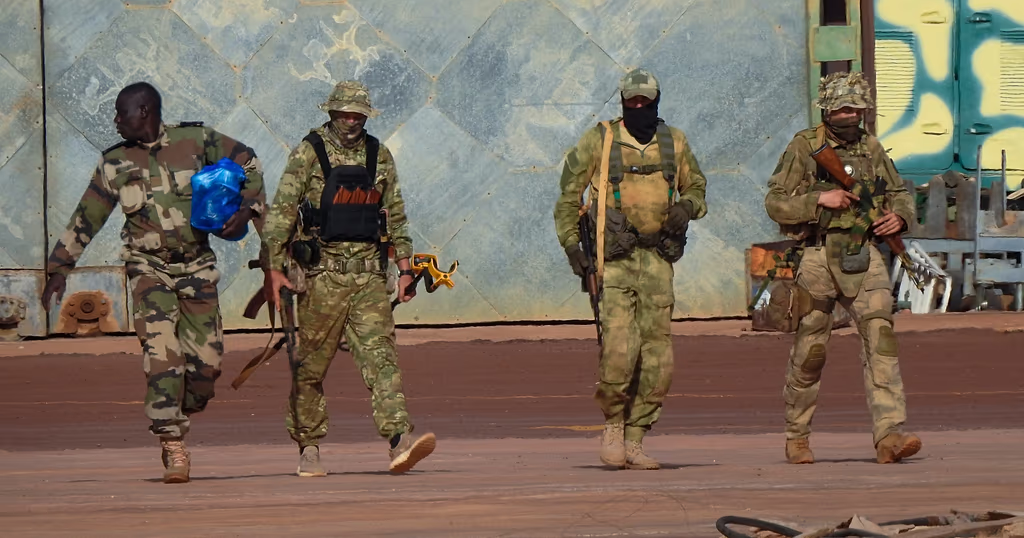
The article reports that Russia’s Africa Corps unit has freed two hostages, employees of a Russian geology company, who were held in Mali for nearly two years. The hostages, Oleg Greta and Yuri Yurov, were initially captured by an al-Qaeda-linked group in Niger in August 2024. Moscow claims the hostages were taken a month before the reported date. The summary captures the main theme of the hostage situation, the timeline of events, and the geopolitical context involving Russia, Mali, and Niger.
Key Points:
- Russia’s Africa Corps unit freed two hostages from a Russian geology company held in Mali.
- The hostages, Oleg Greta and Yuri Yurov, were captured in August 2024 by an al-Qaeda-linked group in Niger.
- The group, Group for the Support of Islam and Muslims (GSIM), released a video confirming the hostages’ capture.
- Moscow asserts the hostages were taken a month before the reported date in August 2024.
Actionable Takeaways:
-
Enhanced Security Measures in Geographical Hotspots: The incident highlights the need for enhanced security measures in regions prone to militant activity, such as Mali and Niger. Travel companies and governments should collaborate to improve surveillance and response capabilities in these areas to prevent future hostage situations.
-
Strengthening Diplomatic Relations: The article underscores the importance of diplomatic relations between Russia, Ukraine, and Mali. Strengthening these ties could lead to better intelligence sharing and coordinated efforts to counter militant threats, thereby reducing the risk of hostage situations.
Contextual Insights:
The article reflects current geopolitical tensions and the ongoing challenges faced by countries in West Africa, particularly in terms of security and stability. The recent trend of militant groups targeting foreign nationals and companies in these regions is a significant concern for the travel industry. Thought leaders in the travel sector are increasingly focusing on risk assessment and mitigation strategies, such as enhanced security protocols, insurance products tailored for high-risk destinations, and partnerships with local authorities to ensure the safety of travelers. The incident also highlights the importance of fintech innovations in providing secure payment solutions for travelers, especially in regions where traditional banking infrastructure is weak. By leveraging blockchain technology and other fintech solutions, travel companies can offer safer and more reliable financial services to their clients, thereby enhancing their overall travel experience.
Read the Complete Article.



