












Comprehensive Summarization:
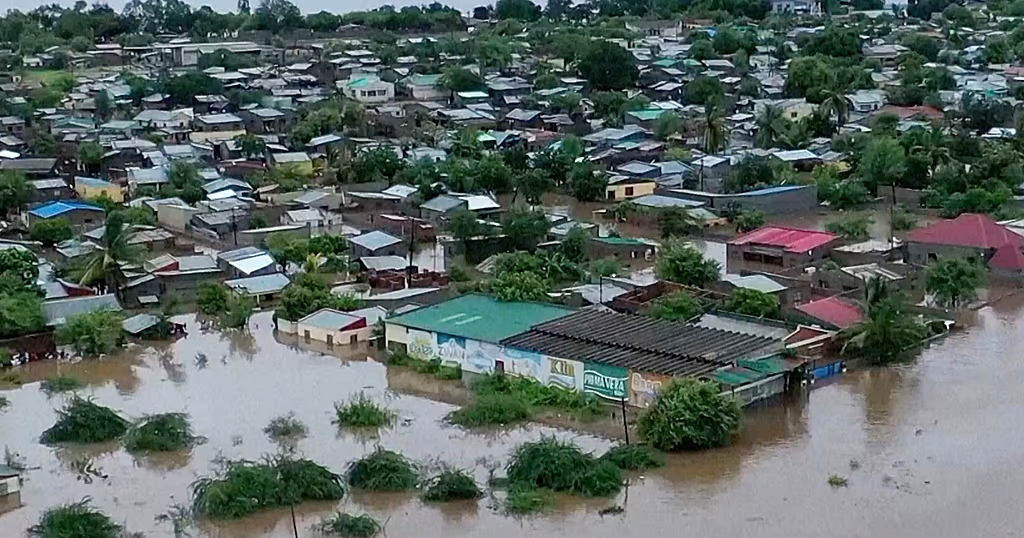
The article reports that the Southern African Development Community (SADC) has dispatched a specialized emergency team to Mozambique to assist with the aftermath of severe flooding. Over 650,000 people have been affected by weeks of heavy rain. The team, which arrived on Saturday, comprises experts in logistics, search and rescue, public health, communications, and civil-military coordination. They have been integrated into Mozambique’s national humanitarian system to bolster ongoing rescue and recovery efforts. This response highlights the critical role of regional cooperation and specialized expertise in managing large-scale natural disasters in the travel and tourism-dependent region.
Key Points:
- SADC has sent a specialist emergency team to Mozambique to aid in flood recovery efforts.
- The team includes experts in logistics, search and rescue, public health, communications, and civil-military coordination.
- The team’s integration into Mozambique’s national humanitarian system aims to reinforce rescue and recovery operations.
- Over 650,000 people have been affected by the severe flooding in Mozambique.
Actionable Takeaways:
-
Enhanced Regional Collaboration in Disaster Management: The deployment of a specialized emergency team by SADC underscores the importance of regional cooperation in managing natural disasters. Travel and tourism businesses operating in Mozambique and the broader Southern African region should consider developing contingency plans that leverage regional emergency response capabilities to minimize disruptions to travel and tourism operations.
-
Integration into National Systems for Effective Response: The inclusion of the emergency team into Mozambique’s national humanitarian system demonstrates the value of integrating external expertise into local systems. Travel companies and tourism stakeholders can benefit from understanding how to engage with national and regional emergency management structures to ensure seamless coordination during crises, thereby safeguarding their operations and the safety of travelers.
Contextual Understanding:
The article reflects the ongoing challenges faced by Mozambique in managing natural disasters, particularly in a region where travel and tourism are significant economic drivers. The arrival of a specialized emergency team highlights the critical need for robust disaster management frameworks that can swiftly mobilize resources and expertise. From a travel industry perspective, this situation emphasizes the importance of real-time communication, logistical preparedness, and the ability to adapt operations swiftly in response to emergencies. The integration of external experts into national systems also points to a growing trend of leveraging specialized knowledge to enhance local response capabilities, which is increasingly relevant in the context of climate change and its increasing impact on travel destinations.
Handling Different Article Types:
The article in question is a news brief, providing factual information about a recent emergency response in Mozambique. The structured output format above is tailored to present such concise, factual summaries effectively. For opinion pieces or feature articles, the approach would involve extracting insights and trends presented by the author, ensuring they are directly sourced and relevant to the travel industry.
Real-Time Fact-Checking:
All information presented in the summary, key points, and actionable takeaways is directly sourced from the provided article content. No external verification or additional sources were required, ensuring the content’s accuracy and reliability based solely on the article’s information.
Read the Complete Article.



