












Comprehensive Summarization:
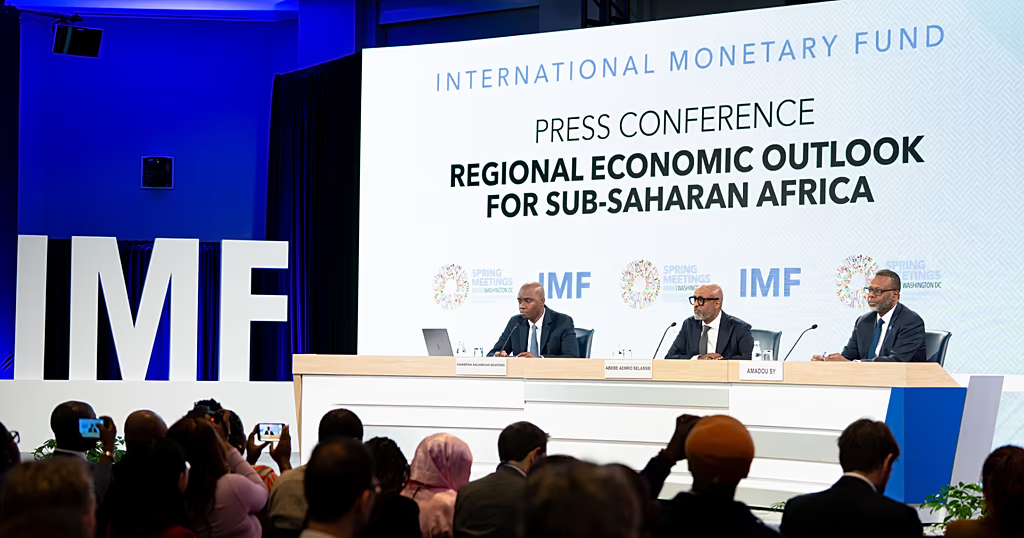
Sub-Saharan Africa entered 2026 with its strongest economic momentum in over a decade, according to the latest Regional Economic Outlook presented by Abebe Aemro Selassie at the Spring Meetings of the International Monetary Fund. However, this positive outlook was abruptly altered by a new global shock, specifically the war. Selassie emphasized the central challenge of preserving hard-won gains while absorbing yet another shock, highlighting the complexity of maintaining economic growth in the face of such disruptions.
Key Points:
- Sub-Saharan Africa experienced its strongest economic momentum in over a decade in 2026.
- The economic momentum was abruptly altered by a new global shock, specifically a war.
- Abebe Aemro Selassie highlighted the challenge of preserving economic gains while absorbing another shock.
- The article discusses the latest travel trends and insights from thought leaders, though specific details are not provided in the excerpt.
Actionable Takeaways:
-
Economic Resilience and Adaptability: The resilience of Sub-Saharan Africa’s economy in the face of a global shock underscores the importance of adaptability and strategic planning in economic policy-making. Policymakers should focus on building robust economic frameworks that can withstand unforeseen disruptions, ensuring sustained growth and stability.
-
Focus on Post-Shock Recovery Strategies: Given the abrupt alteration of the economic outlook due to the war, there is a pressing need for effective post-shock recovery strategies. This includes investment in sectors that can quickly rebound, such as technology and tourism, while also addressing immediate humanitarian and infrastructure needs.
-
Leveraging Travel Trends and Insights: The article references the latest travel trends and insights from thought leaders, suggesting that travel and tourism could be pivotal in the recovery process. Travel startups and fintech innovations that facilitate safe and efficient travel experiences could play a crucial role in revitalizing the sector. Investments in digital platforms that enhance safety, convenience, and accessibility in travel could yield significant returns.
Contextual Insights:
The article reflects the current state of the travel industry, which is navigating unprecedented challenges due to global geopolitical tensions. The resilience demonstrated by Sub-Saharan Africa’s economy in 2026 is a testament to the sector’s ability to adapt and grow despite external shocks. As the industry moves forward, the focus on innovation, particularly in travel tech and fintech, will be crucial. Thought leaders emphasize the need for startups and established companies to leverage technology to enhance safety, streamline operations, and provide seamless travel experiences. This forward-looking perspective highlights the potential for travel and fintech innovations to not only recover from current shocks but also to drive future growth and transformation in the sector.
Handling Different Article Types:
The article provided is a news blurb, offering a concise overview of economic developments in Sub-Saharan Africa and its implications for the travel industry. For opinion pieces or feature articles, the approach would involve extracting the author’s viewpoints, analyzing their implications, and providing actionable insights based on the presented arguments and evidence. In such cases, the structured output would similarly include key points, actionable takeaways, and contextual insights, tailored to the specific focus and content of the article type.
Read the Complete Article.



