












Comprehensive Summarization:
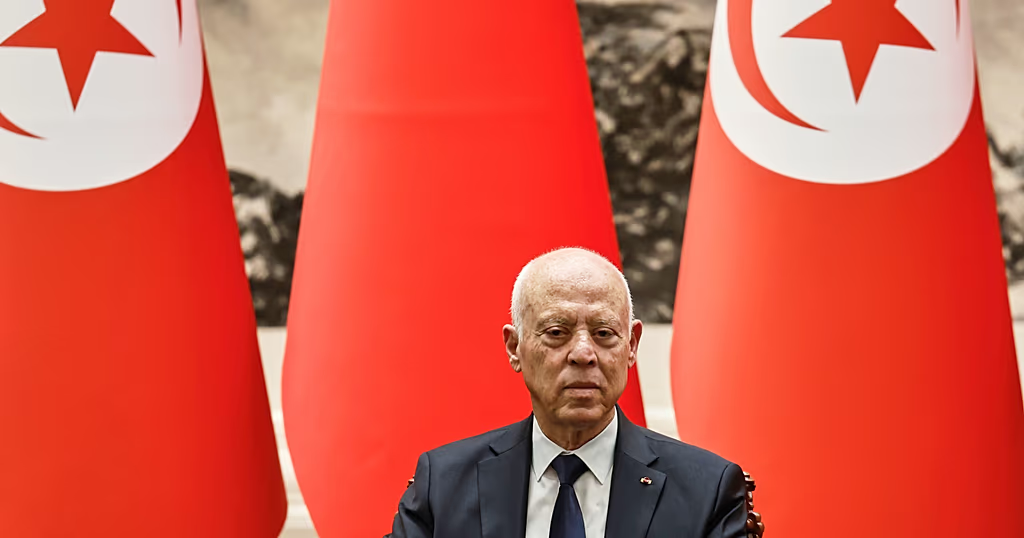
The article reports that Tunisian President Kais Saied has ordered the dismissal of Energy and Industry Minister Fatma Thabet Chiboub, ahead of a parliamentary review of controversial draft laws on renewable energy contracts. This move comes amid criticism from unionists and lawmakers over five government-approved bills that regulate concessions to foreign companies, primarily for solar panel installations. The bills propose that foreign firms can exploit energy resources, sparking concerns among stakeholders. The dismissal and the legislative debate highlight ongoing tensions between government policy and industry interests in Tunisia’s renewable energy sector.
Key Points:
- Tunisian President Kais Saied has dismissed Energy and Industry Minister Fatma Thabet Chiboub.
- The dismissal precedes a parliamentary review of draft laws on renewable energy contracts.
- Criticism has been raised from unionists and lawmakers regarding the proposed bills.
- The bills allow foreign firms to exploit energy resources, particularly for solar panel installations.
- The controversy underscores tensions between government policy and industry interests in Tunisia’s renewable energy sector.
Actionable Takeaways:
-
Policy Review and Stakeholder Engagement: Tunisian authorities should engage in transparent stakeholder consultations before finalizing renewable energy contracts to address concerns from unionists and lawmakers. This approach can help mitigate political risks and ensure the sustainability of renewable energy projects.
-
Balancing Foreign Investment and Local Interests: The proposed legislation could attract significant foreign investment in Tunisia’s renewable energy sector. However, policymakers should ensure that such investments align with national energy strategies and do not compromise local energy security or economic interests.
-
Monitoring and Compliance Mechanisms: Implementing robust monitoring and compliance mechanisms for foreign firms operating in Tunisia’s renewable energy sector is crucial. This can help ensure adherence to environmental standards and local regulations, thereby fostering trust and cooperation between the government and the private sector.
Contextual Insights:
The dismissal of the Energy and Industry Minister and the parliamentary review of renewable energy contracts reflect broader tensions within Tunisia’s energy sector. The country is increasingly focusing on renewable energy to diversify its energy mix and reduce dependency on fossil fuels. However, the proposed legislation has sparked debate over the balance between attracting foreign investment and protecting local interests. This situation is emblematic of a larger trend in the global travel and energy sectors, where governments are navigating the challenges of integrating renewable energy technologies while balancing economic and environmental objectives.
In the context of travel tech and fintech, the article highlights the importance of regulatory clarity and stakeholder engagement. As renewable energy projects become a focal point for investment and development, the travel industry must adapt to these changes by ensuring that travel-related services, such as tourism infrastructure and sustainable travel options, align with evolving energy policies. This alignment can enhance the appeal of Tunisia as a travel destination and foster innovation in travel tech and fintech solutions that support sustainable tourism.
Read the Complete Article.



