







No products in the cart.
- Latest
- Trending

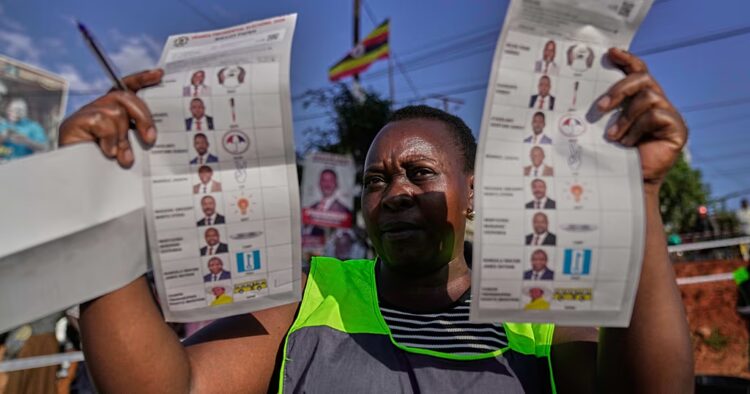
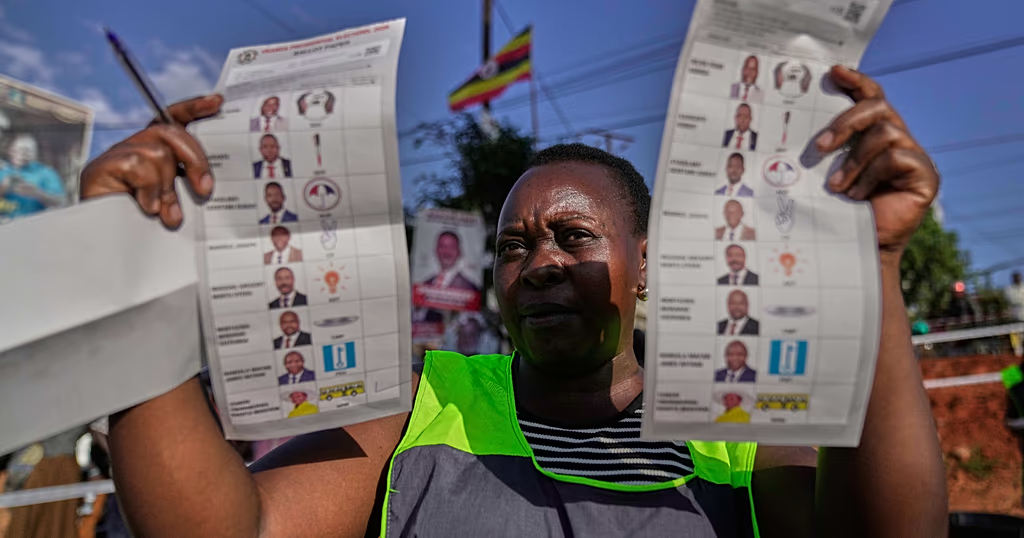
With polls closed, vote counts are underway in Uganda presidential election
Comprehensive Summarization:
The article reports on Uganda’s presidential election, where polls closed amidst a chaotic day of voting. The election, which took place under an internet blackout and with long delays due to technical breakdowns, is being seen as a crucial test for President Yoweri Museveni, who has ruled Uganda for 40 years. Museveni, an 81-year-old who came to power in 1986, is widely expected to win a seventh term in office due to his total control of the state and security apparatus. However, opposition candidate Bobi Wine, a 43-year-old singer-turned-politician, received loud cheers in a Kampala stadium during the vote counting, indicating a significant challenge to Museveni’s dominance. The article also touches on the broader context of travel trends and insights, highlighting the importance of innovation, technology, and adaptability in the travel industry.
Key Points:
Actionable Takeaways:
Political Stability in Uganda: Museveni’s expected victory could have significant implications for political stability in Uganda. For travel companies operating in the region, this could mean continued business as usual, but also the need for vigilance in monitoring political developments.
Importance of Technology in Travel: The article highlights the challenges posed by technical breakdowns and internet blackouts during elections. This underscores the importance of robust technological infrastructure in the travel industry, particularly for services that rely on digital platforms, such as online booking systems and mobile apps.
Adaptability in the Travel Industry: The article emphasizes the need for adaptability in the face of unexpected challenges, such as technical issues during elections. Travel companies should consider developing contingency plans to ensure service continuity during unforeseen disruptions.
Contextual Insights:
The article’s context is deeply rooted in the current political climate in Uganda and the broader challenges faced by the travel industry in maintaining service continuity during crises. The reliance on technology during elections highlights the sector’s increasing dependence on digital platforms, making it imperative for travel companies to invest in resilient infrastructure. Furthermore, the potential for opposition challenges to established leaders like Museveni could signal shifts in regional politics, which may have indirect effects on travel trends and consumer behavior. For instance, increased political instability could impact tourism flows, necessitating proactive strategies from travel companies to mitigate risks.
Handling Different Article Types:
The article falls under the category of a news blurb, providing factual information about a recent political event and its implications for the travel industry. The structured output format ensures that the key points and actionable takeaways are clearly delineated, making it easy for readers to digest and apply the information. The contextual insights further enrich the content by linking the article’s facts to broader industry trends and expert opinions, offering a forward-looking perspective on the travel sector’s future.
Read the Complete Article.
Get curated travel AI insights — choose the newsletters that matter to you.
This spot is reserved for brands with a compelling story for the travel trade. They use this space to cut...
Read moreDetailsTravel One Technologies launches the world’s first Traveler DNA Platform, targeting the structural data gap at the core of an...
Read moreDetails