












Comprehensive Summarization:
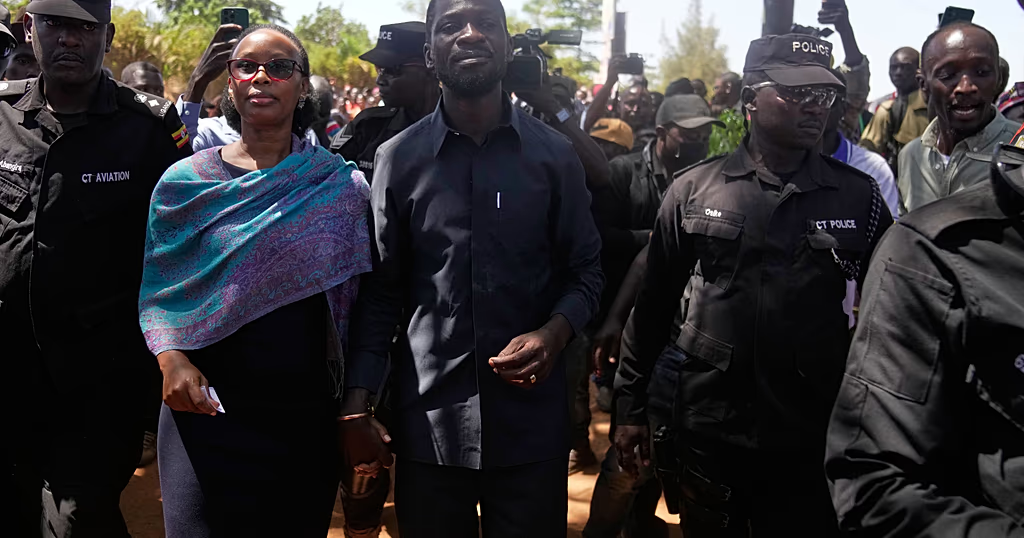
The article reports on the wife of Ugandan opposition politician Bobi Wine, Barbra Itungo Kyagulanyi, recounting her harrowing experience during an overnight raid on her home by soldiers in Kampala. According to her account, she was strangled and held at gunpoint, with the primary reason cited as the search for her husband’s phone, which was left behind. The raid highlights concerns over security and privacy issues affecting high-profile individuals in Uganda, particularly those involved in political opposition. The context of the article is set against the backdrop of ongoing political tensions and the broader travel industry’s focus on security and safety measures for travelers, especially in regions with political unrest.
Key Points:
- Barbra Itungo Kyagulanyi, wife of Ugandan opposition politician Bobi Wine, was subjected to an overnight raid by soldiers in her home in Kampala.
- During the raid, she alleges she was strangled and held at gunpoint, with soldiers searching for her husband’s phone.
- The soldiers reportedly used her husband’s phone as a reason for the raid, suggesting a potential link between political opposition figures and security operations in Uganda.
- The incident underscores broader concerns about security and privacy for political figures and high-profile individuals in Uganda.
Actionable Takeaways:
-
Enhanced Security Measures for Political Figures: Travel agencies and hospitality providers operating in politically volatile regions should prioritize enhanced security measures for their clients, particularly those involved in political activities. This could include offering secure accommodations, private transportation, and on-site security personnel to mitigate risks associated with political unrest.
-
Privacy and Data Protection: The incident highlights the importance of privacy and data protection for individuals in high-risk environments. Travel companies could advocate for stronger data protection laws and services that ensure the safety of personal information, especially for travelers who may be targets of surveillance or security threats.
-
Risk Assessment and Travel Advisory Services: Travel advisory services should incorporate real-time risk assessments for destinations, especially those with political instability. Providing travelers with up-to-date information on security threats and advising them on alternative travel plans can help mitigate risks associated with political unrest.
Contextual Insights:
The article’s context is deeply rooted in the ongoing political tensions in Uganda, where opposition figures like Bobi Wine face significant security challenges. This situation is reflective of broader trends in the travel industry, where safety and security have become paramount, particularly in regions with political unrest. Recent trends indicate a growing demand for travel solutions that prioritize safety, including secure accommodations, private transportation, and real-time risk assessments. Thought leaders in the travel industry are increasingly focusing on developing technologies and services that enhance traveler safety, such as AI-driven security monitoring and predictive analytics for potential threats. The incident involving Barbra Itungo Kyagulanyi serves as a stark reminder of the vulnerabilities faced by political figures and underscores the need for the travel industry to adapt and innovate in response to these challenges. By integrating these insights, travel companies can better serve their clients and navigate the complexities of operating in politically sensitive regions.
Read the Complete Article.



