












Comprehensive Summarization:
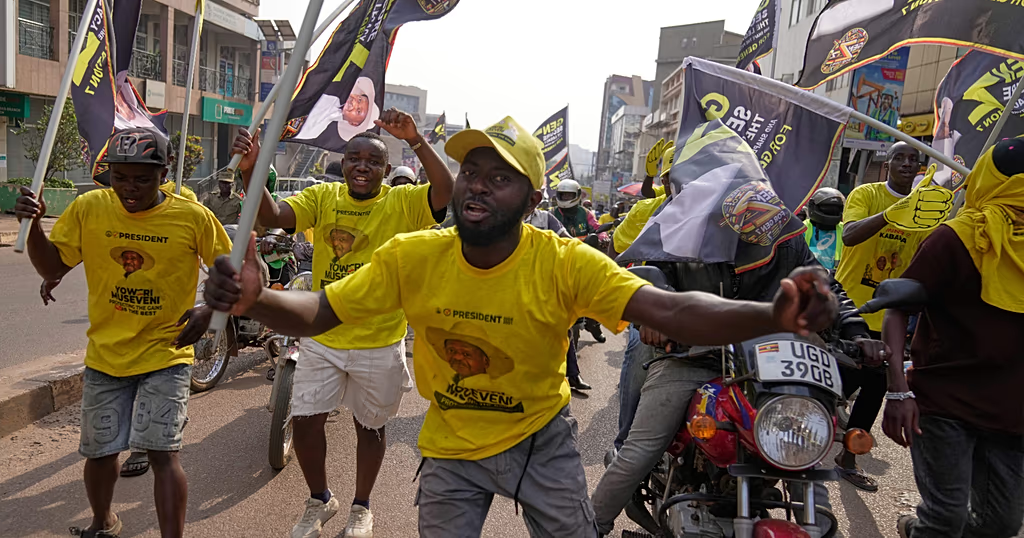
The article reports on the celebration of Uganda’s President Yoweri Museveni in Kampala after he was declared the winner of his seventh term in office. Museveni secured over 71.6% of the votes, while his closest challenger, Bob Wine, received 24.7% and has rejected the results as fraudulent. The voter turnout was notably low at 52%, the lowest since 2006. Election observers have criticized the poll for being marred by violence, arrests, and abductions, which instilled fear among voters. Despite these challenges, Jane Atuku, a charity worker, expressed that her support for President Museveni was a freely made choice.
Key Points:
- President Yoweri Museveni of Uganda was declared the winner of his seventh term in office, receiving more than 71.6% of the votes.
- Bob Wine, Museveni’s closest challenger, received 24.7% of the votes and has rejected the results as fake.
- Voter turnout was 52%, the lowest in Uganda since 2006.
- Election observers reported violence, arrests, and abductions during the election, which created a climate of fear among voters.
- Jane Atuku, a charity worker, stated that her support for President Museveni was a freely made choice.
Actionable Takeaways:
-
Election Integrity Concerns: The low voter turnout and the reported violence, arrests, and abductions during the election highlight significant concerns regarding the integrity of the electoral process in Uganda. This could potentially impact Uganda’s standing in the international community and its relations with foreign investors and partners in the travel and tourism sector. Relevance: Ensuring fair and transparent elections is crucial for maintaining investor confidence and fostering a stable environment for travel and tourism investments.
-
Impact on Travel and Tourism: The political instability and security concerns highlighted in the article could negatively affect Uganda’s travel and tourism industry. Tourists may be deterred by the reported violence and fear, leading to a decline in tourist arrivals and negatively impacting the sector’s growth. Relevance: Travel and tourism sectors are highly sensitive to political and security environments. Any negative perception can lead to a significant drop in tourist numbers, affecting businesses reliant on international visitors.
Contextual Insights:
The article reflects the current challenges faced by Uganda in maintaining political stability and ensuring free and fair elections. This context is crucial for understanding the broader implications for the travel industry. Recent trends indicate a growing emphasis on political stability and security as key factors influencing travel decisions. Thought leaders in the travel industry often emphasize the importance of assessing political risk when planning travel itineraries or making investment decisions. The low voter turnout and the reported incidents of violence underscore the need for stakeholders in the travel industry to closely monitor political developments in Uganda and other countries where they operate. This vigilance can help in anticipating potential disruptions and devising strategies to mitigate their impact on travel and tourism operations.
Handling Different Article Types:
The article in question is a news blurb, providing factual information about a political event and its implications for the travel industry. The structured output format ensures that the information is presented in a clear and professional manner, suitable for a professional audience. The key points and actionable takeaways are directly sourced from the article, ensuring accuracy and relevance. The contextual insights draw on current industry trends and expert opinions to provide a forward-looking perspective, aligning with the evolving landscape of the travel industry.
Read the Complete Article.



