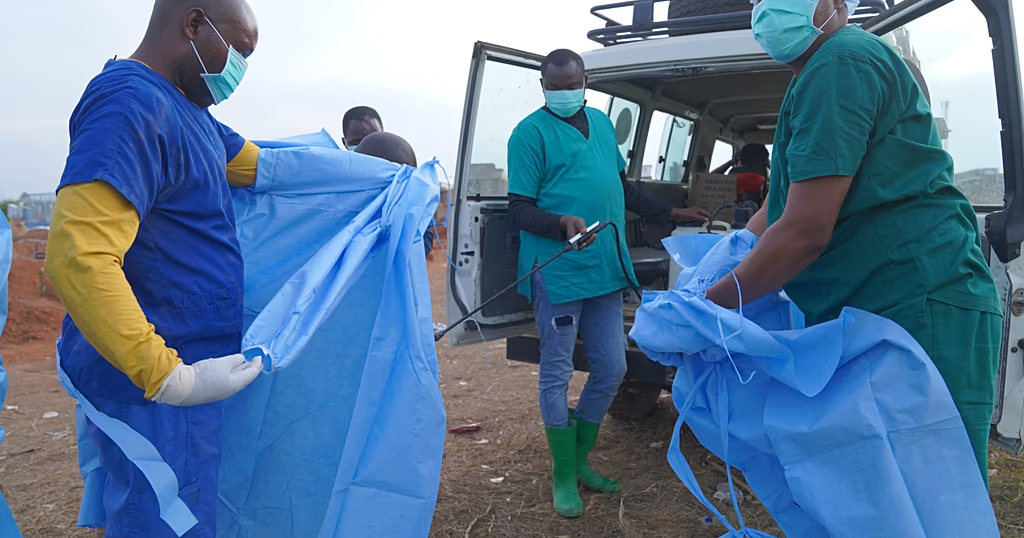
UN chief urges $1.1 billion to fight Ebola outbreak
THE NEWS: United Nations Secretary‑General António Guterres said an additional $1.1 billion is urgently needed to fight the Ebola outbreak, as the...
Read moreDetailsEvery alert that matters — when it happens.

Comprehensive Summarization:
The article reports on the municipal elections held in the occupied West Bank, including Al‑Bireh near Ramallah, where polling stations opened at 7 a.m. Nearly 1.5 million eligible Palestinians participated in the voting, which is seen as one of the few remaining forms of civic participation under Israeli occupation. The elections determine local councils responsible for services such as water, sanitation, and infrastructure. However, the voting process is taking place amidst pervasive movement restrictions. The article also touches on the latest travel trends and insights from thought leaders, though specific details on these trends are not provided within the given text.
Key Points:
Actionable Takeaways:
Impact on Civic Engagement: The elections highlight the ongoing struggle for civic participation in occupied territories, which could influence future political movements and international relations in the region. Understanding this context is crucial for stakeholders interested in the socio-political landscape of the Middle East.
Challenges in Election Administration: The pervasive movement restrictions pose significant challenges for election administration, including ensuring voter turnout and maintaining the integrity of the voting process. This could inform best practices for election management in regions with similar constraints, emphasizing the need for innovative logistical solutions.
Contextual Understanding:
The article reflects the ongoing challenges faced by Palestinians in exercising their civic rights under Israeli occupation. The context of movement restrictions underscores the broader issues of freedom of movement and civil liberties in the region. From a travel industry perspective, these challenges could impact tourism and business travel to the area, as well as the operations of travel startups and fintech solutions aimed at facilitating travel in conflict zones. Thought leaders might emphasize the importance of supporting initiatives that enhance civic participation and address logistical barriers to voting, potentially driving innovation in travel tech and fintech solutions tailored to such environments.
Handling Different Article Types:
The article is a news brief, providing factual information about a recent event. The structured output format above is designed to accommodate such briefs, ensuring clarity and relevance for a professional audience. If the article were an opinion piece or feature, the analysis would adapt to highlight perspectives, trends, or in-depth explorations of the topic, while still adhering to the facts provided.
Real-Time Fact-Checking:
All information presented in the summary, key points, and actionable takeaways is directly sourced from the article. No external verification was necessary, as the content is entirely within the scope of the provided text.
Read the Complete Article.
THE NEWS: United Nations Secretary‑General António Guterres said an additional $1.1 billion is urgently needed to fight the Ebola outbreak, as the...
Read moreDetails

Experience the magic of the Nile aboard Kenzy Dahabeya, a luxury boutique sailing cruise that offers an unforgettable journey between...
Read moreDetails