












Article Summary:
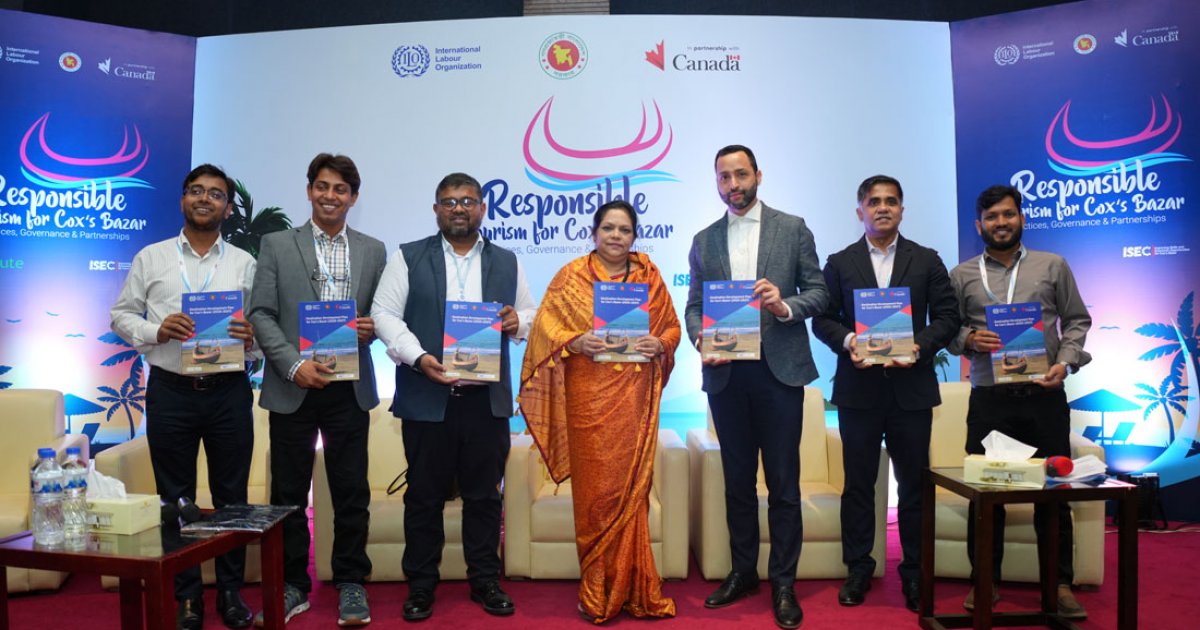
The article reports on a national seminar titled “Responsible Tourism for Cox’s Bazar: Practices, Governance, and Partnerships,” held at Ocean Paradise Hotel in Cox’s Bazar, Bangladesh. The seminar was organized under the Improving Skills and Economic Opportunities for Women and Youth in Cox’s Bazar (ISEC) project of the International Labour Organization (ILO) and implemented by Enroute International Limited, with additional support from unspecified entities. The seminar aims to shape the future of sustainable tourism in Bangladesh’s premier coastal destination by focusing on responsible tourism practices, governance, and partnerships.
Key Points:
- The seminar was organized by the ISEC project of the ILO and Enroute International Limited, highlighting a collaborative effort to promote sustainable tourism in Cox’s Bazar.
- The focus of the seminar is on responsible tourism practices, governance, and partnerships, indicating a comprehensive approach to sustainable tourism development.
- The event is part of a broader initiative to improve skills and economic opportunities for women and youth in Cox’s Bazar, emphasizing the socio-economic benefits of sustainable tourism.
Actionable Takeaways:
-
Promote Responsible Tourism Practices: Implementing responsible tourism practices can enhance the sustainability of tourism in Cox’s Bazar, ensuring long-term economic benefits for local communities while preserving the natural and cultural heritage of the region. This aligns with global trends towards sustainable tourism and can serve as a model for other coastal destinations facing similar challenges.
-
Enhance Skills and Economic Opportunities: By focusing on improving skills and economic opportunities for women and youth, the seminar addresses a critical aspect of sustainable tourism development. Empowering local populations through education and employment opportunities can lead to more inclusive and resilient tourism economies, reducing dependency on external funding and fostering local ownership of tourism projects.
-
Collaborative Governance: The involvement of multiple stakeholders, including the ILO and Enroute International Limited, underscores the importance of collaborative governance in sustainable tourism. Such partnerships can facilitate knowledge sharing, resource mobilization, and coordinated efforts to address complex challenges in tourism development, ensuring that initiatives are well-supported and effectively implemented.
Contextual Insights:
The seminar reflects current industry trends towards sustainable and responsible tourism, which are increasingly prioritized by governments, NGOs, and private sector entities worldwide. The focus on women and youth empowerment aligns with broader movements towards gender equality and inclusive economic development in the tourism sector. As coastal destinations like Cox’s Bazar face environmental pressures and socio-economic challenges, adopting a holistic approach that integrates sustainability, governance, and community development is crucial. The seminar’s emphasis on partnerships suggests a forward-looking perspective, where collaboration among diverse stakeholders is key to overcoming the multifaceted challenges of sustainable tourism development. This context underscores the potential for such initiatives to not only enhance the tourism sector’s resilience but also contribute to broader socio-economic goals in the region.
Read the Complete Article.


