












Article Summary:
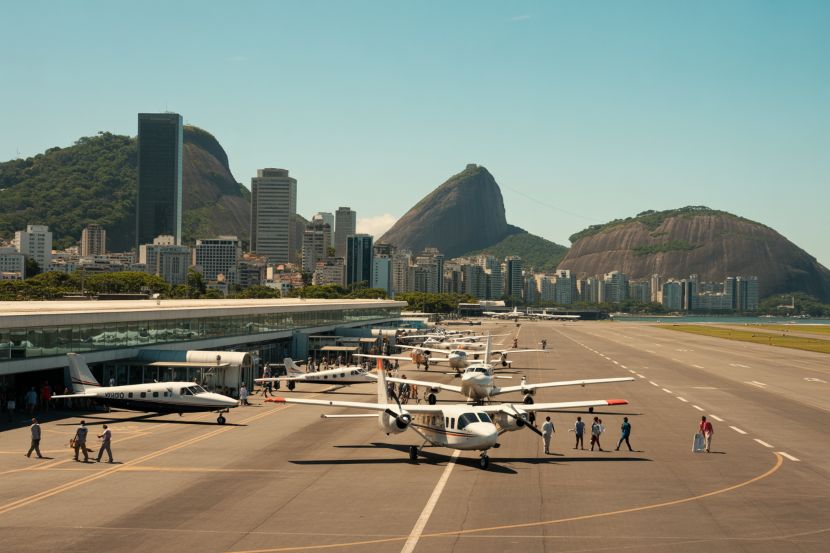
Brazil’s tourism industry is facing uncertainty as Santos Dumont Airport in Rio de Janeiro considers expanding its passenger capacity. This development, set to occur next year, could significantly impact both domestic and international air travel, potentially undermining the city’s recent tourism growth. The Brazilian civil aviation authority (ANAC) is contemplating this expansion shortly after Rio de Janeiro achieved a notable milestone in tourism growth, creating a complex scenario for the industry.
Key Points:
- Airport Expansion Consideration: ANAC is contemplating increasing the passenger capacity of Santos Dumont Airport in Rio de Janeiro.
- Impact on Tourism Growth: The expansion could potentially disrupt the recent tourism growth achieved by Rio de Janeiro.
- Dual Impact on Travel: The development could affect both domestic and international air travel, creating a complex scenario for the tourism industry.
- Timing of Announcement: The announcement was made shortly after Rio de Janeiro achieved a milestone in tourism growth, adding a layer of complexity to the situation.
Actionable Takeaways:
-
Monitor Airport Expansion Closely: Travel industry stakeholders should closely monitor the progress of the Santos Dumont Airport expansion. The potential disruption to tourism growth necessitates proactive measures to mitigate any adverse effects on the industry.
-
Diversify Travel Options: Given the potential impact on both domestic and international travel, travel companies should explore diversifying their travel options and partnerships to ensure resilience against capacity changes at key airports.
-
Invest in Alternative Transportation: To counteract potential disruptions, investment in alternative transportation options, such as ground transport improvements or enhanced rail services, could provide passengers with viable alternatives, ensuring continued travel demand.
Contextual Insights:
The consideration of expanding Santos Dumont Airport in Rio de Janeiro is a significant development within the context of Brazil’s tourism industry. This move comes shortly after Rio de Janeiro experienced a notable increase in tourism growth, which adds a layer of complexity to the situation. The expansion could potentially disrupt this growth, posing challenges for the tourism sector.
From a broader perspective, this scenario highlights the delicate balance between infrastructure development and tourism growth. It underscores the importance of strategic planning in the travel industry, where infrastructure decisions can have far-reaching implications. The article also reflects the ongoing need for travel companies to remain agile and adaptable in response to infrastructure changes, emphasizing the role of innovation and diversification in maintaining industry resilience.
In the context of current travel trends, the focus on infrastructure development and its impact on tourism aligns with the increasing emphasis on sustainable and efficient travel solutions. As the industry continues to evolve, thought leaders are likely to advocate for a balanced approach that considers both the expansion of infrastructure and the preservation of tourism growth. This article serves as a timely reminder of the intricate relationship between airport capacity, tourism growth, and the broader travel ecosystem.
Read the Complete Article.



