












Article Summary:
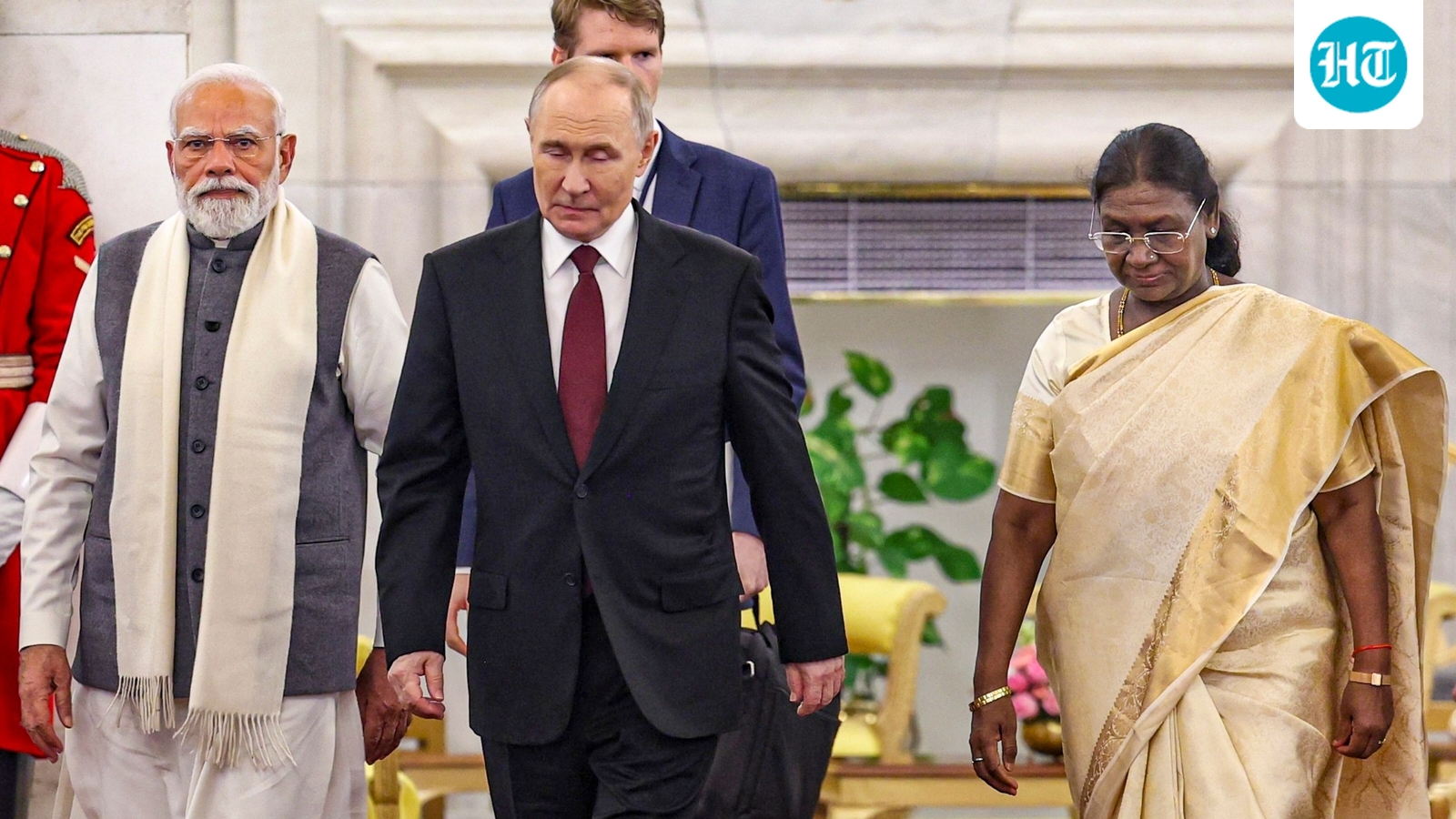
On the concluding day of Russian President Vladimir Putin’s two-day state visit to India, the visit concluded at the Rashtrapati Bhawan with a ceremonial welcome and a tri-services guard of honor. The President of India, Droupadi Murmu, hosted a banquet in honor of Putin, marking the end of the visit. During his stay, Putin addressed a joint press conference with Prime Minister Narendra Modi and participated in a business forum. Both countries reiterated their commitment to the diplomatic ties they share. The visit also touched upon the ongoing war in Ukraine, with PM Modi stating that India is not neutral but is on the “side of peace.”
Key Points:
- Putin’s two-day state visit to India concluded at the Rashtrapati Bhawan with a ceremonial welcome and a tri-services guard of honor.
- President Droupadi Murmu hosted a banquet in honor of Putin, marking the end of the visit.
- During the visit, Putin addressed a joint press conference with Prime Minister Narendra Modi and participated in a business forum.
- Both India and Russia reiterated their commitment to the diplomatic ties they share.
- The visit touched upon the ongoing war in Ukraine, with PM Modi stating that India is not neutral but is on the “side of peace.”
Actionable Takeaways:
-
Strengthening Diplomatic Relations: The visit underscores the importance of diplomatic ties between India and Russia, particularly in the context of global geopolitical dynamics. For businesses and governments, this highlights the potential for increased collaboration and trade opportunities in sectors such as defense, energy, and technology.
-
Focus on Peace and Non-Alignment: PM Modi’s statement that India is “on the side of peace” reflects India’s stance on global issues. This could influence how businesses approach market entry and engagement in regions affected by geopolitical tensions, emphasizing the importance of aligning with non-aligned policies.
Contextual Insights:
The article reflects the current state of international relations, particularly the complex dynamics between major global powers like India and Russia. In the context of travel and tourism, this geopolitical landscape can impact travel advisories, visa policies, and market access for tourists and businesses. The emphasis on peace and diplomatic ties suggests a cautious optimism for future collaborations, particularly in sectors less affected by geopolitical tensions. For travel startups and fintech innovations, this context underscores the need for flexibility and adaptability in navigating international markets, ensuring compliance with evolving diplomatic and regulatory frameworks.
Read the Complete Article.


