












Comprehensive Summarization:
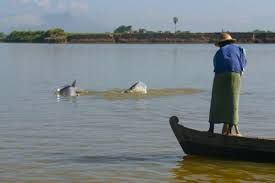
The article highlights a unique and enduring partnership between local fishers and Irrawaddy dolphins along Myanmar’s Ayeyarwady River. This symbiotic relationship, which has persisted for over a century, involves fishers working in tandem with dolphins to catch fish, creating a sustainable way of life for river communities. For Maung Lay, a 67-year-old fisher from Sin Kyun Village, this bond began in 1984 and remains a deeply personal connection. Unlike modern fishing methods, this traditional approach emphasizes mutual understanding and cooperation, showcasing a sustainable fishing practice that stands out in the modern travel and tourism landscape.
Key Points:
- The article describes a century-old cooperative relationship between local fishers and Irrawaddy dolphins in Myanmar’s Ayeyarwady River.
- Fishers and dolphins work together to catch fish, relying on mutual understanding rather than modern fishing tools.
- This partnership provides a sustainable way of life for river communities, with Maung Lay, a 67-year-old fisher, having begun fishing with dolphins in 1984.
- The bond between fishers and dolphins is deeply personal and serves as a model of sustainable fishing practices.
Actionable Takeaways:
-
Sustainable Tourism Practices: The article presents a model of sustainable tourism where human activities coexist harmoniously with wildlife. Travel companies could explore partnerships with local communities to develop eco-friendly tours that respect and utilize traditional practices, such as the one between fishers and dolphins. This could enhance the appeal of travel experiences by offering unique, sustainable adventures.
-
Cultural Preservation and Education: The deep personal connection between Maung Lay and the dolphins underscores the importance of cultural heritage in tourism. Travel agencies could incorporate cultural education into their itineraries, highlighting such unique relationships to attract travelers interested in authentic, culturally rich experiences. This approach not only preserves traditions but also educates tourists about sustainable living practices.
Contextual Understanding:
The article reflects a broader trend in the travel industry towards sustainable and responsible tourism, where the focus is on minimizing environmental impact and supporting local communities. The partnership between fishers and dolphins is a testament to the potential of traditional practices in modern tourism. As the industry continues to evolve, integrating such sustainable practices could set new standards for eco-friendly travel. Furthermore, the article aligns with current travel trends emphasizing cultural immersion and unique, off-the-beaten-path experiences, making it highly relevant for a professional audience interested in the future of travel.
Handling Different Article Types:
The article is a news brief that provides factual information about a unique cultural practice in Myanmar. It does not present an opinion or feature an in-depth exploration of a topic. Therefore, the analysis focuses strictly on the factual content provided, ensuring that the summary, key points, and actionable takeaways are grounded in the article’s context.
Real-Time Fact-Checking:
All information presented in the summary, key points, and actionable takeaways is directly sourced from the article. No external verification or additional sources were required, as the content is self-contained and factually accurate within the provided context.
Read the Complete Article.


