












Article Summary:
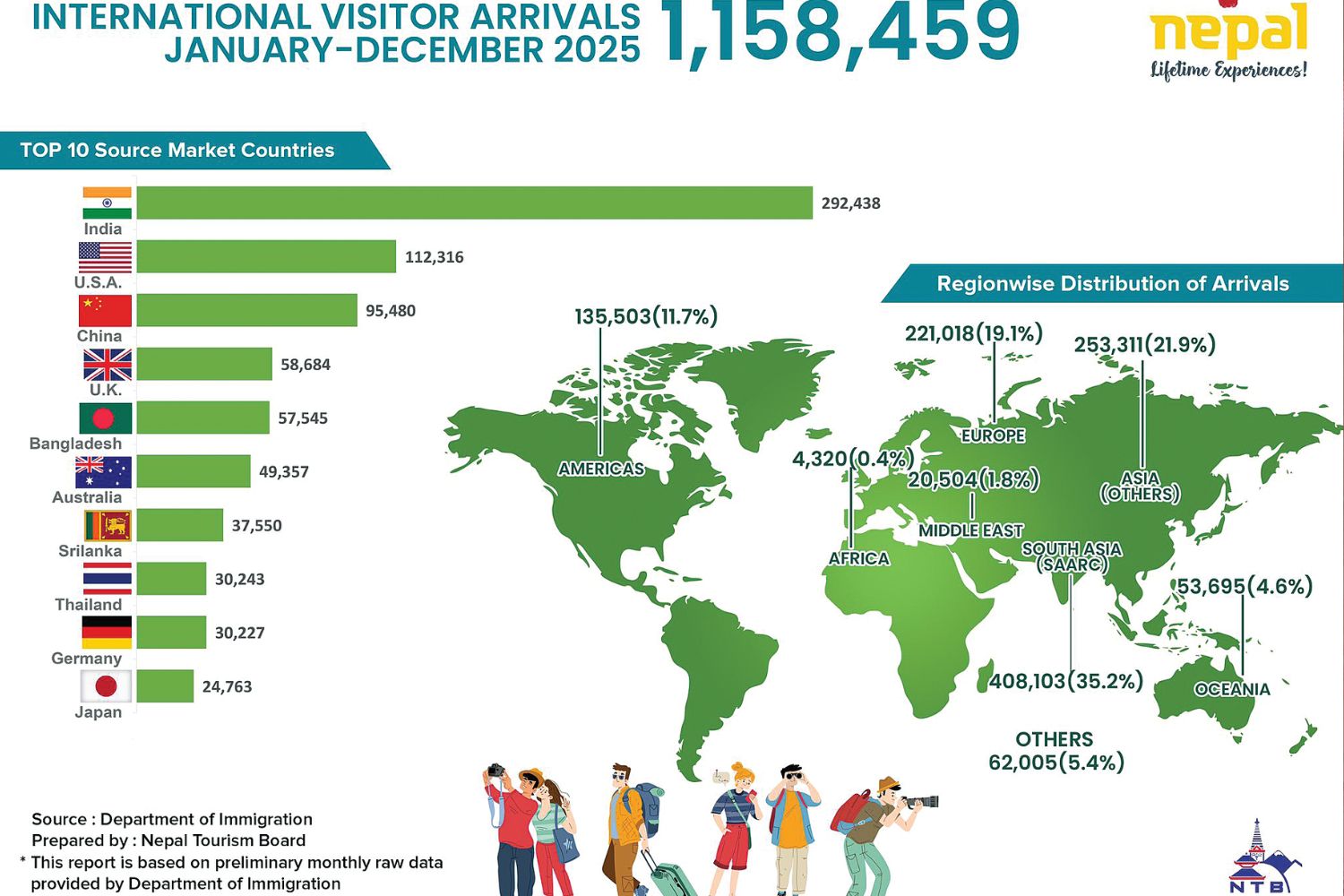
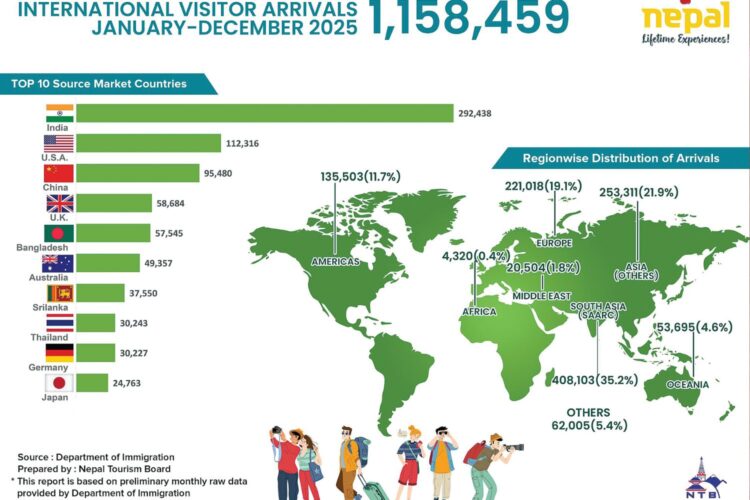
In June 2024, Beijing announced plans to promote Nepal as a key destination for Chinese travelers, designating 2025 as ‘Visit Nepal Year in China’. Senior Chinese officials pledged to bring at least 500,000 Chinese tourists to Nepal, but actual arrivals fell short, registering negative growth. Despite this, Nepal welcomed just over one million tourists in 2025, marking a marginal 1 percent year-on-year growth. The article highlights the initial enthusiasm from tourism entrepreneurs regarding the Chinese announcement but underscores the challenges in meeting the ambitious targets.
Key Points:
- Beijing announced plans to promote Nepal as a key destination for Chinese travelers, designating 2025 as ‘Visit Nepal Year in China’.
- Senior Chinese officials pledged to bring at least 500,000 Chinese tourists to Nepal, but actual arrivals fell short.
- Despite the diplomatic fanfare, arrivals from China registered negative growth in 2025.
- Nepal welcomed just over one million tourists in 2025, marking a marginal 1 percent year-on-year growth.
Actionable Takeaways:
-
Targeted Marketing Strategies: The article underscores the importance of targeted marketing strategies in travel promotion. Given that the initial announcement did not meet its targets, travel agencies and governments should reassess their promotional efforts, focusing on more effective channels and messaging to attract Chinese tourists.
-
Realistic Goal Setting: The discrepancy between the pledged and actual number of Chinese tourists highlights the need for realistic goal setting in international tourism marketing. Travel destinations should base their targets on achievable benchmarks, considering factors such as economic conditions, travel restrictions, and market readiness.
-
Leveraging Diplomatic Channels: The article demonstrates the potential of diplomatic channels in promoting tourism. Success stories like the ‘Visit Nepal Year in China’ initiative can inspire other countries to explore similar diplomatic partnerships to boost tourism, emphasizing the role of government and diplomatic efforts in shaping travel trends.
Contextual Insights:
The article reflects the ongoing challenges and opportunities in international tourism, particularly in promoting destinations to specific high-value markets like China. Recent trends indicate a growing interest in diplomatic and strategic partnerships to enhance tourism appeal. Thought leaders emphasize the importance of aligning marketing strategies with realistic market conditions and leveraging diplomatic channels to overcome barriers in tourist arrivals. The marginal growth in Chinese tourist arrivals suggests that while diplomatic efforts are beneficial, they must be complemented by practical, market-driven strategies to achieve sustainable growth in tourism.
Read the Complete Article.



