












Article Summary:
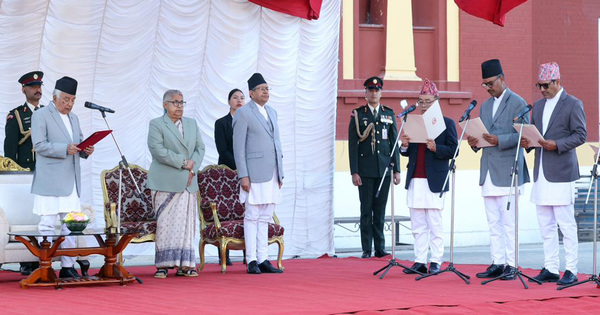
The interim government of Nepal, led by Prime Minister Sushila Karki, has expanded its Cabinet by appointing four new ministers. These ministers are tasked with organizing the House of Representatives elections scheduled for March 5. The new appointments include Kumar Ingnam as Minister of Land Management, Cooperatives, and Poverty Alleviation, Rajendra Singh Bhandari as Minister of Labour, Employment, and Social Security, Madhav Prasad Chaulagain, and Shraddha Shrestha. The oath of office and secrecy was administered to these ministers by Nepalese President Ramchandra Paudel at the Office of the President.
Key Points:
- The interim government of Nepal has expanded its Cabinet with four new ministers.
- The new ministers are responsible for organizing the House of Representatives elections on March 5.
- The oath of office and secrecy was administered by Nepalese President Ramchandra Paudel.
- The ministers are appointed to key portfolios including Land Management, Cooperatives, Poverty Alleviation, Labour, Employment, and Social Security.
Actionable Takeaways:
- Political Stability in Nepal: The expansion of the interim government’s Cabinet indicates a focus on political stability and governance in Nepal. This could potentially impact travel and tourism in the region, as political stability often correlates with safer and more predictable travel conditions. Travel agencies and tour operators may need to monitor political developments closely to advise their clients effectively.
- Election Timing: The scheduled elections on March 5 are a significant event for Nepal. For travel businesses, this could mean increased travel demand as citizens prepare for the electoral process, including travel to polling stations or related activities. Businesses should consider this timing for promotional campaigns or special travel packages.
- Leadership Appointments: The appointments of Kumar Ingnam, Rajendra Singh Bhandari, Madhav Prasad Chaulagain, and Shraddha Shrestha to key portfolios suggest a government focused on infrastructure, labor, and social welfare. This could lead to improvements in infrastructure and labor conditions, potentially boosting the travel and tourism sector in Nepal. Businesses in these sectors should keep an eye on government initiatives and policies that could positively impact their operations.
Read the Complete Article.



