












Article Summary:
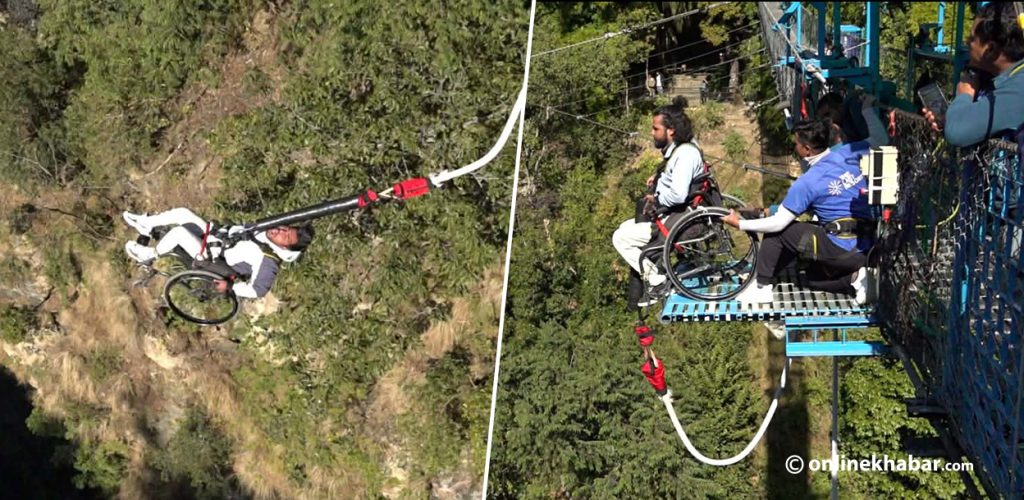
Dilip Sapkota and Shishir Dahal, residents of Sindhupalchok and Sindhuli respectively, have made history by completing a wheelchair bungee jump from a 160-meter-high suspension bridge over the Bhotekoshi River in Nepal. This jump is claimed to be the first of its kind in Nepal, marking Sapkota as the first person in the country to perform a bungee jump in a wheelchair. The event underscores the growing trend of inclusive and innovative travel experiences, pushing the boundaries of traditional adventure sports.
Key Points:
- Dilip Sapkota and Shishir Dahal completed a wheelchair bungee jump from a 160-meter-high suspension bridge in Sindhupalchok, Nepal.
- This jump is described as the first of its kind in Nepal, with Sapkota being the first person in the country to perform a bungee jump in a wheelchair.
- The event highlights the potential for inclusive and innovative travel experiences, pushing the boundaries of traditional adventure sports.
Actionable Takeaways:
- Inclusive Adventure Tourism: The wheelchair bungee jump exemplifies the growing trend of inclusive adventure tourism, where travel experiences are adapted to accommodate individuals with disabilities. This trend is likely to gain momentum as the travel industry seeks to cater to a broader demographic, enhancing accessibility and inclusivity in travel offerings.
- Technological Advancements in Adventure Sports: The successful execution of a bungee jump in a wheelchair underscores advancements in adaptive sports equipment and safety technologies. Travel companies and startups in the adventure sports sector may benefit from investing in research and development of such technologies to expand their market reach and offer unique experiences to a wider audience.
Contextual Insights:
The wheelchair bungee jump reflects broader industry trends towards innovation and inclusivity within the travel sector. As the travel industry continues to evolve, there is a notable shift towards offering experiences that cater to diverse needs, including those of individuals with disabilities. This aligns with the increasing demand for sustainable and responsible travel practices, where accessibility and inclusivity are prioritized. Furthermore, the event highlights the potential for technological advancements in adventure sports, suggesting that travel startups and established companies may explore similar innovations to enhance their offerings. By integrating such inclusive and technologically-driven experiences, travel companies can not only meet the evolving expectations of modern travelers but also position themselves as leaders in the industry, appealing to a broader audience and fostering positive brand associations.
Read the Complete Article.



