












Article Summary:
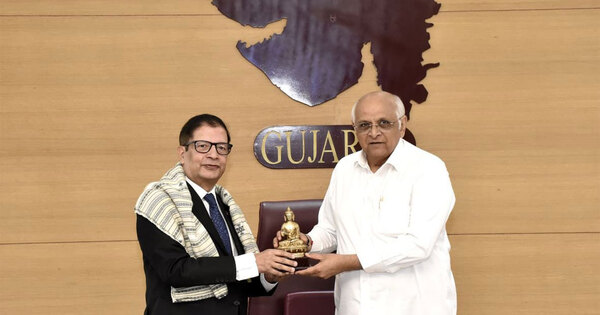
The Ambassador of Nepal to India, Shankar Prasad Sharma, paid a courtesy visit to Gujarat’s Chief Minister Bhupendra Patel during his tour of Gujarat. The visit aimed at promoting Nepal’s tourism. The Ambassador commended the world-class tourism attractions developed in Gujarat under Prime Minister Narendra Modi’s guidance. They held discussions on cooperation in sectors like tourism, information technology, hydro energy, manufacturing, and education. The Chief Minister highlighted Gujarat’s progress under Modi’s leadership.
Key Points:
- Shankar Prasad Sharma, Nepal’s Ambassador to India, visited Gujarat for tourism promotion.
- The visit was aimed at highlighting Nepal’s tourism attractions and exploring cooperation sectors.
- Discussions focused on tourism, IT, hydro energy, manufacturing, and education sectors.
- Chief Minister Bhupendra Patel shared Gujarat’s progress under Prime Minister Narendra Modi’s guidance.
Actionable Takeaways:
- Enhanced Tourism Cooperation: The visit underscores the potential for enhanced cooperation between Nepal and Gujarat in the tourism sector. This could lead to increased tourist exchanges, joint marketing campaigns, and collaborative development of tourism infrastructure. Given the growing global interest in cultural and natural tourism, such cooperation could significantly boost both countries’ tourism industries.
- Focus on IT and Hydro Energy: The emphasis on IT and hydro energy sectors suggests a strategic push towards leveraging technology and renewable energy in tourism. For travel startups and fintech companies, this presents an opportunity to innovate in areas like digital ticketing, eco-friendly travel solutions, and sustainable tourism financing. The focus on these sectors aligns with the broader travel industry trend of integrating technology and sustainability.
- Leadership and Infrastructure Development: The Chief Minister’s emphasis on Gujarat’s progress under Prime Minister Narendra Modi’s leadership highlights the importance of visionary leadership in infrastructure development. For the travel industry, this indicates the potential for significant investments in tourism infrastructure, which could drive growth in travel-related services and jobs. It also suggests that strategic planning and policy support are key drivers of tourism success.
Contextual Insights:
The article reflects the current emphasis on international collaboration in tourism, a trend driven by the need for diversified tourism markets and the sharing of best practices. The focus on sectors like IT and hydro energy aligns with the broader travel industry’s shift towards digital transformation and sustainable practices. The mention of Prime Minister Narendra Modi’s leadership underscores the role of strong governance in fostering tourism growth. This context is crucial for understanding the strategic importance of the visit and the potential for future collaborations in the travel sector. As the travel industry continues to evolve, such strategic partnerships and technological innovations will be key to addressing challenges like sustainability, digital engagement, and economic diversification.
Read the Complete Article.



